


Brazil's prez holds calls with Canada, Mexico and Colombia on Venezuela
The calls came just days after a deadly US military operation captured Maduro and stunned Latin America, generating stiff rebukes
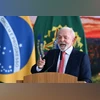 "Luiz Inacio Lula da Silva, Brazil")
Lula was careful to avoid mentioning of Maduro or Donald Trump, notable omissions for an old ally of Venezuela’s socialist leaders and long-time opponent of US interventionism in the region | Image: Bloomberg


Listen to This Article
By Daniel Carvalho
Brazil’s Luiz Inácio Lula da Silva talked to a trio of regional counterparts about Venezuela on Thursday, as leaders across the Americas search for a response to the stunning US raid that toppled Nicolás Maduro.
Lula spoke by phone with Canadian Premier Mark Carney, Mexico’s Claudia Sheinbaum and Colombian President Gustavo Petro, Brazil’s government said, with each conversation focused on a similar topic: the need to respect international law and national sovereignty.
The calls came just days after a deadly US military operation captured Maduro and stunned Latin America, generating stiff rebukes.
Lula, vacationing in Rio at the time, condemned the seizure as a “serious affront to Venezuela’s sovereignty” and “flagrant violation of international law” that crossed “an unacceptable line.”
Also Read

 "Venezuela")
 "US President Donald Trump")
 "Military personnel carry caskets during the funeral of soldiers killed in a US operation to capture Venezuela's leader Nicolas Maduro and his wife Cilia Flores in the capital on January 3 | Reuters")
 "US embassy in Venezuela")

But he was careful to avoid mentioning of Maduro or Donald Trump, notable omissions for an old ally of Venezuela’s socialist leaders and long-time opponent of US interventionism in the region.
It was no accident, according to five officials inside Brazil’s government. With his reelection campaign looming and US trade talks ongoing, Lula is treading carefully around the situation in Venezuela, seeking to blunt attacks from conservative political opponents and avoid derailing so-far successful efforts to roll back Trump’s tariffs on his nation.
Back in Brasilia, Lula’s government has given explicit guidance to members of his administration: They shouldn’t comment on Venezuela without prior authorisation, according to the officials, who requested anonymity to discuss internal matters.
If they do see a need to address events in the neighboring nation, they’ve been advised to stick strictly to the language Lula and Brazil’s foreign ministry have already outlined, two of the officials briefed on the instructions said.
The guiding message is a defense of national sovereignty, according to two of the officials. It’s the same line Lula took to Trump’s imposition of 50 per cent tariffs on many Brazilian exports in a bid to help right-wing former President Jair Bolsonaro dodge a coup attempt trial last year.
“The need to reaffirm the sovereignty of countries, the right of each people to define their own destiny, is clear to the entire world,” Chief of Staff Rui Costa said Thursday, following the playbook. “More than ever, this right must be affirmed.”
The fight over tariffs boosted Lula’s popularity and helped put him atop polls ahead of the October election. And he has so far avoided the sort of ire Trump aimed at Colombia and Mexico in the wake of the Venezuelan raid, before the US leader smoothed things over with Petro on Wednesday.
But Venezuela’s slide into autocracy has long posed political risk to the 80-year-old leftist who initially rose to power alongside Maduro’s predecessor, Hugo Chávez, more than two decades ago.
Shortly after returning to office in 2023, Lula welcomed Maduro to Brasilia and declared him the victim of a “narrative” led by Washington. The misstep fueled right-wing efforts to tie him to the regime; later, it complicated attempts to broker a solution when Maduro claimed victory in Venezuela’s 2024 election despite overwhelming evidence he’d lost.
Lula’s chief election challenger has already sought to seize on the US intervention. Flavio Bolsonaro, a son of the former president, posted an image of Brazil’s leader and the ousted Venezuelan on Saturday with the caption, “Lula is Maduro, Maduro is Lula.”
Allies push back by pointing to Lula’s refusal to recognize Maduro as the election winner and a decision to block Venezuela from joining the BRICS bloc of emerging market nations. Gleisi Hoffmann, a minister in the government, accused the right of “trying to exploit” the crisis in a Saturday social media post.
Sidônio Palmeira, Lula’s communications chief and a strategist behind his 2022 victory, told reporters Thursday that Venezuela is unlikely to factor in this year’s election.
Improving relations with Washington provide another reason to proceed carefully. Lula won the battle with Trump, who lifted levies from most of Brazil’s key exports. But he’s kept pushing for full removal of the duties, and Brazil has yet to finalize a broader trade framework with the US.
The caution is also due in part, the officials say, to a lack of clarity on the state of affairs in Caracas. Lula spoke briefly to acting leader Delcy Rodríguez on Saturday, before it was clear she’d take the reins, but hasn’t since.
Foreign Minister Mauro Vieira struck a slightly tougher tone at a closed-door meeting of the Community of Latin American and Caribbean States this week, referring to Maduro’s capture as a “kidnapping,” according to a person close to him. Brazil’s representative to the Organization of American States later repeated the term publicly.
Lula, however, has remained careful. On Thursday, in his first public remarks since returning from vacation, he avoided Venezuela altogether.
More From This Section
 "Trump")
 "JD Vance, Vance")
 "Elon Musk, Tesla CEO")
 "Ghazipur landfill,fire")
 "United Nations Security Council")
Topics : Lula da Silva Luiz Inacio Lula da Silva Mark Carney Canada Mexico Colombia Brazil Venezuela Crisis
Don't miss the most important news and views of the day. Get them on our Telegram channel
First Published: Jan 09 2026 | 8:05 AM IST