


'Mistaken' letter, $2.2 bn freeze: Inside Harvard's showdown with Trump
An unauthorised letter sparked a $2.2 billion funding freeze, deepening a dispute between Harvard University and Trump's administration
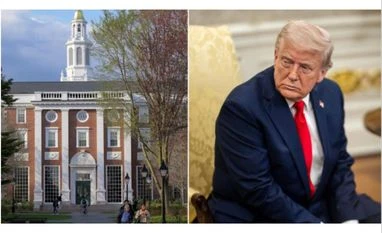 "Donald Trump, Harvard University")
Harvard and Trump administration clash over mistaken letter, leading to funding freeze and escalating tensions
Listen to This Article
A letter that sparked a high-stakes clash between Harvard University and US President Donald Trump’s administration, leading to the latter freezing $2.2 billion federal funds to the institution, was “unauthorised” and sent “by mistake,” an official close to the situation told The New York Times.
On April 11, Harvard received an unexpected email from the Trump administration, laying out a series of demands regarding hiring, admissions, and curriculum policies. Some demands were so sweeping that university officials decided to challenge the White House directly — triggering a fierce confrontation between one of America's oldest universities and the US President.
According to two people familiar with the situation, the email from the White House’s antisemitism task force — signed by acting general counsel of the Department of Health and Human Services Sean Keveney — was never supposed to reach Harvard. The sources, speaking to The New York Times, confirmed that the letter was “unauthorised.”
How the letter sparked chaos
The official said it remains unclear what caused the “mistaken” dispatch of the letter. Inside the Trump administration, there are conflicting accounts. Some officials believed the letter was sent prematurely, while others thought it was intended only for internal circulation among task force members.
Also Read

 "Murshidabad Security, Murshidabad, Murshidabad violence")
 "US flag, US, united states")
 "Viswanatha Raju at his Gutlapadu shrimp farm in West Godavari district. The farm spans over 60 acres")
 "Donald Trump, US President Trump")
 "Donald Trump, Trump")
The timing couldn’t have been worse. Harvard was already engaged in sensitive discussions with the task force when the letter landed. The university was blindsided, and ultimately concluded that reaching any agreement with the task force would be “impossible,” according to The New York Times.
A senior White House official later said the administration chose to stand by the letter and blamed Harvard for escalating the issue.
"It was malpractice on the side of Harvard’s lawyers not to pick up the phone and call the members of the antisemitism task force whom they had been talking to for weeks,” said May Mailman, the White House senior policy strategist.
“Instead, Harvard went on a victimhood campaign," she added.
Despite the tension, Mailman suggested there is still a way forward — but only if Harvard meets Trump’s demands and apologises to its students for allowing a climate where antisemitism allegedly grew.
“The task force and the entire Trump administration are in lockstep on ensuring that entities that receive taxpayer dollars are following all civil rights laws," a spokesperson for the antisemitism task force said in a statement.
Harvard later fired back, insisting that it had no reason to doubt the letter's legitimacy.
“The letter was signed by three federal officials, placed on official letterhead, sent from the inbox of a senior federal official, and arrived on April 11 as promised,” Harvard said in a statement on Friday.
“Recipients of such correspondence from the US government — even when it contains sweeping demands that are astonishing in their overreach — do not question its authenticity or seriousness," it said.
Harvard added: “It remains unclear to us exactly what, among the government’s recent words and deeds, were mistakes or what the government meant to do and say. But even if the letter was a mistake, the actions the government took this week have real-life consequences on students, employees, and the standing of American higher education in the world."
Shock and the fallout
Before the controversy, Harvard’s lawyers William Burck and Robert Hur had been in ongoing talks with Trump administration officials Josh Gruenbaum of the General Services Administration, Thomas Wheeler, acting general counsel for the Department of Education, and Sean Keveney.
Throughout the negotiations, Burck and Hur were expecting a formal communication from the task force. But when the letter arrived, it was far more aggressive than anticipated.
Following Harvard’s public rejection of the demands, Gruenbaum called Burck and Hur. Initially, Gruenbaum admitted that neither he nor Wheeler had authorised the letter’s release. However, he quickly backtracked, saying the letter was intended to be sent — just not on that particular Friday when talks were still productive, a source told The New York Times.
By then, it was too late.
Harvard’s public stand against the Trump administration triggered immediate retaliation. The White House announced that President Trump would freeze $2.2 billion in federal grants to Harvard. Within 24 hours, Trump was also threatening to revoke the university’s tax-exempt status.
More From This Section
 "google, google logo")
 "Donald Trump, Trump")
 "Europe, Venice, ITALY")
 "Shooting, Gun")
Don't miss the most important news and views of the day. Get them on our Telegram channel
First Published: Apr 19 2025 | 11:59 AM IST