


More than 30 sanctioned ships in Venezuela at risk after US tanker seizure
The US action, as Trump ratchets up pressure on the government of Venezuelan President Nicolas Maduro, has put many vessel owners, operators and shipping agencies on alert
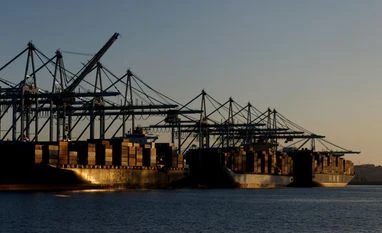 "Container ships at the Port of Los Angeles in August")
Representative Image: The targeting of Venezuela-origin cargoes is expected to create short-term export delays | Image: Bloomberg


Listen to This Article
More than 30 US-sanctioned oil vessels doing business in Venezuela could face punishment by Washington after the Coast Guard seized a supertanker carrying Venezuelan crude for export, according to shipping data.
The seizure, announced by President Donald Trump on Wednesday, was the first of an oil cargo from Venezuela, which has been under US sanctions since 2019, and the Trump administration's first known action against a Venezuela-related tanker since he ordered a massive military buildup in the region.
The US action, as Trump ratchets up pressure on the government of Venezuelan President Nicolas Maduro, has put many vessel owners, operators and shipping agencies on alert, with many reconsidering whether to set sail from Venezuelan waters in the coming days as planned, shipping sources said.
The targeting of Venezuela-origin cargoes is expected to create short-term export delays and could scare some vessel owners away, experts and analysts say. Washington had not previously interrupted Venezuela's oil exports, which are carried by intermediaries in third-party vessels.
Over 80 tankers waiting in or near Venezuela
Venezuela accused the US of "blatant theft," describing the seizure as "an act of international piracy." The seized supertanker, identified by a risk management group as the Skipper, is part of a "shadow fleet" of ships that carry sanctioned oil to their largest destinations. They often turn off their signal or otherwise disguise their locations.
Also Read

 "Donald Trump, Trump")
 "The Warner Bros. Discovery Techwood office campus in Atlanta")
 "US personnel, US military")
 "Donald Trump, Trump")
Such tankers have been increasingly employed by traders and shippers dealing with Venezuelan oil since Washington imposed the sanctions on the OPEC country.
Previous sanctions on Venezuela-related vessels or oil flows have left a swirl of loaded tankers waiting for weeks and even months to depart to avoid conflicts. On Wednesday, more than 80 vessels loaded or waiting to load oil were in Venezuelan waters or near its coast, including more than 30 under US sanctions, according to data compiled by TankerTrackers.com.
The global shadow fleet includes 1,423 tankers, of which 921 are subject to US, British or European sanctions, according to analysis from maritime data specialist Lloyd's List Intelligence. They are typically old, their ownership opaque and they sail without top-tier insurance cover to meet international standards for oil majors and many ports.
The ships mostly transport sanctioned oil from Russia, Iran and Venezuela to Asian destinations, according to vessel monitoring data. Many have made separate voyages carrying Iranian or Venezuelan oil and then Russian cargoes.
In the case of Venezuela, they load at ports operated by state-run PDVSA under fake names, shipping and company data show. They typically disguise their locations until long after departure while crossing the Atlantic Ocean heading to Malaysia or China.
PDVSA did not immediately reply to a request for comment.
An estimated 15 per cent of the global fleet of very large crude carriers, which can carry a maximum load of 2 million barrels per voyage, has been hit with sanctions, according to estimates from Cyprus-based leading oil shipping company Frontline.
For Venezuela-controlled vessels, the US has in recent years added almost all of PDVSA's fleet to its sanctioned list, along with a handful of tankers that transport Venezuelan oil to Cuba, which also is under US sanctions.
Russia and China, both also heavily sanctioned, have used similar strategies to flout those restrictions for years.
In a sign of success for the dark fleet's strategy, Venezuela's oil exports rose to over 900,000 barrels per day in November and imports of much-needed naphtha to dilute its extra-heavy oil, mostly from Russia, doubled to 167,000 bpd, increasing stocks for the coming weeks.
Venezuela and Iran also have collaborated in the past for the use of their fleets.
PDVSA's key joint-venture partner, Chevron, which is responsible for all Venezuelan crude shipments to the US, said on Wednesday the company was operating normally.
(Only the headline and picture of this report may have been reworked by the Business Standard staff; the rest of the content is auto-generated from a syndicated feed.)
More From This Section
 "London, UK")
 "Criminal in handcuffs")
 "The 6th Air Wing of Japan Air Self-Defense Force's F-15 fighters hold a joint military drill with the U.S. B-52 bomber over Sea of Japan | Reuters")
 "Narendra Modi, Vladimir Putin")
 "Trade, tariffs")
Don't miss the most important news and views of the day. Get them on our Telegram channel
First Published: Dec 11 2025 | 10:42 AM IST