


Nuclear talks with US a good start, says Iranian Foreign Minister
For Washington, carrying out enrichment - a possible pathway to nuclear bombs - inside Iran is a red line. Tehran has long denied any intent to weaponise nuclear fuel production
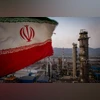 "Iran, Iran flag")
Listen to This Article
Irans top diplomat said on Friday that nuclear talks with the US mediated by Oman were off to a good start and set to continue, in remarks that could help allay concern that failure to reach a deal might nudge the Middle East closer to war.
But Foreign Minister Abbas Araqchi said after the talks in the Omani capital Muscat that "any dialogue requires refraining from threats and pressure. (Tehran) only discusses its nuclear issue ... We do not discuss any other issue with the US"
While both sides have indicated readiness to revive diplomacy over Tehran's long-running nuclear dispute with the West, Washington wanted â to expand the talks to cover Iran's ballistic missiles, support for armed groups around the region and "treatment of their own people", US Secretary of State Marco Rubio said on Wednesday.
Iranian officials have repeatedly ruled out putting Iran's missiles - one of the largest such arsenals in the Middle East - up for discussion, and have said Tehran wants recognition of its right to enrich uranium.
For Washington, carrying out enrichment - a possible pathway to nuclear bombs - inside Iran is a red line. Tehran has long denied any intent to weaponise nuclear fuel production.
Also Read

 "Barack Obama, Obama, Barack")
 "US flag, USA")
 "US immigration")
 "Jeffrey Epstein")
 "united states, european union, us-eu, us, eu")
"It was a good start to the negotiations. And there is an understanding on continuing the talks. Coordination on how to proceed will be decided in the capitals," Araqchi told Iranian state TV. "If this process continues, I think we will reach a good framework for an understanding."
Talks were 'very serious', says Oman
Mediator Badr al-Busaidi, Oman's foreign minister, said the talks had been "very serious", with results to be considered carefully in Tehran and Washington. The goal was to reconvene in due course.
The Islamic Republic's clerical leadership remains deeply worried that Trump may still carry out his ​threats to strike Iran after a US naval buildup in seas in the region.
"The lack of trust is a huge challenge during the talks and it should be overcome," Araqchi said.
Last June the US struck Iranian nuclear targets, joining in the final stages of a 12-day Israeli bombing campaign. Tehran has since said it has halted uranium enrichment activity.
The naval buildup, which Trump has called a massive armada, has followed a bloody government crackdown on nationwide protests in Iran last month, heightening tensions between Washington and Tehran.
Trump has warned that "bad things" will probably happen if a deal cannot be reached, ratcheting up pressure on the Islamic Republic in a standoff that has led to mutual threats of air strikes.
World powers and regional states fear a breakdown in the negotiations would ignite another conflict between the US and Iran that could spill over to the rest of the oil-rich region.
Iran has vowed a harsh response to any strike and has cautioned neighbouring Gulf Arab countries that host US bases that they could be in the firing line if they were involved in an attack.
Negotiators in Oman will have to navigate Iran's red line on discussing its missile programme to reach a deal and avert future military action. Tehran has flatly ruled out talks on its "defence capabilities, including missiles and their range".
In a show of defiance, Iranian state TV said hours before the talks that one of the country’s most advanced long-range ballistic missiles, the Khorramshahr-4, had been deployed at one of the Revolutionary Guards vast underground missile cities.
However, Tehran is willing to show "flexibility" on uranium enrichment, including by handing over 400 kg of highly enriched uranium - refined closer to bomb-grade - and accepting zero enrichment under a consortium arrangement as a solution, Iranian officials told Reuters last week.
Iran also demands the lifting of US sanctions, reimposed since 2018 when Trump, during his first term in ​the White House, ditched Iran's 2015 nuclear deal with six world powers.
The United States, its European allies and Israel accuse Tehran of using its nuclear energy programme as a veil for efforts to develop the capability to produce atomic bombs. Iran says its nuclear programme is for peaceful purposes only.
Israel has likened the danger of Iran's missiles to its nuclear programme. Prime Minister Benjamin Netanyahu said in January that Iran's "attempt to build atomic weapons" and "20,000 ballistic missiles" were like "two lumps of cancer".
More From This Section
 "amazon")
 "European Commission President Urusla von der Leyen")
 "Kenta Kon")
 "Apple CEO Tim Cook said he believes Apple will return to growth in China during the current quarter")
 "Donald trump at UNGA")
Topics : Nuclear Iran United States
Don't miss the most important news and views of the day. Get them on our Telegram channel
First Published: Feb 06 2026 | 11:03 PM IST