


Pfizer's drug-price deal with Trump follows months of negotiation deadlock
Pfizer and the White House were deadlocked for months over lowering US drug prices, with Trump demanding quick results from drug executives right from the start of his second term
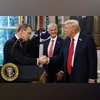 "Donald Trump shakes hands with Albert Bourla in the Oval Office of the White House on Sept 30")
Donald Trump shakes hands with Albert Bourla in the Oval Office of the White House on Sept 30 | Image: Bloomberg


Listen to This Article
By Rachel Cohrs Zhang, Madison Muller and Damian Garde
Around dinnertime on Sept 25, President Donald Trump took to social media to announce a fresh round of tariffs on drugs. The Truth Social post seemingly came out of nowhere, rattling global markets as investors raced to understand the impact of the new levies.
The post, however, played a critical role in cementing a deal with one of the world’s largest pharmaceutical companies, Pfizer Inc, according to senior officials from the White House and the Centers for Medicare and Medicaid Services who requested anonymity to discuss the inner workings of the process.
For months, Pfizer and the White House had been deadlocked in their negotiations over how to address one of President Trump’s most critical issues: lowering US drug prices. From the very beginning of his second term, the president told drug executives he expected them to come to the table and quickly deliver results, the officials said.
Starting in May, senior officials from the White House and Department of Health and Human Services started meeting with companies to discuss potential solutions.
Also Read

 "Harvard, Harvard University")
 "Vladimir Putin, Putin")
 "Donald Trump, Trump")
 "Donald Trump, Trump")
 "Donald Trump")
Senior officials described the first set of meetings in June and July as awkward and standoffish. Many came to the table fiercely resistant to the idea of aligning drug prices globally, an idea known as most-favored-nation pricing.
The president was well aware that things weren’t going well. On July 31, Trump sent letters to 17 of the largest pharmaceutical companies, including Pfizer, Eli Lilly & Co, Novo Nordisk A/S and others, insisting they immediately lower what they charge Medicaid for existing drugs. He also asked them to guarantee future medicines be launched and stay at prices on par with what they cost overseas. The companies had 60 days — until Sept 29 — to voluntarily comply.
The letter did little to sway Pfizer Chief Executive Officer Albert Bourla, even though he received a personalized note from the president — who crossed out “Dr Bourla” and wrote in “Albert.”
In a meeting that same month, Pfizer still wouldn’t budge on many of the administration’s priorities. There was a trust issue, officials said.
Behind the scenes, Chris Klomp, director of Medicare and deputy administrator of CMS, spent weeks building a better relationship with the company, according to a person familiar with the matter who spoke on the condition of anonymity discussing non-public details.
By September, those efforts had started to pay off.
A meeting with Bourla at the Hubert H. Humphrey Building in Washington, where HHS is housed, was a pivotal moment in the talks. The meeting in mid-September lasted just over an hour, but to those in the room, it felt like an impasse had finally been breached.
Bourla came to the meeting prepared to make a deal, the officials said, after wrestling with it the night before. He conceded that a deal with the president was the only path forward. They shook hands and walked away thinking the broad strokes had been reached.
Yet, there were still key disagreements on the fine print. The two sides hadn’t agreed on important definitions, the officials said. All the while, they continued to negotiate with other drug companies.
With the 60-day deadline from Trump’s letters looming, the pressure was on. The officials and Pfizer shared a common goal: Find a way to keep patients at the center, while not undermining innovation. They worked through the night on Sept 24 to hammer out final details.
But, just in case, the president gave it an extra push.
“Starting October 1st, 2025, we will be imposing a 100 per cent Tariff on any branded or patented Pharmaceutical Product, unless a Company IS BUILDING their Pharmaceutical Manufacturing Plant in America,” Trump said in the Sept 25 Truth Social post.
After that, things moved quickly. Administration officials worked through nights and weekends to get the final details nailed down. It was a coordinated effort, they said, and still it came down to the wire.
Just hours before Trump and Bourla were set to announce the deal from the Oval Office, the Commerce Department had yet to sign off. Finally, at 11:15 am — slightly later than planned — Bourla and HHS Secretary Robert F. Kennedy Jr. signed the agreement.
Thirty minutes later, the deal was finally announced: Pfizer would get a reprieve from Trump’s long-threatened tariffs after agreeing to slash some of its drug prices by up to 85 per cent and selling directly to the American public on a new site called TrumpRx.
Pfizer also said it will offer a US insurance program for low-income and disabled adults to receive comparable prices to those offered in other countries. The company also committed to launch new medicines at parity with other developed nations. In exchange, the company gained a three-year grace period from widely anticipated pharmaceutical tariffs that the administration has been threatening.
Pfizer and the White House declined to comment Thursday.
In the short term, Bourla’s play got a warm reception on Wall Street. Pfizer shares rose as much as 5.6 per cent after the deal was announced that day. It also buoyed drugmakers’ stocks for days to come, and JPMorgan analysts said the Pfizer deal could be a potential bellwether for the sector and “reassure investors over a broadly manageable impact.”
The deal has allowed Trump to finally claim progress toward ending what he views as unfair foreign freeloading off of high drug prices that Americans pay. Equalizing prices with foreign countries is Trump’s top health-care priority, the officials said.
Bourla’s concessions to Trump mark a seminal moment for a pharmaceutical industry that has steadfastly fought Trump’s idea of tying domestic drug prices to foreign ones.
Specifics of the agreement are still under wraps as the administration is actively negotiating with other companies, but administration officials said they’re confident it will reduce spending on Medicaid, the government health plan for lower-income Americans.
More companies are expected to follow suit. Right after the press conference ended, another deal was finalized, and a third is getting close to the finish line, the officials said.
Since then, they said, their phones haven’t stopped ringing with other companies looking to come to the negotiating table.
More From This Section
 "Cybertruck")
 "Benjamin Netanyahu, Benjamin, Netanyahu, Israel PM")
 "Israel Flag, Israel")
 "Boeing 777")
 "Israel attacks on Gaza")
Don't miss the most important news and views of the day. Get them on our Telegram channel
First Published: Oct 03 2025 | 8:52 AM IST