


Russia's secret oil ships: How shadow tankers evade the West's watch
In order to avoid tracking, many of these ships turn off their automatic identification system, disappearing from standard maritime monitoring
 "Russian oil tanker, Russian tanker")
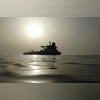
Instead of docking at ports, shadow tankers often transfer oil at sea to other ships. (Image: Bloomberg)
Listen to This Article
The US on Wednesday seized a Russian-flagged oil tanker that had been shadowed by a Russian submarine, following a pursuit lasting over two weeks across the Atlantic. The move is part of Washington’s broader effort to block Venezuelan oil exports.
The operation was confirmed by the US European Command on X, which said the seizure targets vessels already sanctioned by the US.
Originally named 'Bella 1', the tanker was sanctioned in 2024 and later renamed 'Marinera'. It had been travelling from Iran to Venezuela but reportedly changed course and returned to the Atlantic in an attempt to evade US seizure efforts near Venezuelan waters. This was not the first US attempt to intercept the ship. In December, US forces tried to board it near Venezuela, but the crew reportedly resisted. Afterwards, the vessel was painted with a Russian flag and added to Russia’s official shipping registry, prompting a diplomatic protest from Moscow.
This has brought attention to Russia’s “shadow fleet”, a group of secretive vessels that help Moscow export oil despite Western sanctions. These ships conceal their owners and cargo, allowing Russia to continue selling oil even when it is officially restricted.
Also Read

 "State Bank of India (SBI)")
 "binge drinking, alcohol")
 "H1B visa")
 "Supreme Court, SC")
 "monument")
How tankers hide their identity
To avoid tracking, many of these ships turn off their automatic identification system (AIS), disappearing from standard maritime monitoring. Some vessels reportedly carry spy equipment and could even interfere with undersea communication cables.
Instead of docking at ports, shadow tankers often transfer oil at sea to other ships. These ship-to-ship transfers usually happen in remote areas like the eastern Mediterranean or off West Africa, where monitoring is limited, NDTV reported.
Many vessels are registered in countries with lax regulations, such as Panama or Liberia, hiding the true owners and complicating enforcement. Analysts also note that Russia increasingly relies on older tankers, which are cheaper but less likely to comply with international safety standards. Before the Ukraine invasion, only 3 per cent of global tankers were over 20 years old; by 2025, that number had risen to 11 per cent, the news report said.
Following Russia’s invasion of Ukraine in 2022, Western nations imposed sanctions on Russian energy exports. Moscow has since used shadow fleets to bypass restrictions, using older tankers with obscure ownership, fake registration papers, and disabled tracking systems. These ships have delivered oil to countries including China, India, and Turkey, news agency PTI reported.
India becomes top destination for shadow fleet oil
The Centre for Research on Energy and Clean Air (CREA) reported that India imported 5.4 million tonnes of Russian crude, worth €2.1 billion, between January and September 2025. These shipments arrived on 30 vessels operating under false flags, making India the largest national destination for oil moved by Russia’s shadow fleet.
CREA found that in the first nine months of 2025, 113 Russian vessels operated under false flags, carrying 13 per cent of Russia’s crude -- about 11 million tonnes worth €4.7 billion ($5.4 billion). Of this, €2.1 billion (5.4 million tonnes) went to India.
India, traditionally reliant on West Asian crude, increased purchases from Russia after February 2022. Lower European demand and Western sanctions allowed India to buy Russian oil at discounted rates. CREA estimates that India imported about €144 billion worth of Russian crude since the start of the Ukraine war, contributing to Moscow’s cumulative oil revenue of roughly €1 trillion.
(With agency inputs)
More From This Section
 "Japanese PM Sanae Takaichi, Xi Jingping, China")
 "Oxford University, Oxford")
 "Trump")
 "Donald Trump, Trump")
 "Russia-Ukraine, rescue work, building collapse, war")
Topics : Russia Oil tankers US Russia Russia Oil production crude oil supply India crude oil India imports BS Web Reports
Don't miss the most important news and views of the day. Get them on our Telegram channel
First Published: Jan 09 2026 | 11:54 AM IST