


Former South Korean President Moon Jae-in indicted in bribery case
Former South Korean President Moon Jae-in joins many of his predecessors, including recently removed President Yoon Suk Yeol, who have faced prosecution
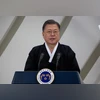 "Former South Korean President Moon Jae-in")
Former South Korean President Moon Jae-in | Photo: Reuters
Listen to This Article
South Korea’s prosecution service has indicted former president Moon Jae-in on bribery charges linked to his former son-in-law’s controversial appointment to a top airline post.
Allegations against Moon
According to prosecutors, Moon’s former son-in-law, identified only by the surname Seo, was hired as executive director of Thai Eastar Jet in 2018, despite having no notable experience in aviation. The appointment allegedly came in exchange for Eastar Jet founder and former lawmaker Lee Sang-jik being named head of the state-run Korea SMEs and Startups Agency that same year.
Prosecutors claim this deal was orchestrated to indirectly benefit Moon.
Seo reportedly received around 217 million won in salary and housing support between 2018 and 2020. A Reuters report cited by prosecutors noted that Seo frequently absented himself from his duties and failed to perform in a capacity commensurate with his role.
The scandal has also drawn in Lee Sang-jik, who had already been sentenced to six years in prison in 2022 for embezzlement. He now faces fresh charges of bribery and breach of trust.
ALSO READ | Here is why South Korea's ex-President Yoon could face death penalty
Also Read

 "Japanese rice and chopsticks")
 "Oilmeal")
 "North Korea, North Korea flag")
 "Yoon Suk Yeol, Yoon Suk, South Korea President")
 "Han Duck-soo, South Korean PM")
Yoon Suk Yeol removed from office
Just weeks ago, former President Yoon Suk Yeol was removed from office after declaring martial law—a move that sparked public outrage. He, too, now faces criminal charges.
Moon joins Yoon and other former South Korean presidents who have faced prosecution. South Korea’s first female president, Park Geun-hye, was impeached in 2017 following a high-profile corruption scandal involving her confidante Choi Soon-sil. She was sentenced to a combined 22 years in prison before being pardoned on health and humanitarian grounds in December 2021.
Moon’s immediate predecessor, Lee Myung-bak, was convicted of embezzlement and bribery, receiving a 17-year sentence in 2018. He was released early through a presidential pardon in 2022, also citing health issues. Moon’s political mentor, Roh Moo-hyun, also faced a corruption probe linked to his family after leaving office and died by suicide in 2009. Earlier, former military rulers Chun Doo-hwan and Roh Tae-woo were convicted in 1996 for mutiny, treason, and corruption related to the 1979 coup and the 1980 Gwangju massacre. Chun’s death sentence was later commuted to life imprisonment, while Roh received a 17-year sentence. Both were pardoned in 1997 as part of a national reconciliation effort led by then-president Kim Young-sam with the support of president-elect Kim Dae-jung.
More From This Section
 "Volodymyr Zelenskyy, Zelenskyy")
 "Palestinian President Mahmoud Abbas")
 "Chinese robo cafe")
 "US China, US China flag")
 "Pope Francis, St Peter's Basilica")
Topics : South Korea BS Web Reports Bribery
Don't miss the most important news and views of the day. Get them on our Telegram channel
First Published: Apr 24 2025 | 2:27 PM IST