


Tech titans funded Trump; now face tariffs, trials and tight rules
The sweeping tariffs he imposed last week will squeeze Apple's iPhone supply chain and make it much more expensive for Amazon, Meta, Google, and Microsoft to build supercomputers to power AI
 "Donald Trump, Trump")
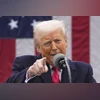
Less than three months into the president’s second term, Donald Trump has hardly returned any favours. | File Photo
Listen to This Article
Cecilia Kang
The biggest technology companies and their chief executives donated millions to US President Donald Trump’s inauguration, hosted black-tie parties, and dinners in his honour, and allowed him to announce and take credit for new multibillion-dollar manufacturing projects.
But less than three months into the president’s second term, Trump has hardly returned their lavish gestures with favours.
The sweeping tariffs he imposed last week will squeeze Apple’s iPhone supply chain and make it much more expensive for Amazon, Meta, Google, and Microsoft to build supercomputers to power artificial intelligence (AI). The president has slashed federal funding for research into emerging technologies like AI and quantum computing. His immigration clampdown has incited fears that he will cut off pipelines for tech talent.
The Trump administration has also signaled that it will continue an aggressive regulatory stance on reining in the power of the biggest tech companies, beginning next week with a landmark antitrust trial to break up Meta, the owner of Facebook, Instagram and WhatsApp. Since the inauguration, the combined market value of Amazon, Apple, Google, Meta, and Microsoft has fallen 22 per cent to $10 trillion. And the tech-heavy Nasdaq index is down 21 per cent.
Also Read

 "Google AI Mode")
 "Kyle Daigle, chief operating officer (COO), GitHub")
 "Amazon Kindle 11th Gen")
 "Microsoft logo, Microsoft")
 "IT industry")
The efforts to court Trump are a far stretch from the industry’s approach to his first administration, when many tech leaders were openly hostile toward the president. The relationship that tech executives have with the president has been a “one-way street,” said Gigi Sohn, a former senior advisor to the Federal Communications Commission under the Biden administration. “They give him everything, and he promises nothing, which in this case is a good thing.” The companies have said that they want to engage with Trump on a variety of issues and that they are looking at the long-range effects of his policies. Apple, Google, Meta and Amazon declined to comment.
In the aftermath, Zuckerberg called him a “badass.” Jeff Bezos, the founder of Amazon, commended Trump for “grace under fire.” Elon Musk, who leads the rocket company SpaceX, the electric carmaker Tesla and the social media platform X, endorsed Trump and went on to stump for and donate $300 million to his campaign.
After the election, Apple’s Tim Cook, alongside Meta, Google and Amazon, donated $1 million each to the inauguration. Several of the executives made trips to Mar-a-Lago, Trump’s resort in Palm Beach, Fla. And at the inauguration, Musk, Bezos, Zuckerberg, Cook and Pichai all appeared on the dais next to cabinet members.
“If you look at the inauguration, look at the people that were on that stage — here was a who’s who of a world that was totally against me the first time,” Mr. Trump said recently in an interview with Clay Travis of OutKick, a sports and news site owned by Fox.
Despite slashing its federal funding, Trump has opened the door to a continued light regulatory touch on AI, which he has declared his top priority to beat China in a race for global tech leadership. Last month, Google, Microsoft, and other tech giants submitted suggestions, asking for the administration to stay out of the way.
And US regulators have almost entirely dismantled a yearslong government crackdown on the crypto industry, a volatile sector rife with fraud, scams and theft. That benefits companies including the venture capital firm Andreessen Horowitz, a major investor in the space.
But tech companies still face intensifying pressures under the current Trump administration.
The new leaders appointed to the Justice Department and the FTC have shown no signs of backing down on a series of antitrust suits filed against Google, Meta, Amazon and Apple.
Trump chose Gail Slater, a veteran lawyer and a vocal tech critic, to lead the antitrust division at the Justice Department. Mr. Trump emphasized the importance of her role to quell powerful Silicon Valley giants during his announcement.
“Big Tech has run wild for years, stifling competition in our most innovative sector and, as we all know, using its market power to crack down on the rights of so many Americans, as well as those of Little Tech!” Trump said in a post on Truth Social, his social media platform.
The president also appointed Andrew Ferguson, who has expressed concerns about social media companies’ power, as chair of the F.T.C. Next week, Ferguson will lead the antitrust trial against Meta, in which the government accuses Facebook of buying Instagram and WhatsApp nearly a decade ago to cement its monopoly in social networking.
It’s unclear if efforts by Zuckerberg to secure a settlement will be successful. But ultimately, any decision on whether or not to proceed will be made by the president, Ferguson said last week at a conference held by the tech start-up incubator Y Combinator in Washington.
“The president’s head of the executive branch, and I think it’s important for me to obey lawful orders,” he said when asked if he would drop a suit like the Meta case if instructed by Trump.
“I think that the president recognizes that we’ve got to enforce the laws, so I’d be very surprised if anything like that ever happened,” he added.
Perhaps the biggest blow to the tech industry came in the form of tariffs last week. Apple, one of the hardest-hit companies, produces 90 percent of the iPhones it sells around the world in China, where tariffs, which were already at 20 percent, are expected to increase to 34 percent this week.
“These tariffs will raise consumer prices and will force our trade partners to retaliate,” said Gary Shapiro, the chief executive of the Consumer Technology Association, a trade group. “Americans will become poorer because of these tariffs.”
More From This Section
 "Xi Jinping, Donald Trump")
 "Jamieson Greer")
 "US Supreme court")
 "accident")
 "Yen, Japan Currency")
Don't miss the most important news and views of the day. Get them on our Telegram channel
First Published: Apr 08 2025 | 11:21 PM IST