


UN aviation body indicts Russia for 2014 downing of Malaysia Airlines MH17
The International Civil Aviation Organization held Russia accountable for the 2014 downing of Malaysia Airlines flight MH17, confirming its role in the tragic incident that killed 298 passengers
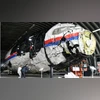 "MH17 crash")
Flight MH17 was en route from Amsterdam to Kuala Lumpur when it was shot down while flying over eastern Ukraine. (Photo/X)


Listen to This Article
The United Nations aviation agency, the International Civil Aviation Organization (ICAO), has ruled that Russia is responsible for the downing of Malaysia Airlines Flight MH17 in 2014. The incident, which occurred in the eastern region of Ukraine, resulted in the deaths of all 298 people on board. The agency’s decision comes after a lengthy dispute brought forward by Australia and the Netherlands, the countries with the highest number of fatalities.
ICAO’s ruling
The Montreal-based ICAO said the claims presented by Australia and the Netherlands were “well-founded in fact and law”, adding that Russia had failed to uphold its obligations under international air law. This marks the first time in ICAO’s history that the Council has made a ruling based on the merits of a dispute between member states.
A statement from the ICAO emphasised that Russia’s actions violated international air law during the downing of Flight MH17 on July 17, 2014. The agency’s council decision adds further weight to the international legal position on the tragedy.
Flight MH17 crash
Flight MH17, a Boeing 777, was en route from Amsterdam to Kuala Lumpur when it was shot down while flying over eastern Ukraine, a region embroiled in conflict between pro-Russian separatists and Ukrainian forces. The attack occurred over the Donetsk region, where Russian-backed separatists were active. Among the 298 victims were 196 Dutch citizens and 38 Australian citizens or residents.
Also Read

 "Indian economy, Indian people, Indian population, union budget 2024")
 "Labourer, farmers, ECONOMY, INFLATION")
 "United Nations")
 "India Pakistan")
 "United Nations Security Council")
The plane was struck by a Russian surface-to-air missile, which experts later identified as being fired from territory held by pro-Russian rebels. This conclusion was supported by an international investigation led by several countries, including the Netherlands, Australia, and Ukraine. Despite this, Russia has consistently denied any involvement in the tragedy.
Call for accountability
Following the ICAO’s ruling, both the governments of Australia and the Netherlands welcomed the decision and called for reparations for the victims’ families. Australian Foreign Minister Penny Wong expressed her country’s support for the ruling, urging ICAO to move swiftly to determine appropriate remedies.
“We call upon Russia to finally face up to its responsibility for this horrific act of violence and make reparations for its egregious conduct, as required under international law,” Wong said in a statement.
Dutch Foreign Minister Caspar Veldkamp echoed similar sentiments, stating, “This decision is an important step towards establishing the truth and achieving justice and accountability for all victims of Flight MH17, and their families and loved ones.”
Veldkamp also emphasised the broader message the ruling sends: “States cannot violate international law with impunity.” Both Australia and the Netherlands are now pushing for Russia to enter negotiations on reparations. The ICAO Council is expected to discuss the form of legal redress in the coming weeks.
Russia’s denial and legal proceedings
Despite the ruling and the mounting evidence, Russia continues to deny its involvement in the downing of MH17. Moscow had withdrawn from negotiations with both Australia and the Netherlands in October 2020 and has refused to extradite the two Russian nationals convicted by a Dutch court in 2022. Those convicted were sentenced to life in prison for their roles in the tragedy, though one individual was acquitted due to a lack of evidence.
Further evidence of Russian involvement emerged in 2023 when a team of international investigators indicated that Russian President Vladimir Putin had personally authorised the supply of the missile that downed the flight. However, the investigation into additional suspects was later suspended due to insufficient evidence.
Road ahead for Australia and the Netherlands
With the ICAO’s decision, both Australia and the Netherlands are now pressing for Russia to be held accountable for the downing of Flight MH17. In the coming weeks, the ICAO will continue deliberating on the next steps, including possible reparations for the victims’ families and legal consequences for Russia.
(With AFP inputs)
More From This Section
 "us china, china us, china flag, us flag")
 "Softbank")
 "Donald Trump, Trump")
 "Trump, Saudi Prince, Trump's Saudi visit")
 "Germany, Germany flag")
Topics : United Nations Malaysia Airlines flight MH17 Malaysia Airlines Ukraine Russia Netherlands Australia BS Web Reports
Don't miss the most important news and views of the day. Get them on our Telegram channel
First Published: May 13 2025 | 1:48 PM IST