


US-Iran conflict: Why have attacks resumed despite peace talk efforts?
A fresh exchange of strikes between the US and Iran has fuelled fears of a wider conflict and disrupted shipping through the Strait of Hormuz. Here's what led to the latest escalation
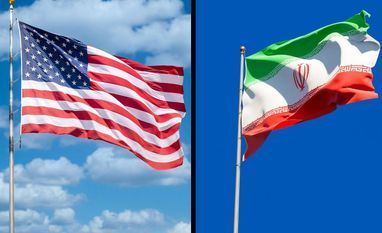 "us iran, us flag, iran flag")
The future of the US-Iran peace deal as of now appears increasingly uncertain | Image: Canva/Free
Listen to This Article
The fragile peace between the United States and Iran has come under stress after Washington launched a fresh wave of military strikes on Iranian targets, prompting swift retaliation from Tehran and raising fears that West Asia could once again slide towards full-scale conflict.
Following the US strikes, President Donald Trump said the memorandum of understanding (MoU) with Iran signed last month was effectively over. His remarks immediately rattled global markets. Brent crude climbed above $78 a barrel, European equities declined and investors rushed to the US dollar amid concerns that renewed fighting could disrupt energy supplies through the Strait of Hormuz and reignite inflationary pressures.
The latest escalation comes despite ongoing peace talks between US and Iran. So, what caused the two sides to resume the attacks?
Why did the US launch fresh strikes on Iran?
The US Central Command (CENTCOM) launched strikes on more than 80 Iranian military targets after three commercial tankers came under attack while transiting the Strait of Hormuz on Wednesday. According to the US military, the operation targeted Iranian air defence systems, command centres, coastal radar installations, anti-ship missile batteries and dozens of Islamic Revolutionary Guard Corps (IRGC) boats operating near the strategic waterway. The US said the strikes were intended to prevent further attacks on international shipping.
Defending the operation, Trump said the US had struck "very powerfully" and described Iran's leadership as "dangerous people".
Also Read

 "Monsoon, India inflation, Consumer Price Index, Food inflation, RBI monetary policy")
 "stock markets")
 "EPFO, Employees' Provident Fund Organisation, Provident Fund")
 "Nilesh Shah, Nilesh, Manthan 2026, Manthan")
 "crude oil, hormuz, persian gulf")
Washington views the attack as a "direct violation" of the MoU, which required Iran to ensure the safe passage of commercial shipping through the Strait of Hormuz while negotiations were underway. Tehran, however, rejected the accusations and instead accused Washington of violating the peace agreement by launching military strikes.
Why did the US reimpose oil sanctions on Iran?
In another blow to the peace process, the United States reinstated sanctions on Iranian oil exports that the MoU had partially waived.
As part of the June 17 agreement, Washington granted Tehran a 60-day waiver allowing it to continue exporting crude oil while negotiations continued. The waiver had been due to expire on August 21. However, the renewed sanctions came into force on July 7 for all new Iranian oil sales.
The US Treasury said cargoes shipped before that date would still be permitted to proceed under a grace period. However, payments from those sales will be held in blocked, interest-bearing accounts instead of being made directly available to Iran.
How did Iran respond to the US strikes?
Iran responded by launching retaliatory missile strikes against US military facilities in Bahrain and Kuwait. According to Al Jazeera, the IRGC claimed it had destroyed 85 US military installations, including facilities at Port Salman, the US Fifth Fleet base in Bahrain and Kuwait's Ali Salem Air Base. The group also claimed to have shot down a US MQ-9 drone that attempted to interfere with the operation.
In a statement, Iran's Ministry of Foreign Affairs said the US military had violated Article 2(4) of the UN Charter by attacking Iranian monitoring and surveillance centres along the country's southern coastline. It added that the strikes also violated Paragraph 1 of the MoU, which required both sides to cease military operations.
The ministry said Iran's armed forces will not hesitate to defend the country's territorial integrity, sovereignty and national security under Article 51 of the UN Charter.
US strikes Chabahar port
The military confrontation intensified further on Thursday when the United States launched fresh strikes on Iran's southeastern port city of Chabahar.
Iranian state media said widespread power outages affected several neighbourhoods. Residents reported hearing multiple blasts as emergency services rushed to damaged areas. The attack marked the first strike on the strategically important port since the US-Iran ceasefire was announced in April.
In a post on X, CENTCOM said the operation aimed to further degrade Iran's ability to threaten freedom of navigation in the Strait of Hormuz. "The United States is holding Iran accountable for recent unjustified aggression against commercial shipping and civilian crews freely navigating a vital international waterway," it said.
How has the renewed conflict affected shipping through the Strait of Hormuz?
According to a Bloomberg report, traffic through the strait slowed sharply on Thursday after the US launched a second consecutive day of strikes on Iran. Most observable vessel movements were concentrated along an Iran-approved route closer to the northern side of the waterway, while the US-backed Omani shipping corridor remained largely inactive.
Only 14 commodity carriers crossed the strait in either direction on Wednesday, the lowest number since the interim peace agreement reached in mid-June. That marks a significant decline from recent weeks. Since the US and Iran reached their interim agreement to reopen the Strait of Hormuz, the average daily number of commodity vessel transits had stood at 34, peaking at 59 on June 24, according to Kpler data.
What does this mean for the US-Iran peace deal?
The renewed exchange of attacks has fuelled fears that the fragile ceasefire could collapse entirely, raising the prospect of another full-scale regional conflict with significant implications for global energy markets.
Speaking at the Nato summit in Turkey, Trump said he believed the MoU was "effectively over". While he said he might still permit negotiations to continue, he argued that further peace talks would be a "waste of time". Trump also warned that the US was prepared to launch additional military strikes after accusing Iran of violating the ceasefire. However, he later suggested that the latest exchange of attacks did not necessarily signal a return to full-scale war.
Iran has taken a sharply different position. In a statement posted on Telegram, Iran's Foreign Minister Abbas Araghchi said the US strikes had rendered key, fundamental elements of the war-ending agreement ineffective. "The US regime, having reneged on its commitments, bears responsibility for the dangerous consequences of this escalation," he said, adding that Washington "still hasn't learned that bullying and breaking promises are no longer cost-free".
With both sides accusing each other of violating the peace agreement and military strikes resuming alongside fresh sanctions, the future of the US-Iran peace deal appears increasingly uncertain.
More From This Section
 "E. Jean Carroll")
 "Traffic ground to a near halt in the Strait of Hormuz on Thursday. Ship clusters can be seen forming, a sign of electronic interference in navigation systems")
 "People board Air Force One carrying U.S. President Donald Trump, en route to Washington after his participation in the NATO leaders' summit")
 "US President Donald Trump arrives for a news conference during the NATO Summit in Ankara,")
 "donald trump, trump")
Don't miss the most important news and views of the day. Get them on our Telegram channel
First Published: Jul 09 2026 | 2:22 PM IST