


US Fed proposes easing bank capital rules to free funds for lending
The Fed's Board of Governors will vote to formally propose the plan Thursday. The FDIC board is holding a concurrent meeting
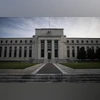 "US Federal Reserve, Fed")
US Federal Reserve (File Photo: Bloomberg)
Listen to This Article
Wall Street lending giants would get relaxed capital requirements under proposals unveiled by the Federal Reserve on Thursday, in a move that could potentially unleash billions of dollars for lending, share buybacks and dividends.
“These changes would strengthen our overall capital framework, which would remain robust under the new regime,” Fed Vice Chair for Supervision Michelle Bowman said in a statement.
The package of proposals, which are subject to a 90-day public consultation before they can be finalized, were crafted by officials at the Fed, in addition to the Federal Deposit Insurance Corp. and the Office of the Comptroller of the Currency.
The Fed’s Board of Governors will vote to formally propose the plan Thursday. The FDIC board is holding a concurrent meeting.
Officials are pitching the landmark package as part of a harmonization of capital. If finalized, these plans — along with moves to ease the enhanced supplementary leverage ratio and overhaul stress tests — would amount to some of the biggest bank-capital rule changes since those enacted following the 2008 global financial crisis.
Also Read

 "US Israel strike Iran")
 "Strait of Hormuz")
 "power, energy")
 "People dressed in traditional attire take part in a procession celebrating 'Gudi Padwa', the Maharashtrian New Year, in Mumbai on Thursday. Photo: Kamlesh Pednekar")
 "south pars gas field")
The proposals, when combined, are expected to result in a “moderate decrease” in capital requirements for some banks, the Fed said in a memo. For the biggest banks, common equity tier 1 capital — the highest quality of regulatory capital — are projected to decrease by 4.8% in aggregate, while midsize banks would see an aggregate reduction of 5.2 per cent.
One part of the package is tied to Basel III, an international accord that is intended to prevent future bank failures and another financial crisis.
Regulators expect that measure would result in a small capital hike for the likes of Citigroup Inc., Bank of America Corp. and JPMorgan Chase & Co. Specifically, the plan would aim to better capture credit, market and operational risks for the largest, most internationally active banks, among other things.
These changes represent a stark shift from a 2023 proposal, which would have forced some Wall Street lenders to hold onto significantly more capital to buffer against potential losses. The earlier Basel III proposal — which included some stiffer mortgage capital requirements — was never finalized amid fierce opposition from the bank industry.
Another part of the package unveiled on Thursday would address the risk-sensitivity for banks by requiring midsize firms to apply a standardized approach and eliminate the current advanced approach.
G-SIB Surcharge
The Fed also unveiled a plan that would adjust the surcharge for US global systemically important banks to see it indexed for changes in the nominal gross domestic product, which officials said would put the buffer more in line with international standards.
That plan also proposes assigning surcharges in increments of 10 basis points rather than 50 basis points.
Fed Governor Michael Barr, who previously served as the agency’s top bank cop, opposed the plans and said significant reductions in capital requirements are “unnecessary and unwise.”
“Today’s proposals, if adopted, would harm the resilience of banks and the US financial system,” Barr said.
More From This Section
 "WTO")
 "Iran war, Tehran, Israel strikes, Iran")
 "Saad bin Sherida Al Kaabi")
 "European Central Bank, ECB")
 "Scott Bessent , Trump's Treasury secretary pick")
Topics : US Federal Reserve United States BS Reads
Don't miss the most important news and views of the day. Get them on our Telegram channel
First Published: Mar 19 2026 | 10:15 PM IST