


Explained: What is Project Vault, Trump's $12 bn critical minerals plan?
The US government has rolled out Project Vault, a $12 billion scheme to stockpile rare earths and critical minerals, aiming to shield American companies from global supply disruptions
 "Donald Trump, Trump")
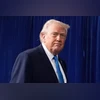
US President Donald Trump (Photo: PTI)
Listen to This Article
US President Donald Trump on Monday announced a $12 billion plan to build a stockpile of critical minerals used in defence, technology and manufacturing. The move is aimed at reducing America’s dependence on China for rare earths and other key metals, Bloomberg reported.
The initiative, called 'Project Vault', was unveiled during Trump’s remarks at the White House. He said supply disruptions have repeatedly hurt American companies.
“For years, American businesses have risked running out of critical minerals during market disruptions,” Trump said. “Today, we're launching what will be known as Project Vault to ensure that American businesses and workers are never harmed by any shortage.”
What is Project Vault?
Project Vault is a public-private partnership that will buy and store critical minerals and rare earth elements. These include gallium and cobalt, which are essential for modern technology and defence equipment. It will combine $1.67 billion in private seed funding with another $10 billion from the US government’s Export-Import Bank.
Cobalt is widely used in rechargeable batteries and in jet engines for military aircraft, making it strategically important.
Also Read

 "Gold-jewellery related stocks zoomed up to 20% on Tuesday after US reduced reciprocal tariffs on India.")
 "India US trade, US import tariffs 2025, reciprocal tariffs India, Indian exporters US, apparel export India, 90-day tariff pause, US India trade relations, export challenges tailor-made goods, US tariff impact India, Indo-US apparel trade")
 "US visa, H4, H1B")
 "India US trade deal")
 "Donald Trump, Trump")
How will the stockpiling system work?
Companies will make an initial commitment to buy materials later at a fixed inventory price. They will also pay some upfront fees. Based on these commitments, companies can give Project Vault a list of the materials they need. The project will then purchase and store those materials.
Manufacturers will pay a carrying cost that covers loan interest and storage expenses.
When can companies access the stored minerals?
Companies will be allowed to use their stored materials as long as they replace what they take out. In case of a major supply disruption, firms will be able to access their entire stockpile, Bloomberg reported.
A key feature of the plan is that companies must agree to repurchase the same amount of materials in the future at the same price. The administration believes this will help reduce price volatility in the market.
Which companies are involved in Project Vault?
More than a dozen companies have already joined the initiative. These include General Motors, Stellantis, Boeing, Corning, GE Vernova and Google.
Three global commodities trading firms -- Hartree Partners, Traxys North America and Mercuria Energy Group -- will handle purchases of raw materials for the stockpile.
How does this fit into US mineral policy?
The US already maintains a mineral stockpile for defence needs, but not for civilian industries. In recent years, the government has also invested directly in domestic mining and processing companies to boost local production.
The administration has signed cooperation agreements with countries such as Australia, Japan and Malaysia. It plans to push for more partnerships during a global summit in Washington on Wednesday (local time).
How is Project Vault similar to existing US stockpiles?
The project is similar to the US Strategic Petroleum Reserve, which stores emergency oil supplies. However, instead of crude oil, Project Vault will focus on minerals.
These minerals are used in products such as smartphones, batteries, jet engines and electric vehicles. The stockpile is expected to include rare earths, critical minerals and other strategically important elements whose prices can swing sharply.
Why is the US pushing this initiative now?
This initiative highlights Trump’s broader effort to reduce US supply chain dependence on China, which dominates the global production and processing of critical minerals.
The minerals are essential for industries such as automotive, aerospace and energy. Supply risks became clearer last year when China tightened export controls on certain materials, which forced some US manufacturers to cut production.
(With agency inputs)
More From This Section
 "nasa, space, moon, usa")
 "Russia, Russia flag")
 "India US side letters, India US trade deal, India US non tariff barriers, India US bilateral trade agreement, side letters trade agreements, India US trade negotiations, resolving NTBs India US, India US free trade talks, non tariff barriers India US")
 "Cuba")
 "Changi airport, Singapore")
Don't miss the most important news and views of the day. Get them on our Telegram channel
First Published: Feb 03 2026 | 11:08 AM IST