


Will China weaponise $760 bn treasury holdings amid tariff tensions with US
Beijing doesn't even need to sell that many US bonds to perpetuate a bear narrative
 "Wall Street")
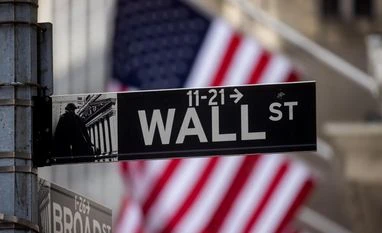
Last week, news broke that the People’s Bank of China added gold to its reserves for a fifth straight month. That prompted frantic buying, with more betting that gold is more attractive than the dollar | Photo: Bloomberg
Listen to This Article
By Shuli Ren
China is done retaliating against US President Donald Trump’s exorbitant tariffs, calling the administration’s actions a “joke” that it no longer considers worthy of matching. The question now is whether President Xi Jinping will find a more potent weapon to strike back at his opponent. Beijing, on Friday, reiterated its vow to “fight to the end.”
One dangerous card that China’s got is its $760 billion holdings in Treasury securities. The country is the US’s second-largest foreign creditor after Japan.
Last week, the 10-year yield jumped by 50 basis points to 4.49 per cent, the biggest weekly surge since 2001. Some of the sharpest moves were occurring during Asian hours, prompting speculation that Beijing was in the market. Will China weaponise and dump its holdings?
Also Read

 "Exports, Export")
 "US China flag, US-China flag")
 "Xi Jinping, Donald Trump")
 "Wall Street")
Treasury Secretary Scott Bessent brushed this fear aside. In a recent interview with Tucker Carlson, he talked about the beauty of being the world’s biggest borrower. “If you take a bank loan, the bank is in charge, they can repossess whatever you borrowed against. But if you take a big enough loan, you’re kind of in charge of the bank,” he said.
While that’s true in a distressed scenario, the dynamic doesn’t quite work here. Trump’s abrupt tariff U-turn exposed the White House’s Achilles’ heel: He blinked and paused hikes on all nations except China — after watching US sovereign bonds tank.
After all, Bessent, who’s now spearheading tariff negotiations, requires a stable bond market to sell into. His department needs to issue roughly $2 trillion in new debt this year, in addition to rolling over about $8 trillion in maturing bonds. Every basis point rise in yield would cost the government around $100 billion.
But that weakness — that the White House doesn’t want a fiscal crisis — gives China an opening. More creative escalations from the administration? No problem, sell some Treasuries when Asia wakes up, and Trump will feel the heat.
Beijing doesn’t even need to sell that many US bonds to perpetuate a bear narrative. It’s logical that foreign nations no longer have to hold so many dollars if Trump is determined to use high tariff walls to turn his country into an economic island.
Already, the greenback is losing some of its dominance in international trade and finance. Its share of global reserves declined to 58 per cent last year from over 70 per cent two decades ago, according to the International Monetary Fund. Trade tensions aside, US Treasuries have not generated stable total returns in recent years, as an indecisive Federal Reserve switches its stance on interest rates.
Last week, news broke that the People’s Bank of China added gold to its reserves for a fifth straight month. That prompted frantic buying, with more betting that gold is more attractive than the dollar.
In other words, in this volatile environment where anti-American, anti-bullying sentiment runs high, it won’t take much for the PBOC to smash the safe-haven status of the US dollar and bonds. Global investors are happy to look elsewhere. Canada’s biggest pension funds, for instance, are eyeing Europe as an alternative, attractive spot for capital.
On X, billionaire hedge fund manager Bill Ackman praised the White House’s tariff U-turn, calling it “brilliantly executed” and “textbook, art of the deal.” That’s smart, publicly stroking Trump’s ego, but also disingenuous. On the contrary, Trump’s chaotic policymaking exposed his core weakness. Now his own backyard is on fire. China will find use for its $760 billion arsenal.
Disclaimer: This is a Bloomberg Opinion piece, and these are the personal opinions of the writer. They do not reflect the views of www.business-standard.com or the Business Standard newspaper
More From This Section
 "office, employees, workers, service industry")
 "Israel Flag, Israel")
 "Pter Magyar, Hungarian leader")
 "Chuck Schumer")
 "Balochistan")
Don't miss the most important news and views of the day. Get them on our Telegram channel
First Published: Apr 14 2025 | 8:47 AM IST