


Has India run out of world-class bowlers?
The Indian bowling was brutally exposed in the ODI series loss to South Africa. Has India actually run out of world-class bowlers
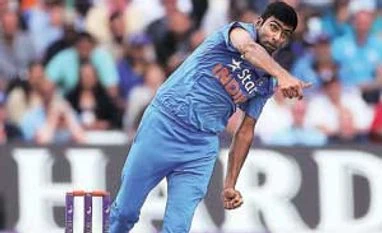 "Ravichandran Ashwin")
For a better part of four hours in Mumbai on Sunday, Francois du Plessis and AB de Villiers dazzled the capacity crowd at Wankhede Stadium with eye-popping strokeplay. For those who've followed their lives, this was almost routine. While studying together at the Afrikaanse Hoër Seunskool in Pretoria two decades ago, du Plessis and de Villiers forged many such partnerships. But then this was no school game. They were up against a heavyweight team playing in its own backyard, on a ground that always evokes sweet memories of a mystical triumph - a ground where it thwarted the world.
But this was all about the Proteas. On show was the artistry of Mark Waugh, the power of Chris Gayle and the acuity of Michael Bevan - an intoxicating cricketing cocktail that is likely to leave the Indian bowlers with a throbbing hangover for some time to come. And, this was after India's bogey man, the baby-faced Quinton de Kock, had pummelled them for yet another hundred. Bhuvneshwar Kumar, India's strike bowler, went for over a hundred in his 10 overs. Amit Mishra, a rare and crafty leg-spinner, was made to look like a club cricketer. This was savagery of a new kind - so crude that de Villiers himself felt a little sorry at the end.
Post-match, Dhoni was questioned for his "unimaginative" bowling changes. To be fair to the Indian captain, he had very little to work with. On a flat Wankhede wicket, Dhoni had at his disposal two medium pacers in Kumar and Mohit Sharma, and three spinners who barely turned the ball in Mishra, Axar Patel and Harbhajan Singh. South Africa, on the other hand, played with three genuine quicks and leggie Imran Tahir who, at 36, looked a whole lot better than all the Indian tweakers on show.
Over the last couple of years, bowling has so often been the Indian team's Achilles' Heel. Even in some of India's glorious victories - both home and away - it's the batsmen who have led the way. Has India run out of world-class bowlers?
"Cricket has become a batsman's game. So, all bowlers tend to struggle," says former Indian coach Anshuman Gaekwad. "But depth in the Indian attack is a problem."
Apart from Ravichandran Ashwin, who excelled in the T20s but missed almost the entire ODI series due to a side strain, no other Indian bowler looked even remotely menacing against the Proteas. The Indian pacers were simply not good enough against batsmen who are used to facing a far superior level of fast bowling.
And, the spinners did little to cover themselves in glory. Unlike Ashwin, Mishra & Co. failed to entice the opposition into making mistakes, bowling flatter and quicker the moment the South Africans starting taking them to task. Former Indian wicket-keeper Nayan Mongia feels that the spinners should have been more patient. "In high scoring games, you have to offer something different. You have to show some more patience. Also, some of the Indian bowling was very predictable," he says.
TWEAKER TROUBLE
Over the years, India has produced some of the finest spinners in the world. The likes of Erapalli Prasanna, Bhagwat Chandrashekhar and Anil Kumble were some of the best exponents of spin during their time. However, the quality of spin has disintegrated in the last few years. Ashwin is the only world-class spinner in the country. And, he too, is often guilty of experimenting too much.
Both Harbhajan and Mishra look over the hill and it is too early to put so much burden on Patel. India's other candidate in this department is Ravindra Jadeja, who has had such a tough, unyielding year that a limited-overs call-up seems a fair while away. All of a sudden, India is bracing itself for an acute spinner crisis.
Former players say that spinners coming through the domestic circuit simply aren't good enough. "The quality has deteriorated in the last few years. That has mainly got to do something with the pitches. Curators generally prepare green tops or flat batting decks," says one former captain. "There is no way spinners can thrive in such situations."
Alongside Ashwin, India need a steady spinner who can strangle the opposition. Leggie Karn Sharma, who has been tried a couple of times in the last year, looks far from the finished article. The selectors must be tempted to pick somebody like Yuzvendra Chahal, who has performed remarkably well in both the Indian Premier League and in the Ranji Trophy for Haryana. Mongia adds that India needs spinners who can attack. "All bowlers will go for runs. But you need people who can pick up wickets."
SEAMER WOES
On a lifeless Wankhede wicket, Kumar and Mohit Sharma were always going to be meat and drink for the South Africans. Both are a handful in seaming conditions but in Mumbai, their limitations were brutally exposed. The ball seldom moved and for most of the game, du Plessis and de Villiers stood and delivered.
That's what makes Umesh Yadav's exclusion from the last two games of the series all the more intriguing. It's no secret that Dhoni prefers to have bowlers in his side who are tidy and help him keep the game in check. Yadav is frantically fast but annoyingly wayward. He has a tendency to go for runs but also picks up crucial wickets - an ability fast becoming rare among Indian bowlers.
That perhaps explains why Varun Aaron has played so little ODI cricket. The Jharkhand pacer can clock high speeds but has failed to win over Dhoni due to his inconsistency. However, India could do with a couple of quick bowlers at the moment. All top teams have one strike player in their ranks that can bowl at blistering pace - South Africa have Dale Steyn, Australia are blessed with Mitchell Johnson and Pakistan can boast of Wahab Riaz.
Gaekwad says that the major problem for the Indian bowlers has been length. "We tend to either go too short or too full. There is absolutely no balance," he says. India has faced the same problem with Ishant Sharma in the past. The lanky Delhi pacer has almost made a habit of bowling short at the death, a tactic that mostly backfires.
"You have to keep things simple at the death. You have to learn to bowl the yorkers. The Indian bowlers just aren't quick enough to be bowling short," says Gaekwad.
But this was all about the Proteas. On show was the artistry of Mark Waugh, the power of Chris Gayle and the acuity of Michael Bevan - an intoxicating cricketing cocktail that is likely to leave the Indian bowlers with a throbbing hangover for some time to come. And, this was after India's bogey man, the baby-faced Quinton de Kock, had pummelled them for yet another hundred. Bhuvneshwar Kumar, India's strike bowler, went for over a hundred in his 10 overs. Amit Mishra, a rare and crafty leg-spinner, was made to look like a club cricketer. This was savagery of a new kind - so crude that de Villiers himself felt a little sorry at the end.
Post-match, Dhoni was questioned for his "unimaginative" bowling changes. To be fair to the Indian captain, he had very little to work with. On a flat Wankhede wicket, Dhoni had at his disposal two medium pacers in Kumar and Mohit Sharma, and three spinners who barely turned the ball in Mishra, Axar Patel and Harbhajan Singh. South Africa, on the other hand, played with three genuine quicks and leggie Imran Tahir who, at 36, looked a whole lot better than all the Indian tweakers on show.
Over the last couple of years, bowling has so often been the Indian team's Achilles' Heel. Even in some of India's glorious victories - both home and away - it's the batsmen who have led the way. Has India run out of world-class bowlers?
"Cricket has become a batsman's game. So, all bowlers tend to struggle," says former Indian coach Anshuman Gaekwad. "But depth in the Indian attack is a problem."
Apart from Ravichandran Ashwin, who excelled in the T20s but missed almost the entire ODI series due to a side strain, no other Indian bowler looked even remotely menacing against the Proteas. The Indian pacers were simply not good enough against batsmen who are used to facing a far superior level of fast bowling.
And, the spinners did little to cover themselves in glory. Unlike Ashwin, Mishra & Co. failed to entice the opposition into making mistakes, bowling flatter and quicker the moment the South Africans starting taking them to task. Former Indian wicket-keeper Nayan Mongia feels that the spinners should have been more patient. "In high scoring games, you have to offer something different. You have to show some more patience. Also, some of the Indian bowling was very predictable," he says.
TWEAKER TROUBLE
Both Harbhajan and Mishra look over the hill and it is too early to put so much burden on Patel. India's other candidate in this department is Ravindra Jadeja, who has had such a tough, unyielding year that a limited-overs call-up seems a fair while away. All of a sudden, India is bracing itself for an acute spinner crisis.
Former players say that spinners coming through the domestic circuit simply aren't good enough. "The quality has deteriorated in the last few years. That has mainly got to do something with the pitches. Curators generally prepare green tops or flat batting decks," says one former captain. "There is no way spinners can thrive in such situations."
Alongside Ashwin, India need a steady spinner who can strangle the opposition. Leggie Karn Sharma, who has been tried a couple of times in the last year, looks far from the finished article. The selectors must be tempted to pick somebody like Yuzvendra Chahal, who has performed remarkably well in both the Indian Premier League and in the Ranji Trophy for Haryana. Mongia adds that India needs spinners who can attack. "All bowlers will go for runs. But you need people who can pick up wickets."
SEAMER WOES
That's what makes Umesh Yadav's exclusion from the last two games of the series all the more intriguing. It's no secret that Dhoni prefers to have bowlers in his side who are tidy and help him keep the game in check. Yadav is frantically fast but annoyingly wayward. He has a tendency to go for runs but also picks up crucial wickets - an ability fast becoming rare among Indian bowlers.
That perhaps explains why Varun Aaron has played so little ODI cricket. The Jharkhand pacer can clock high speeds but has failed to win over Dhoni due to his inconsistency. However, India could do with a couple of quick bowlers at the moment. All top teams have one strike player in their ranks that can bowl at blistering pace - South Africa have Dale Steyn, Australia are blessed with Mitchell Johnson and Pakistan can boast of Wahab Riaz.
Gaekwad says that the major problem for the Indian bowlers has been length. "We tend to either go too short or too full. There is absolutely no balance," he says. India has faced the same problem with Ishant Sharma in the past. The lanky Delhi pacer has almost made a habit of bowling short at the death, a tactic that mostly backfires.
"You have to keep things simple at the death. You have to learn to bowl the yorkers. The Indian bowlers just aren't quick enough to be bowling short," says Gaekwad.

Don't miss the most important news and views of the day. Get them on our Telegram channel
First Published: Oct 31 2015 | 12:25 AM IST