


Movie review: Haider
Haider is a dramatically executed, poignant re-telling of one of Shakespeare's timeless tales
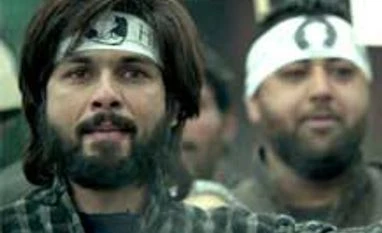 "Haider")
Kashmir in 1995 is Elsinore on the Jhelum in this stunning, blood-drenched Vishal Bhardwaj adaptation of Shakespeare’s Hamlet. Something is infinitely more rotten in that state than in the Bard’s Denmark. And if you see one movie in any language a year or a decade, Haider is the one you must see.
The plotline of a grief-crazed son seeking revenge for his father murdered by his adulterous mother and uncle is familiar worldwide and reworked countless times. It is intact here, in a marvellously original and gripping fashion. Basharat Peer, a Kashmiri journalist who wrote the haunting Curfewed Nights, collaborated with Bharadwaj on the screenplay and the result is electrifying. Kashmir is as much a conflicted protagonist here as the eponymous hero.
The Shakespearean prince is a poetry student at Aligarh. He returns to Kashmir when his father, a gentle humanitarian doctor ‘disappears’ as thousands did at the height of insurgency. The film narrates the rapid descent of the hero and the state into madness to the fated tragic conclusion. The dramatis personae Haider/Hamlet, Ghazala/Gertrude, Hilal/Hamlet the father, Arshia/Ophelia, Khurram/Claudius and Parvez/Polonius carry the plot forward. The ghost turns into a shadowy but real character, Roohdar, a particularly ingenious twist. Two minor characters, Rosenkrantz and Guildenstern, Hamlet’s buffoonish friends who spy on him, turn up in the films as Salman and Salman, doing the same thing. Bhardwaj no doubt took added inspiration from Tom Stoppard’s witty modern classic, Rosenkrantz and Guildenstern are Dead (1968).

The movie is a visual treat. It does not showcase the Kashmir of countless Bollywood songs. Instead its heart-breaking, desolate beauty slowly unfolds before us, moving inexorably from the colourful autumn of dying chinar leaves to the merciless winter snowscape. The rejuvenating spring is not anywhere in sight. The setting is perfect for the sombre tale.
So is the music. Bhardwaj himself composed the background score and the songs (he even sang the boatman’s Jhelum ode, reminiscent of the great Sachin Dev Burman and Bhupen Hazarika numbers). He uses local melodies and instruments to create a tonal image that lingers long after one leaves the cinema. Gulzar’s words shine like jewels set in gold. The extraordinarily choreographed Bismil Bismil number against the backdrop of the ruins of the Avantipura Sun temple narrating the story of the treachery (the equivalent of the play enacted in Hamlet) is the best such composition I have seen and heard in a lifetime of watching Indian films.
The dialogues, the work of Bhardwaj again, not only capture the Kashmiri idiom, but are also delivered crisply with local intonation.
The ensemble cast gives a pitch-perfect performance. Veterans Irrfan (Roohdar), Kay Kay Menon (Khurram) and in a brief but telling appearance, Kulbhushan Kharbanda are their usual professional best. The surprises come in the form Narendra Jha as the gentle Dr Hilal and Shahid Kapoor as Haider, in by far the best role of his career.
But the women outshine even these luminous pieces of acting. As Ghazala, Tabu, our finest actress by a long chalk, conveys more grief and guilt decked out as a bride second time around through just her eyes and expression than other actresses would with reams of sentimental, teary speeches.
The real discovery, though, is Shraddha Kapoor as Arshia, an intrepid newspaper woman on the outside, a fragile and innocent waif at heart. Shakespeare obviously did not imagine her as the perfect Ophelia 400 years ago, but Bhardwaj most certainly made a serendipitous choice.
Peer’s moulding the narrative to fit the classic play seamlessly into the contemporary Kashmir reality is brilliant. But the use of what is essentially a revenge drama studded with violent scenes to deliver a stunningly effective message against vengeance is nothing short of genius. The Kharabanda character says to street demonstrators early on in the film that revenge begets more revenge, and the true aazadi lies in freedom from revenge. Ghazala repeats this to her revenge-crazed son in the climactic scene. That is Bhardwaj’s true achievement in this most polished re-telling of Shakespeare’s timeless tales. It should rank as equal to Akiro Kurasawa’s Throne of Blood (Macbeth) and Ran (King Lear).
Bhardwaj must surely be our leading auteur, given his œuvre and mastery of all aspects of film craft. And certainly the release of this masterpiece on the birth anniversary of the apostle of non-violence who wanted India to foreswear vengeance is no coincidence!
Don't miss the most important news and views of the day. Get them on our Telegram channel
First Published: Oct 04 2014 | 12:14 AM IST