


HDFC Life March quarter: Guidance of premium growth offers confidence
Analysts' target price tops Rs 600
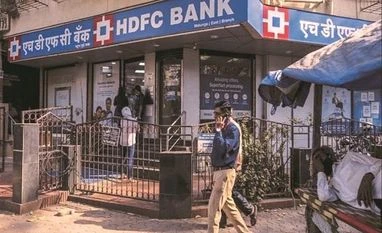 "HDFC bank")
HDFC.


HDFC Life declared results that were slightly better than the consensus, but in line with most expectations. It reported 17 per cent YoY growth in Annualised Premium Equivalent (APE) in FY22 to Rs 9,760 crore and 22 per cent YoY growth in Value of New Business (VNB) to Rs 2,680 crore (standalone).
Net premium is Rs 45,396 crore for the FY2021-22, versus Rs 38,122 crore (2020-21). Income from investments was Rs 19,215 crore versus Rs 32,677 crore in 2020-21. The VNB margin for FY2021-22 stood at 27.4 per cent (130 bps rise YoY) versus 26.5 per cent for the first three quarters indicating the rise in the Q4. The two-year CAGR of 17 per cent in RWRP, (Retail-weighted received premium) is almost double the 9 per cent CAGR for the industry and higher than 14 per cent CAGR ex-LIC. The merger of Exide Life is expected to be completed in 2022-23 according to the management guidance.
The standalone operating RoEV (without Exide) in FY22 was 16.6 per cent which shows a decline from 19.1 per cent last year, negative 2.5 per cent impact from excess mortality on account of Covid-19. The EV for FY2021-22 stood at Rs 30,050 crore after paying out Rs 726 crore in cash to Exide Life promoters in the acquisition. The Return on Embedded Value (RoEV) for FY2021-22 stood at 16.6 per cent. If we exclude the impact of Excess Mortality Reserve, the RoEV was 19 per cent, around 50 bps higher than the previous year.
The solvency margins stood at 176 per cent, a fall from 190 per cent after the first three quarters and lower than 201 per cent for 2020-21. Adjusting for the cash payout to Exide Life promoters, accounts for about 13 per cent of the decline. Another 11-12 per cent of the dip was due to excess mortality charges of Rs 650 crore due to Covid-19. If these two factors are adjusted, the solvency ratio seems reasonable.
The board has approved a proposal to raise up to Rs 350 crore in non-convertible debentures (NCD) – this will boost the solvency ratio by 6 per cent. The management remains open to raising more capital via a mix of debt and equity. The targeted solvency ratio for 2022-23 is 180 per cent which would be achieved if the NCD issue is made.
The guidance was confident about achieving APE growth at a rate that was twice the real GDP growth. As per management, the HDFC-HDFC Bank merger should increase the scope for cross-selling and maybe some cost reductions. The market value to Embedded Value ratio would be roughly 4x – more if we consider HDFC Life standalone without Exide Life. That’s higher than SBI Life (roughly 3.5x) and ICICI Prudential Life (2.6x).
In terms of sequential trends, Individual Protection APE of Rs 155 crore was up 64 per cent QoQ in Q4, but down 9.7 per cent YoY. Other parts of individual segments like Annuity, Par and Non-Par Savings rose 20.5 per cent, 20.5 per cent and 15 per cent QoQ, respectively. But Group business was sluggish, growing 2.5 per cent QoQ.
The merger would mean that the entire 47 per cent stake of HDFC Limited in HDFC Life would be transferred to HDFC Bank. Sebi approval has been sought to take the stake of HDFC Bank in HDFC Life to 50 per cent. The management cautiously welcomed the LIC IPO, pointing out that the average ticket size/ policy for HDFC Life is 4x that of LIC.
The stock has been flat after results. At the current price of Rs 547, there could be a decent upside if analysts’ targets of Rs 605 (12 months) or Rs 690 (June 2023) are achieved.