


Life after lockdown: 3 new ways to shop - distance, distance, and distance
The last of a three-part series looks at how retailers and e-tailers are doing business amid the Covid-19 pandemic
 "fmcg, grocery, supermarket, shopping")
premium
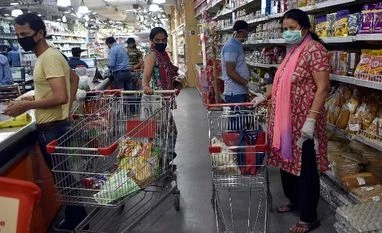
Raj Mandir Hyper Market Rajapuri in New Delhi (Photo-Dalip Kumar)
Gone are the days when home delivery meant a man handing over a package, sometimes with a smile, into the hands of the person answering the door. Delivery boys now keep a distance, place the package outside the door, keep well away, and exchange fleeting masked glances in a ‘contactless’ delivery.
If there is one sector that has been swift to adapt to change, it is e-commerce and retail. “The interface with customers is high in retail. Retailers and e-tailers have been left with no choice but to introduce changes quickly to survive,” said Arvind Singhal, chairman, Technopak.
Running essential services, no matter how constrained during the lockdown, has helped retail and e-commerce majors prepare themselves for the road ahead. They are accustomed to deep cleaning and sanitization of hubs, shop floors, high-contact points, and cash counters.
Thermal screening of staff and customers happens at all entry and exit points of stores and fulfilment centres. Employee hours are staggered. Shoppers have fixed time slots, and delivery boys and shop floor executives are getting digital training.
Amazon has made around 100 small to large changes ranging from using personal protective equipment, doing regular temperature checks, and changing the way items are picked, packed and bagged to ensure a minimum two-metre distance. Only one person is allowed to load or unload products at any given time. The arrival of drivers and delivery associates has been staggered to avoid crowding.
At Flipkart’s fulfilment centres and hubs, hand hygiene, temperature checks. and personal protective equipment have also become the norm. Hub employees, security personnel, and Flipkart delivery executives have to ensure their centres are thoroughly cleaned before heading out to deliver essentials. Innovative tie-ups with Meru and Uber for last-mile delivery have been started.
If there is one sector that has been swift to adapt to change, it is e-commerce and retail. “The interface with customers is high in retail. Retailers and e-tailers have been left with no choice but to introduce changes quickly to survive,” said Arvind Singhal, chairman, Technopak.
Running essential services, no matter how constrained during the lockdown, has helped retail and e-commerce majors prepare themselves for the road ahead. They are accustomed to deep cleaning and sanitization of hubs, shop floors, high-contact points, and cash counters.
Thermal screening of staff and customers happens at all entry and exit points of stores and fulfilment centres. Employee hours are staggered. Shoppers have fixed time slots, and delivery boys and shop floor executives are getting digital training.
Amazon has made around 100 small to large changes ranging from using personal protective equipment, doing regular temperature checks, and changing the way items are picked, packed and bagged to ensure a minimum two-metre distance. Only one person is allowed to load or unload products at any given time. The arrival of drivers and delivery associates has been staggered to avoid crowding.
At Flipkart’s fulfilment centres and hubs, hand hygiene, temperature checks. and personal protective equipment have also become the norm. Hub employees, security personnel, and Flipkart delivery executives have to ensure their centres are thoroughly cleaned before heading out to deliver essentials. Innovative tie-ups with Meru and Uber for last-mile delivery have been started.