


The political opportunism of Congress MP Sanjay Nirupam
State govt subsidises power for rest of Maharashtra but leaves mumbai out of the subsidy net
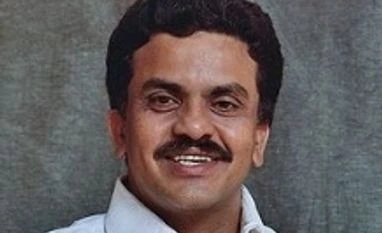)
Sanjay Nirupam
Congress MP Sanjay Nirupam needed an Arvind Kejriwal to tell him that power tariffs in Maharashtra are high. He along with Priya Dutt, another Congress MP from Mumbai decided to voice their concern for people of Maharashtra against their own government in the state just before elections are due.
Maharashtra's Chief minister Prithviraj Chauhan obliged by reducing power tariffs across the state by 20 per cent but omitted Mumbai from it, much to their dismay. While the govt's move will cost the state an additional Rs 7,272 crore per annum in subsidy over and above the existing subsidy of Rs 11,500 crore, the two Congress MPs have little to show for their effort in their constituencies.
Having nowhere to go they decided to sit on a hunger strike in front of Reliance Infrastructure's office. Reliance Infrastructure is one of the three power distribution companies in Mumbai, the other two being Tata Power and BEST (Brihan Mumbai Electric Supply & Transport).

What prevented them from protesting in front of the offices of the other two companies? Two reasons, one being that Reliance Infrastructure is the main electricity supplier in their constituencies (North Mumbai) and the other, Reliance Infrastructure is the costliest supplier of the three companies.
While Tata Power and BEST rates are comparable, Reliance Infrastructure is by far the costliest amongst the three. According to the website www.wotsmybill.com, for a residential consumer in Mumbai who consumer 300 units of power every month, his bill under Tata Power would be Rs 1409.49 while Reliance Infrastructure would charge Rs 2016.19. While the per unit rate for Tata Power is Rs 1.05 for first 100 units of consumption, Rs 2.5 for 101-300 units, the same is Rs 2.96 and Rs 5.56 for Reliance Infrastructure consumers respectively.
Clearly Nirupam has a point in protesting against high rates charged by Reliance Infrastructure. However, what needs to be noted is that power distribution companies have a natural monopoly in the areas they have a distribution network. It is only over the last few years that Tata Power is selling power in Reliance Infrastructure's area after they have been allowed to do so.
But Tata Power also has to pay a rental to Reliance Infrastructure apart from taking into account 9.9 per cent per unit per consumer for losses on wheeling network of Reliance Infrastructure. Thus for a consumer of Reliance Infrastructure, if he decides to use Tata Power as the provider, he will be billed for 329.7 units though he consumes 300 units. The above mentioned difference of 30 per cent in bill amount is after taking into account the additonal charges.
There is nothing stopping consumers of Reliance Infrastructure to move to Tata Power and reduce their bill by 30 per cent. Rather than sitting on a hunger strike, Nirupam would do a lot of good to his constituency if he highlights this differential.
So why is Reliance Infrastructure charging higher per unit charge. The company does not have enough generation capacity of its own to meet the consumer demand. The company has a power generation unit at Dahanu on the outskirts of mumbai through which it supplies power and the remaining units is bought from Tata Power. The rate that it charges is the blended rate of its own generation and what Tata Power charges the company. In that case does Tata Power charge Reliance Infrastructure higher rates, which would mean Nirupam shifting his camp to the former.
There is no need for Nirupam to shift his camp to Tata Power because the company supplies at rates that are governed by MERC (Maharashtra Electricity Regulatory Commission).
Nirupam has been asking Reliance Infrastructure to drop fixed charges of Rs 100 per bill and regulatory asset Charge (RAC) of Rs 600. Both these rates are again fixed by MERC and not Reliance Infrastructure. In fact these rates are common for all distribution companies. Will he then have to shift his camp to MERC then?
MERC fixes these rates after auditing and taking into account presentation of all the companies. Like in the case of Delhi Power companies and Kejriwal, it is the government who will have to subsidise power tariff below the regulator rates.
Someone needs to tell Sanjay Nirupam and Priya Dutt that they are protesting at the wrong door, before it's too late.
It is only Prithviraj Chavan who can give them deliverance in a crucial election year.
Don't miss the most important news and views of the day. Get them on our Telegram channel
First Published: Jan 24 2014 | 4:36 PM IST