


IIT-Bombay to build on its global linkages
To raise the bar on international collaborations to boost research quality
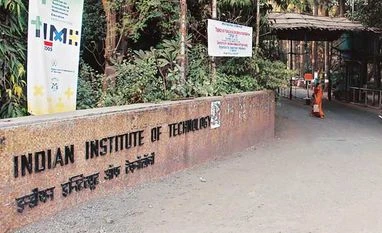 "IIT-Bombay to build on its global linkages")
The Indian Institute of Technology, Bombay (IIT-B) is clearly ahead of its peers in terms of international presence. However, this is not enough to be globally competitive as the Quacquarelli Symonds (QS) World University Rankings 2016/17 - where its ranking fell from 202 last year to 219 - shows.
IIT-B has 23 international faculty and 65 foreign students. The institute also has 25 memoranda of understanding (MoUs) with global institutions with 1,430 papers having been published in national and international journals in 2014-15.
These figures, however, appear too small compared to good foreign institutes. Sample this: IIT-B scored 54.7 in terms of academic reputation in the recent rankings, which was higher than IIT Delhi (47.2) and IIT Madras (41.1). But, it was nowhere near even the 12th ranked National University of Singapore, which scored 100.
ALSO READ: IIT-Kanpur steps up visibility
Reputation matters in case of higher education institutes as they attract more foreign faculty and students to their campuses. Diversity on campus is regarded not only as the direct result of quality education and high reputation across academic groups in other countries, but it also enhances the employability of students by way of exchange of ideas, experiences and culture. And, it is around this diversity that IIT-B is weaving its game plan to improve its rankings and global reputation going forward.
"We as an institute are taking a number of steps to improve the quality of education and research. While we don't focus on rankings, per se; these steps will contribute to higher rankings," says Devang Khakhar, director of IIT-B. According to him, the reason why the institute's ranking in the QS Rankings has fallen is because others improved faster than IIT-B.
Other institutes improved immensely in the overall research space, says another professor. "While the number of doctoral degree holders are seeing a rise every year, others have seen a higher rate of growth in these numbers as well as in the international papers published. We are working on that."
IIT-B's annual report for 2014-15 says the institute has been increasingly assigning "significant value to its relationships with various international partners".
Spread over 200 hectares of land at Powai, the IIT-B campus is situated in picturesque surroundings with the Vihar and the Powai lakes on either side and green hills around it, making it one of the favourite destinations for recruiters and international collaborators.
Its foreign linkages go a long way back. Established in 1958, IIT-B was the first to be set up with foreign assistance. The funds from UNESCO came as Roubles from the erstwhile Soviet Union. Later, in 1961, Parliament recognised IITs as 'institutes of national importance'.
"We are trying to bring in more international faculty by way of visiting and adjunct faculty schemes," says an IIT-B spokesperson.
Apart from consolidating on its international linkages, the institute would focus on enhancing research. This year, it awarded 325 PhD degree, compared with 230 PhD degrees last year and 227 the year before.
As many as 128 Indian patents were filed during 2015-16, against 72 in 2014-15 and 61 in 2013-14. Another major step IIT-B plans to take is to boost funding for research. The institute, which has 15 departments, 17 centres and four interdisciplinary programmes, received Rs 255.07 crore for research and development (R&D) in 2015-16, of the total grants worth Rs 515.06 crore received from the government.
What could facilitate this growth in future as well is the rate at which these funds are flowing in. According to its annual report for 2014-15, during the last five years, IIT-B's R&D receipts grew at a compounded annual growth rate of 19 per cent, with the same standing at Rs 243 crore in FY15. While some steps are being taken in the right direction, there are still areas of concern for the institute to deal with. During 2014-15, IIT-B signed 25 MoUs with various foreign universities and received governmental delegations from across the globe for exploring areas of collaboration and cooperation.
Such research activities and collaboration are supported by a healthy number of faculty members on campus. Currently, IIT-B has a faculty-student ratio of 1:16, with 155 faculty members for 2,515 students graduated from the institute this year. Softer aspects such as gender diversity are also a focus for the institute. According to its spokesperson, the male-female ratio is increasing for the Masters and PhD programmes at IIT-B. The undergraduate ratio fluctuates, but it still shows an increase.
Institutional ranking depends on the facilities that are available. Ben Sowter, head of research at the QS Intelligence Unit, attributes Indian institutions' poor performance to factors such as relatively low numbers of PhD-qualified researchers and low international faculty ratio, among others. A well-suited, modern and sufficiently efficient infrastructure and a work culture lead to high-impact research and training.
EYEING FUTURE
-
Taking steps to improve the quality of education and research
-
Looking at a balanced male-female ratio
-
Trying to bring more international faculty
- Looking at having better infrastructure

Don't miss the most important news and views of the day. Get them on our Telegram channel
First Published: Sep 20 2016 | 12:25 AM IST