


PM warns BRICS about monitoring, managing hot money
Exhorts member countries to switch to new competition policies
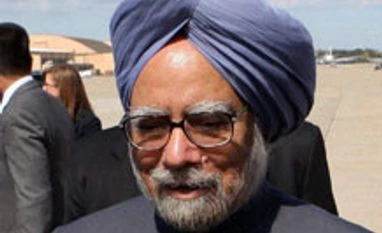)
Manmohan Singh
Prime Minister Manmohan Singh today cautioned members of the BRICS bloc against volatility of portfolio investments, often accentuated by speculations over tapering of quantitative easing by the Federal Reserve these days.
Inaugurating BRICS International Competition Conference here, he slammed legislative and fiscal policies that shield public sector enterprises from the market forces and exhorted the member countries to switch to new competition policies that free these firms from red-tapism.
"We face common challenges of monitoring and managing speculative capital flows. It is a challenging task in times of global uncertainty," he said.
Also Read

Capital markets worldwide, particularly in emerging market economies, witness huge volatility as soon as talks of tapering of quantitative easing begin.
While most analysts believe that upcoming Federal Reserve Chairman Janet Yellen might not opt for tapering soon, they also think that the programme of $85 billion bond buying a month cannot be continued indefinitely.
The Prime Minister also attacked the present policies of giving leeway to public sector companies over private players simply because the sovereign owns it.
"By virtue of their ownership, they have been shielded from competition and for long enjoyed captive markets," he said.
He said the crucial issue is the exposure of these firms to increased competition.
"Government may hold public sector firms and exercise the normal rights and ownership but it does not mean that it should shelter these firms from competition as well," Singh said.
Unfortunately, ownership inevitably leads to bureaucratic style of decision making, resulting in making these enterprises uncompetitive in markets.
He said the solution lies in giving public sector firms greater financial autonomy and free them from bureaucratic controls.
Pointing out that each of the five nations is equipped with advantages, the Prime Minister said India is poised to be most significant exporter of services.
Singh said BRICS nations have two crucial agreements in the pipeline-- to set up a development bank and contingency reserve arrangement.
Don't miss the most important news and views of the day. Get them on our Telegram channel
First Published: Nov 21 2013 | 12:16 PM IST