


India to counter China's stance at RCEP talks
Govt to pitch specific levels of tariff reduction for China, different from those offered to all other nations at upcoming ministerial meet
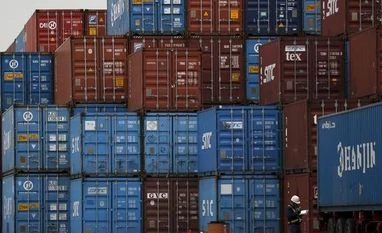 "India may isolate China in trade bloc talks")
India is set to go on the offensive against China at the upcoming negotiations on the Regional Comprehensive Economic Partnership (RCEP) agreement.
The meeting of trade ministers from the 16 participant countries, to be held in the Philippines on November 4, might see India offer a specific level of tariff reduction solely for China apart from the common one aimed at all other nations, a senior government official said.
The RCEP is a proposed free trade agreement (FTA) between the 10 countries of the Asean (Association of Southeast Asian Nations) and six others with which this bloc has FTAs — Australia, China, India, Japan, South Korea, and New Zealand. Negotiations, which formally began in end-2012, have progressively become more complicated after 15 rounds and four ministerial meetings.
At the last ministerial in Laos held in August, India had made its boldest move so far by shifting its long-held stance of a three-tiered, differential levels of tariff reduction to a single one applicable to all the RCEP members.

However, with the move yet to pay off, India is now mulling a two-pronged approach on which it expects to round up support from all other nations and in the process isolate China.
India has a goods trade deficit with China that has ballooned from $1.1 billion in 2003-04 to $52.7 billion in 2015-16. The domestic steel and heavy industries sectors have been apprehensive that China may use the RCEP to try and gain more market access in India even as it remains unwilling to import more.
The government had reason to believe other RCEP nations shared the same concerns and would support India’s position, an official said. To this end, the number of tariff lines offered for reduction as well as the phase-out period would be different for China, another official added.
The period for phasing out tariff lines for imports from China could be 20-30 years, as it is essential to ensure Indian industry has enough time to improve its competitiveness.
The RCEP nations will deliberate on finalising the maximum number of goods on which duties will either be eliminated or reduced drastically. Prior to the ministerial meet, chief negotiators and senior officials of all the 16 countries will discuss the entire gamut of issues on November 3.
Under deviations, India may propose a longer duration for either reduction or elimination of import duties for such countries.
For India, the RCEP presents a decisive platform to influence its strategic and economic status in the Asia-Pacific region. Expected to be the largest regional trading bloc in the world, accounting for nearly 45 per cent of the global population with a combined gross domestic product of $21.3 trillion, it will also bring the biggest economies of the region into a regional trading arrangement.
Launched in 2012, the original target of concluding a deal was by end 2015. However, member nations have managed to only submit initial offers for trade in goods and services apart from initial reservation lists for investment. The issue of tariff reduction had then taken hold.
Commerce & Industry Minister Nirmala Sitharaman had said last month that a departure from the earlier stance represented a normal progression in the negotiations since no other nation was on board with the idea. She added countries were looking towards a list of common concessions with minimum deviation with regards to some items.
Under the previous plan, the 10 countries that are part of Asean were being offered up to 80 per cent tariff liberalisation.
Of this, 65 per cent elimination of tariff was to come into force immediately upon completion of the agreement. Another 15 per cent tariff elimination was to happen over 10 years. In the second tier, India offered 65 per cent tariff elimination to South Korea and Japan, with whom it has free trade agreements.
Similar levels of tariff reduction, if finalised, are expected to hurt India the most as it has a relatively higher tariff regime. This has always forced India to reduce tariffs much more than partner nations.
Don't miss the most important news and views of the day. Get them on our Telegram channel
First Published: Nov 01 2016 | 10:21 PM IST