


Locals oppose NPCIL's Chutka n-power project
Most of the tribals living here were displaced by the Bargi Dam in 1984 and struggle to survive as marginal peasants
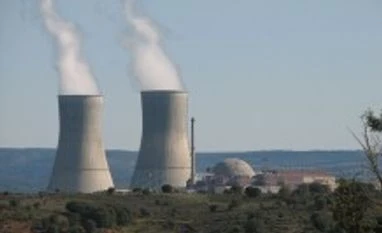 "Locals oppose NPCIL's Chutka n-power project")
A nuclear power project at Chutka village in tribal-dominated Mandla district is facing stiff opposition from villagers of the region.
Sanctioned in 2009, to be developed by Nuclear Power Corporation of India (NPCIL), the area in question (villages of Chutka, Tatighat, Kunda and Manegaon) is predominantly of Gonds, a scheduled tribe, and experienced an earthquake of 6.7 on the Richter scale in 1997. Most of them, they say, were displaced by the Bargi Dam in 1984 and now survive as marginal peasants and farm labour.
Supported by anti-nuclear power activists, the villagers now plan another spell of protests against the proposed project from the last week of this month. They say they are not ready to lose another part of their lives in a frustrating resettling process. Also, this land is highly fertile, with rich fishing sites at the Bargi dam reservoir in proximity. Being also near the Kanha tiger reserve, there is some additional income from tourists in winter.

‘No way’
The villagers have kept launching protests and disruptions against the district administration’s effort for initial surveys to acquire land, since 2013. Gram sabha resolutions (copies are available with Business Standard) of each village panchayat in January last year had rejected the proposed project and put a stringent 26 conditions before giving any consent to government demand for their land.
“They pay a deaf ear to us. What will we do with what they are offering, just Rs 3 lakh to an acre? They had deployed heavy police during the Jan Sunwai (public hearing) on one occasion and we were not allowed to speak. We will not compromise with less than Rs 60 lakh per acre (compensation) and five acres of land to each adult member of an affected family,” says Dadulal Kurapey, head of the Chutka Parmanu Sangharsh Samiti, opposing the project for years.
The women here speak similarly. “We want jobs in the project to at least one member of each affected family, a portion of income from the project, income tax exemptions, no duty on registration of new land and free building material supply for construction of houses at the relocation site,” says Meera Bai, who organises women here if any outsider tries to enter. She lost her husband, cultivable land and house to the Bargi dam project and is an active member of the Samiti, “We will not allow the Parmanu (nuclear power plant) to come up here unless our 26 demands are met. Fulfill our demands or we lay our lives for our lands. It is our only source of livelihood.”
However, the state government has moved ahead to an irreversible stage. “The acquisition has taken place in accordance with the (central) Act of 2013. An award has been passed to acquire 287 hectares. Each affected family will be given Rs 5 lakh in a lump sum, beside a livelihood grant, transportation and rehabilitation grant. A special package of Rs 25 crore will be given to them, in addition to Rs 40.77 crore on the land acquisition package,” said Lokesh Jatav, district collector, when asked why an award was passed when gram sabha resolutions had rejected the project.
Members of neighbouring villages also say they have no clue as to what they’d do after relocation. “We have no other way to make a living than fishing. What will fishermen do if relocated to dry land?” asks Shyam Lal Barman, head of a fishermen cooperative in Tatighat.
“We are already displaced from the Bargi dam project. They did not compensate properly in the early 80s — no agriculture land and a few plots for housing. We were promised development but are living in the dark (there is no electricity, too). Now, they want to take away our houses. Where will we go now? Should a government keep on chasing a few citizens for their entire life in the name of development?” asks Navratan Dubey, an active non-tribal member of the Chutka Parmanu Sangharsh Samiti and a resident of Tatighat village. He says he’s planning to move court.
“It is in contrast to the fact that the Panchayats (Extension to the Scheduled Areas) Act, 1996, has vested all rights on deciding developmental activities to the gram sabhas,” said Rajkumar Sinha, a member of the Bargi Visthapit Sangh, fighting for the rights of oustees of the Bargi dam project.
It is Safe, say state agencies
NPCIL, the National Environmental Engineering Research Institute, Nagpur, and Jawaharlal Nehru Krishi Vishwavidyalaya, Jabalpur, said the project site was “safe” for humans, flora and fauna in terms of radiation and on the charge of its being disaster-prone for falling in a sensitive seismic zone. “In the case of an earthquake, the power plant would automatically be tripped and nuclear fusion will be stopped. It should not be compared with that Fukushima (Japan) incident, which had other issues like floods,” a well-placed official in NPCIL told Business Standard.
An environmental impact assessment report filed by the corporation says the project is in a low seismic activity zone and is benign for the environment. Also, it is techno-economically viable and sustainable. “The design will restrict the radiation dose to members of the public to 0.11 milli-Sieverts (mSv)/year, much lower than the Atomic Energy Regulatory Board permitted dose of 1.0 mSv/year,” the NPCIL report says.
What price?
Anti-nuclear experts do not agree. “The claims are absurd. Even after decommission (the project is to be decommissioned after 40 years), radiation effects remain prevalent for another 100 years. Unfortunately, the track record of the nuclear industry is that it works in a non-transparent manner, as there is no regulator to supervise. There need to be independent regulators if we have to make claims on having safe nuclear energy. Also, it falls under a highly sensitive seismic zone. There are a number of studies worldwide which reveal that working nuclear power plants are hazardous for human lives. Not only NPCIL, but globally, nuclear power plant proponents underestimate geological facts,” Says P Kumar Sundaram, a consultant with the Coalition for Nuclear Disarmament and Peace.
The project will have two units of 700 Mw each. Pressurised heavy water reactors would cost Rs 16,550 crore (estimated) and are likely to be started by 2021. It would be decommissioned in 2061. It would produce power at Rs 2.70 a Kw. “We will see if the protests take an ugly turn,” says Dayal Singh Kokadia, sarpanch of Patha village, whose gram sabha also rejected the project.
UPROAR AGAINST NUCLEAR PLANT
- 1,400-Mw nuclear plant, sanctioned in 2009, is to be developed by NPCIL
- Residents of villages of Chutka, Tatighat, Kunda and Manegaon, where the plant will come up, are predominantly of Gonds tribe
- Villagers say, they were displaced by the Bargi Dam in 1984
- Lands in these villages are highly fertile,villagers say
- Villagers have kept launching protests against administration’s effort for initial surveys to acquire land, since 2013
Don't miss the most important news and views of the day. Get them on our Telegram channel
First Published: Nov 07 2015 | 10:08 PM IST