


SME preparedness: Fines may show way to GST in Panipat textile industry
Panipat is the biggest centre for shoddy yarn in the world
 "protest against the GST, textile")
premium
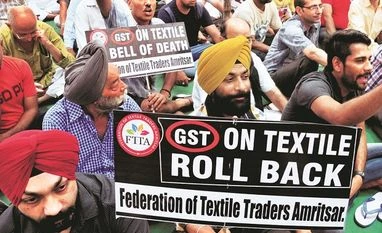
Local traders raise slogans to protest against the GST during a day-long strike in Amritsar on Tuesday Photo: PTI


Sarvesh Kadiyan, a small-time textile manufacturer in the dusty industrial complex of Panipat, had an animated conversation with a chartered accountant (CA) last week. Kadiyan was looking for clarity on the goods and services tax (GST) set to roll out on July 1. The CA told the businessman to “wait till someone penalises you for non-payment of GST”.
For a majority of the 1,500 odd manufacturing units in the area, finding the right guidance seems to be quite a task.
“It was funny; my CA told me he does not know much. According to him, as the roll-out begins on July 1, a lot many people who are equally unaware would start getting fined by taxation authorities for non-compliance,’’ Kadiyan said. Once penalties are imposed, one would get clarity on what is allowed or not allowed in the new tax regime, he added.
Panipat is the biggest centre for shoddy yarn in the world. Anything and everything related to textile is manufactured in this city, a base for the Rs 40,000-crore industry including exports.
But, the size and scale of the industry is not helping businesses when it comes to GST. And, many of the small and large manufacturers have now decided to ‘go with the flow’. In fact, some found similarities to the situation when demonetisation was enforced in November 2016.
“During demonetisation, every day, we got to hear of new rules and we modified the business accordingly. From July 1, we would do the same. The way the rules come out and the way the tax officials, CA and lawyers tell us to function, we will work accordingly,” said Bhim Rana, president, Panipat Dyers Association.
For a majority of the 1,500 odd manufacturing units in the area, finding the right guidance seems to be quite a task.
“It was funny; my CA told me he does not know much. According to him, as the roll-out begins on July 1, a lot many people who are equally unaware would start getting fined by taxation authorities for non-compliance,’’ Kadiyan said. Once penalties are imposed, one would get clarity on what is allowed or not allowed in the new tax regime, he added.
Panipat is the biggest centre for shoddy yarn in the world. Anything and everything related to textile is manufactured in this city, a base for the Rs 40,000-crore industry including exports.
But, the size and scale of the industry is not helping businesses when it comes to GST. And, many of the small and large manufacturers have now decided to ‘go with the flow’. In fact, some found similarities to the situation when demonetisation was enforced in November 2016.
“During demonetisation, every day, we got to hear of new rules and we modified the business accordingly. From July 1, we would do the same. The way the rules come out and the way the tax officials, CA and lawyers tell us to function, we will work accordingly,” said Bhim Rana, president, Panipat Dyers Association.