


Visa, Mastercard may be allowed a share of India's online payments
Growing from nothing in 2016, the smartphone-based UPI - a public utility - handled nearly Rs 13 trillion ($160 billion) in December
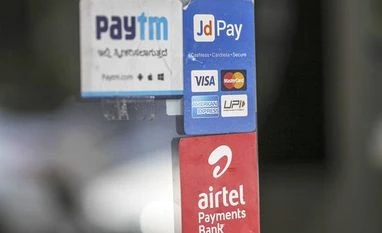 "UPI payments, UPI")
premium
Photo: Bloomberg
India’s dealings with American card networks has been frosty. Visa Inc. and Mastercard Inc. have grumbled to Washington about the lack of a level playing field as New Delhi has cajoled banks to shift to a homegrown alternative. For their alleged failure to comply with local data-storage rules, Mastercard, Discover Financial Services and American Express Co. have run into regulatory trouble in the second-most-populous nation. Recurring payments from the country have been a disaster for failing too often.
It may be time for a thaw in the relationship. According to news portal The Morning Context, the Reserve Bank of India is keen to grant Visa and Mastercard access to the country's popular online payments protocol. It’s like dangling the key to a candy store before a kid: From large malls to roadside shacks, there are now 230 million QR codes set up to receive money. This is when the country of 1.4 billion people has only 7.3 million point-of-sales terminals that swipe cards.
Many emerging markets have warmed up to smartphones ahead of plastic and expensive card readers. In China, merchants scan the two-dimensional barcodes generated by users’ Alipay and WeChat Pay phone apps. India’s fintech pioneer Paytm made the capital load even lighter for small businesses; customers read shopkeepers’ QR stickers and showed them their phone screens after successful payments. After Paytm introduced Soundbox — hardware that could be rented for $2 a month — sellers started receiving audio confirmations.
This became a standard for QR-code-based settlements on Unified Payments Interface, India’s protocol for fast, 24x7 transfer from one bank account to another. Growing from nothing in 2016, the smartphone-based UPI — a public utility — handled nearly Rs 13 trillion ($160 billion) in December. Of this, about Rs 10 trillion was for individuals swapping money with one another. On the remaining Rs 3 trillion of QR-code spending at merchants, the government remunerates banks so that they promote online transactions and make formal credit available to disadvantaged groups such as street vendors.
Opening up this large and fast-growing market to the major networks will mean that credit limits will be used, without the physical cards being swiped. This could potentially be a big deal as at least some users will want to borrow for purchases, instead of using their own funds. Industry participants, however, envisage a pushback. The National Payments Corporation of India, the operator of the UPI protocol, is also the sponsor of RuPay, the local card trying to get a foothold against American networks. The RBI recently allowed RuPay credit cards to be linked to UPI. Why would NPCI want to surrender this nascent advantage so soon? The short answer: This is what banks want.
It may be time for a thaw in the relationship. According to news portal The Morning Context, the Reserve Bank of India is keen to grant Visa and Mastercard access to the country's popular online payments protocol. It’s like dangling the key to a candy store before a kid: From large malls to roadside shacks, there are now 230 million QR codes set up to receive money. This is when the country of 1.4 billion people has only 7.3 million point-of-sales terminals that swipe cards.
Many emerging markets have warmed up to smartphones ahead of plastic and expensive card readers. In China, merchants scan the two-dimensional barcodes generated by users’ Alipay and WeChat Pay phone apps. India’s fintech pioneer Paytm made the capital load even lighter for small businesses; customers read shopkeepers’ QR stickers and showed them their phone screens after successful payments. After Paytm introduced Soundbox — hardware that could be rented for $2 a month — sellers started receiving audio confirmations.
This became a standard for QR-code-based settlements on Unified Payments Interface, India’s protocol for fast, 24x7 transfer from one bank account to another. Growing from nothing in 2016, the smartphone-based UPI — a public utility — handled nearly Rs 13 trillion ($160 billion) in December. Of this, about Rs 10 trillion was for individuals swapping money with one another. On the remaining Rs 3 trillion of QR-code spending at merchants, the government remunerates banks so that they promote online transactions and make formal credit available to disadvantaged groups such as street vendors.
Opening up this large and fast-growing market to the major networks will mean that credit limits will be used, without the physical cards being swiped. This could potentially be a big deal as at least some users will want to borrow for purchases, instead of using their own funds. Industry participants, however, envisage a pushback. The National Payments Corporation of India, the operator of the UPI protocol, is also the sponsor of RuPay, the local card trying to get a foothold against American networks. The RBI recently allowed RuPay credit cards to be linked to UPI. Why would NPCI want to surrender this nascent advantage so soon? The short answer: This is what banks want.
Topics : UPI Visa Mastercard Online Payment