


Alternate reality? Facebook plans to launch massive rebranding exercise
Under fire for its business practices and handling of hate speech, Facebook is planning to rebrand itself. The question is whether this can salvage its image
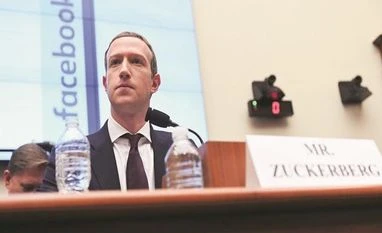 "Mark Zuckerber, Facebook")
premium
Mark Zuckerberg has repeatedly used the M word in his more recent public utterances. In mid-2021, he said, “The Metaverse is going to be the next big chapter for us.”
Over the past 15 years, social media penetration has altered the norms of political campaigning. The skilful propagation of fake news and hate campaigns through Facebook, Instagram and WhatsApp are part and parcel of modern life.
Facebook (that owns Instagram and WhatsApp, which are as dominant in their respective spheres) is one of the world’s two most preferred sources for news content (the other being Google). Facebook’s revenues depend on engagement and its algorithms are designed to generate more and more engagement.
Human nature being what it is, users are more engaged by content that amplifies their personal prejudices, and makes them angry. Few possess either the inclination or ability to check content for authenticity. So, the algorithms offer more and more in the way of horrific content culled from dubious sources, as documented in Facebook’s own research.
A succession of whistle-blowers has revealed how this propensity has been gamed. The first big scandals involved the successful use of Facebook and data culled from it during the Brexit campaign and the Donald Trump Presidential campaign of 2016.
The latest pair of whistle-blowers, data-scientists Frances Haugen and Sophie Zhang, have both separately released internal documents showing how this has vitiated India’s politics. Their testimony shows how Facebook has been careless as well as selective in its moderation efforts, vis-a-vis its largest user base of 350 million Indians.
For instance, a test account purporting to be an Indian woman was set up by Facebook in the lead-in to the Delhi Assembly elections of 2019. This news feed was overwhelmed by “polarising nationalistic content, misinformation, fake news and gore”.
Haugen also released reports that pointed to Rashtriya Swayamsevak Sangh (RSS) setting up Hindutva groups using multiple fake ids run by single individuals. Zhang has revealed how fake accounts run by an unnamed Bharatiya Janata Party MP were not removed, whereas similar fake accounts run by the Aam Aadmi Party and Congress were deleted.
Now, apart from initiating damage control, Facebook may be launching a massive rebranding exercise. There are confirmed rumours, if one might indulge in an oxymoron, Facebook is going to rebrand itself to be something more than a social media giant. Several news reports indicate that it will do an “Alphabet” a la Google as early as next week. A new name has apparently been chosen but it’s said to be a closely-held secret to be revealed at FB’s annual corporate shindig, Connect, on October 28.
Facebook (that owns Instagram and WhatsApp, which are as dominant in their respective spheres) is one of the world’s two most preferred sources for news content (the other being Google). Facebook’s revenues depend on engagement and its algorithms are designed to generate more and more engagement.
Human nature being what it is, users are more engaged by content that amplifies their personal prejudices, and makes them angry. Few possess either the inclination or ability to check content for authenticity. So, the algorithms offer more and more in the way of horrific content culled from dubious sources, as documented in Facebook’s own research.
A succession of whistle-blowers has revealed how this propensity has been gamed. The first big scandals involved the successful use of Facebook and data culled from it during the Brexit campaign and the Donald Trump Presidential campaign of 2016.
The latest pair of whistle-blowers, data-scientists Frances Haugen and Sophie Zhang, have both separately released internal documents showing how this has vitiated India’s politics. Their testimony shows how Facebook has been careless as well as selective in its moderation efforts, vis-a-vis its largest user base of 350 million Indians.
For instance, a test account purporting to be an Indian woman was set up by Facebook in the lead-in to the Delhi Assembly elections of 2019. This news feed was overwhelmed by “polarising nationalistic content, misinformation, fake news and gore”.
Haugen also released reports that pointed to Rashtriya Swayamsevak Sangh (RSS) setting up Hindutva groups using multiple fake ids run by single individuals. Zhang has revealed how fake accounts run by an unnamed Bharatiya Janata Party MP were not removed, whereas similar fake accounts run by the Aam Aadmi Party and Congress were deleted.
Now, apart from initiating damage control, Facebook may be launching a massive rebranding exercise. There are confirmed rumours, if one might indulge in an oxymoron, Facebook is going to rebrand itself to be something more than a social media giant. Several news reports indicate that it will do an “Alphabet” a la Google as early as next week. A new name has apparently been chosen but it’s said to be a closely-held secret to be revealed at FB’s annual corporate shindig, Connect, on October 28.
Topics : Facebook Mark Zuckerberg Social Media whatsapp Instagram