


Donald Trump riles his party's power centres
He thinks country may need an economic 'stimulus' package
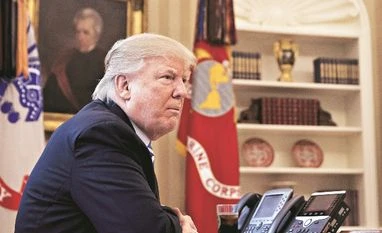 "Donald Trump, Trump")
premium
Donald Trump
The Republican president of the United States said he’d be “honoured” to meet with North Korea’s leader under the right conditions. That he thinks the country may need an economic “stimulus” package. Or possibly a gas-tax hike for better roads. Maybe even break up the big banks. And certainly a health care Bill even more generous than Obamacare for people with pre-existing conditions.
Donald Trump said all of that in one 30-minute interview Monday, and in doing so, managed to poke the eye of just about every major constituency of the Republican party — military hawks, blue-collar workers, fiscal conservatives, Wall Street bankers and Tea Partiers who’ve made repealing Obamacare an article of faith.
He might be governing as a Republican but sometimes he sounds a lot like a Democrat. And as he turns to the second 100 days of his presidency, this is the Trump that confounds his party — so much so that congressional leaders effectively ignored him when they put together the recent Budget compromise and jettisoned nearly all of his priorities.
This try-anything-that-works approach helped Trump win the White House, with voters who were tired of rigid partisan ideology, but it has made governing more challenging as fellow Republicans often don’t know what’s coming next.
Donald Trump said all of that in one 30-minute interview Monday, and in doing so, managed to poke the eye of just about every major constituency of the Republican party — military hawks, blue-collar workers, fiscal conservatives, Wall Street bankers and Tea Partiers who’ve made repealing Obamacare an article of faith.
He might be governing as a Republican but sometimes he sounds a lot like a Democrat. And as he turns to the second 100 days of his presidency, this is the Trump that confounds his party — so much so that congressional leaders effectively ignored him when they put together the recent Budget compromise and jettisoned nearly all of his priorities.
This try-anything-that-works approach helped Trump win the White House, with voters who were tired of rigid partisan ideology, but it has made governing more challenging as fellow Republicans often don’t know what’s coming next.