


'Russian spy whale': How military around the world exploited marine mammals
The earliest of these experiments took place during World War I, when Britain's Royal Navy unsuccessfully attempted to train sea lions to locate German submarines
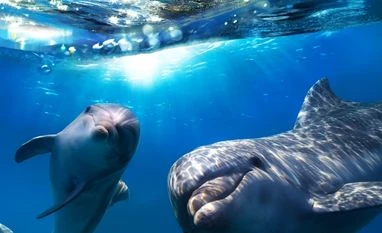 "Representative Image")
Representative Image
In the late 19th century, European militaries had come to appreciate that thoroughly-trained and well-handled dogs could perform useful military services, such as finding wounded soldiers on the battlefield and guarding military installations and outposts. Over the course of the 20th century, new roles were found for them: notably, detecting mines and explosives during World War II.
Given the success achieved with dogs, it was perhaps inevitable that experiments would begin with other intelligent and trainable animals, including marine mammals. The earliest of these experiments took place during World War I, when Britain’s Royal Navy unsuccessfully attempted to train sea lions to locate German submarines.
The early training – conducted at a facility on Lake Bala in Gwynedd, Wales – went well. But once the sea lions were released into the open sea, they were generally found to be more interested in pursuing shoals of fish than U-boats – much to the frustration of the officers involved.
Navy dolphins
These efforts were revived by the United States and other nations during the Cold War, following the discovery that dolphins use echolocation to navigate underwater, emitting high frequency “clicking” sounds and listening for the echos that bounce back off their surroundings to locate and identify nearby objects.
A number of species of marine mammals, including dolphins, porpoises, sea lions, orcas, belugas and pilot whales, drew the attention of rival militaries. Not only do these animals possess extraordinary sensory and physical abilities, they can also change their behaviour – traits which meant they could be trained to perform much the same tasks at sea that dogs performed on land.
In coldly scientific language – and with little acknowledgement of the sophisticated intelligence and capacity for emotion expressed by these animals – one American manufacturer of military sonar equipment described them as: