


Trump's immigration plan: Risks ahead for US govt as shutdown fears loom
Two of the Republicans involved in the discussions complained on Monday that the days-long controversy over Mr. Trump's comment had imperiled hopes for an agreement
 "Trump")
premium
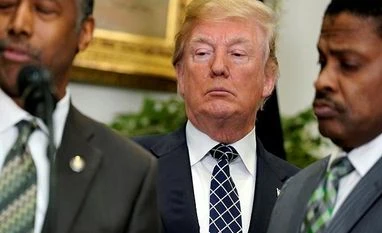
US President Donald Trump stands between US Secretary of Housing and Urban Development Ben Carson (left) and Issac Newton Farris before signing a proclamation to honour Martin Luther King Jr day on Friday
President Trump’s incendiary words about immigration have dampened the prospects that a broad spending and immigration deal can be reached by the end of the week, raising the possibility of a government shutdown with unknown political consequences for lawmakers in both parties.
Democrats facing re-election in states that Mr. Trump carried in 2016 fear that a government funding crisis, precipitated by an immigration showdown, could imperil their campaigns. And they are growing increasingly uneasy that liberal colleagues eyeing White House bids are demanding that any spending bill beyond a stopgap measure that expires on Jan. 19 include protections for undocumented immigrants brought to the United States illegally as children.
“Welcome to our world,” said Senator Claire McCaskill, Democrat of Missouri, who is running for re-election in a state that Mr. Trump carried by 19 percentage points.
“We’ve got people running for president all trying to find their base, and then you’ve got people from Trump states that are trying to continue to legislate the way we always have — by negotiation,” Ms. McCaskill said. “And never the twain shall meet.”
But Republicans face their own uncertainties. With their party controlling the White House and both chambers of Congress, they could receive most of the blame for a shutdown, even if Senate Democrats effectively block a spending plan that does not extend the immigrant protections of an Obama-era program known as the Deferred Action for Childhood Arrivals, or DACA.
“To believe that you can successfully blame Democrats for a shutdown over the DACA debate is naïve,” said Senator Lindsey Graham, Republican of South Carolina.
The angry recriminations continued from allegations that Mr. Trump called African nations “shithole countries” during a White House meeting last week with lawmakers.
The president on Monday attacked Senator Richard J. Durbin of Illinois, the No. 2 Democrat who is leading the immigration talks for his party and attended the White House meeting, as having “totally misrepresented” Mr. Trump’s comments in his public recounting of them. And two Senate Republicans, Tom Cotton of Arkansas and David Perdue of Georgia, have raised questions over whether the term was even used, with Mr. Perdue flatly denying it had.
Mr. Graham, who admonished Mr. Trump in the meeting, has called Mr. Durbin’s account basically accurate. He took an unmistakable swipe on Monday at Mr. Perdue and Mr. Cotton.
“Since the meeting I don’t remember things differently,” Mr. Graham said. “I know what I heard, and I know what I said to the president.”
Ten Democratic senators are on the ballot this November in states that are heavily white, have little sympathy for undocumented immigrants and that Mr. Trump won. Many of these lawmakers have no desire to force a government shutdown over an immigration issue. Some of the party’s most at-risk seats are in Missouri, Indiana, West Virginia and North Dakota.
If they side with Senate Republicans, Congress could pass yet another short-term spending bill by Friday that would end the shutdown threat for now as negotiations continue.
But some Democrats considering presidential runs, such as Senators Kamala Harris of California, Cory Booker of New Jersey and Kirsten Gillibrand of New York, are pressing Democrats to oppose any government-funding bill — no matter how short-term — that does not also protect the approximately 800,000 young immigrants brought to the United States as children, known as Dreamers. Mr. Trump rescinded the program in September and gave Congress six months to enshrine its protections into law.
Mr. Cotton, an immigration hard-liner, suggested that these Democrats will pay a price if their brinkmanship goes too far and they are seen as shutting down the government if they cannot offer amnesty for illegal immigrants.
What most alarms congressional negotiators is that political imperatives appear to have overtaken the immigration policy deliberations in the still-unfolding debate over Mr. Trump’s vulgar description in last Thursday’s meeting of some nations.
Two of the Republicans involved in the discussions complained on Monday that the days-long controversy over Mr. Trump’s comment had imperiled hopes for an agreement.
Mr. Graham said he spoke with the president on the telephone on Saturday and urged him to show the sort of leadership and restraint that many Republicans were pleasantly surprised to see during an earlier, televised immigration discussion in the White House last Tuesday.
“I told him that the President Trump that showed up Tuesday is the one that can lead the country on multiple levels,” Mr. Graham said. “I think the president realizes that it takes a bipartisan solution. But you’re not going to get a deal by tweeting, you’re going to get one by talking.”
Representative Mario Diaz-Balart, Republican of Florida, suggested that the leaks about Mr. Trump’s comments had been as detrimental as the words themselves to the cause of reaching an accord on immigration.
“You have to be able to sit down and have real tough, serious conversations,” said Mr. Diaz-Balart. “And those conversations have to be kept within the folks who are negotiating.”
Mr. Trump seemed to underscore Mr. Diaz-Balart’s remark when he took to Twitter on Monday to mock Mr. Durbin as “Dicky Durbin.”
The president also pressed a talking point that Republicans are sure to use as the government nears its funding deadline: That the issue of the week is not as much about immigration as the continued funding of the military.
Democrats facing re-election in states that Mr. Trump carried in 2016 fear that a government funding crisis, precipitated by an immigration showdown, could imperil their campaigns. And they are growing increasingly uneasy that liberal colleagues eyeing White House bids are demanding that any spending bill beyond a stopgap measure that expires on Jan. 19 include protections for undocumented immigrants brought to the United States illegally as children.
“Welcome to our world,” said Senator Claire McCaskill, Democrat of Missouri, who is running for re-election in a state that Mr. Trump carried by 19 percentage points.
“We’ve got people running for president all trying to find their base, and then you’ve got people from Trump states that are trying to continue to legislate the way we always have — by negotiation,” Ms. McCaskill said. “And never the twain shall meet.”
But Republicans face their own uncertainties. With their party controlling the White House and both chambers of Congress, they could receive most of the blame for a shutdown, even if Senate Democrats effectively block a spending plan that does not extend the immigrant protections of an Obama-era program known as the Deferred Action for Childhood Arrivals, or DACA.
“To believe that you can successfully blame Democrats for a shutdown over the DACA debate is naïve,” said Senator Lindsey Graham, Republican of South Carolina.
The angry recriminations continued from allegations that Mr. Trump called African nations “shithole countries” during a White House meeting last week with lawmakers.
The president on Monday attacked Senator Richard J. Durbin of Illinois, the No. 2 Democrat who is leading the immigration talks for his party and attended the White House meeting, as having “totally misrepresented” Mr. Trump’s comments in his public recounting of them. And two Senate Republicans, Tom Cotton of Arkansas and David Perdue of Georgia, have raised questions over whether the term was even used, with Mr. Perdue flatly denying it had.
Mr. Graham, who admonished Mr. Trump in the meeting, has called Mr. Durbin’s account basically accurate. He took an unmistakable swipe on Monday at Mr. Perdue and Mr. Cotton.
“Since the meeting I don’t remember things differently,” Mr. Graham said. “I know what I heard, and I know what I said to the president.”
Ten Democratic senators are on the ballot this November in states that are heavily white, have little sympathy for undocumented immigrants and that Mr. Trump won. Many of these lawmakers have no desire to force a government shutdown over an immigration issue. Some of the party’s most at-risk seats are in Missouri, Indiana, West Virginia and North Dakota.
If they side with Senate Republicans, Congress could pass yet another short-term spending bill by Friday that would end the shutdown threat for now as negotiations continue.
But some Democrats considering presidential runs, such as Senators Kamala Harris of California, Cory Booker of New Jersey and Kirsten Gillibrand of New York, are pressing Democrats to oppose any government-funding bill — no matter how short-term — that does not also protect the approximately 800,000 young immigrants brought to the United States as children, known as Dreamers. Mr. Trump rescinded the program in September and gave Congress six months to enshrine its protections into law.
Mr. Cotton, an immigration hard-liner, suggested that these Democrats will pay a price if their brinkmanship goes too far and they are seen as shutting down the government if they cannot offer amnesty for illegal immigrants.
What most alarms congressional negotiators is that political imperatives appear to have overtaken the immigration policy deliberations in the still-unfolding debate over Mr. Trump’s vulgar description in last Thursday’s meeting of some nations.
Two of the Republicans involved in the discussions complained on Monday that the days-long controversy over Mr. Trump’s comment had imperiled hopes for an agreement.
Mr. Graham said he spoke with the president on the telephone on Saturday and urged him to show the sort of leadership and restraint that many Republicans were pleasantly surprised to see during an earlier, televised immigration discussion in the White House last Tuesday.
“I told him that the President Trump that showed up Tuesday is the one that can lead the country on multiple levels,” Mr. Graham said. “I think the president realizes that it takes a bipartisan solution. But you’re not going to get a deal by tweeting, you’re going to get one by talking.”
Representative Mario Diaz-Balart, Republican of Florida, suggested that the leaks about Mr. Trump’s comments had been as detrimental as the words themselves to the cause of reaching an accord on immigration.
“You have to be able to sit down and have real tough, serious conversations,” said Mr. Diaz-Balart. “And those conversations have to be kept within the folks who are negotiating.”
Mr. Trump seemed to underscore Mr. Diaz-Balart’s remark when he took to Twitter on Monday to mock Mr. Durbin as “Dicky Durbin.”
The president also pressed a talking point that Republicans are sure to use as the government nears its funding deadline: That the issue of the week is not as much about immigration as the continued funding of the military.