


Undocumented youth divided over how to fight Trump's immigration clampdown
These protests were sparked by increased immigration enforcement against the undocumented population
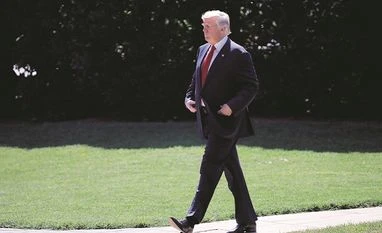 "US President Donald Trump")
US President Donald Trump said recently that dealing with steel was no longer a top priority. (Photo: Reuters)
These protests were sparked by increased immigration enforcement against the undocumented population since the election of Donald Trump, including his pledge to end a temporary form of relief from deportation that has been available to many undocumented youth since 2012.
The protesters pledged their “renewed commitment to winning permanent protection, dignity and respect for all 11m undocumented immigrants”. They have called on other undocumented youth to follow their lead and engage in civil disobedience to defend their communities.
In response to threats faced by undocumented young people, a bipartisan DREAM Act bill was introduced to the Senate on July 20 by senators Lindsay Graham and Dick Durbin to provide eligible undocumented young people with a pathway to citizenship. To be eligible, they must have arrived in the US before the age of 18, have been in the country for at least four years, and not have criminal convictions. A version of the bill has also been introduced in the House of Representatives.
For over a decade, the US legislatures have been trying to pass a version of this DREAM Act but to no avail. When it was last introduced as a standalone bill in 2010 it passed in the House but fell five votes short of the 60 needed to be considered for final passage in the Senate.
Announcing the 2017 bill, Graham praised Donald Trump’s focus on “bad hombres” and asserted that young undocumented people were brought here “by their parents illegally”. But this perpetuates the idea that there are “good immigrants” – the Dreamers – and “bad” immigrants, their parents and those with a criminal record.
Activists divided
While several immigrant rights organisations have come out in support of the 2017 bill, the California Immigrant Youth Justice Alliance described it as “a huge step back for immigrant justice”, expressing concerns about “the lack of solidarity with those who continue to be scapegoated ‘criminals’”.
Some undocumented youth have voiced their intention to resist attempts to divide the undocumented population, stating they “will not throw our parents under the bus to make ourselves more deserving.” This resistance is part of a wider rejection by undocumented young immigrants of being labelled as “Dreamers” – the brightest and best who are innocent because they were “brought” to the US by their parents. Dreamers are often presented as culturally assimilated “all American” students.
Despite concerns over the label, there are still undocumented young people across the US who continue to identify as “Dreamers”. This has led to disagreements within the movement about how to respond to immigration clampdowns by the Trump administration.
During his 2016 presidential campaign, Trump promised to increase enforcement measures against undocumented immigrants. This included a pledge to end the Deferred Action for Childhood Arrivals (DACA) programme, an executive order signed by Barack Obama in 2012. Since its introduction, DACA has provided nearly 800,000 undocumented young people who entered the US as children with a two-year renewable reprieve from deportation and the right to work legally.
DACA came about because of the mobilisation and civil disobedience of undocumented youth, frustrated at the lack of progress on the DREAM Act. In 2011 and 2012, they engaged in a programme of direct actions and civil disobedience, including occupying Obama’s campaign offices during the 2012 election campaign.
Rejecting the ‘Dreamer’ label
In my ongoing research on this youth movement, I have interviewed young activists in southern California about their activism and their responses to Trump’s election. Many activists have critiqued the narrative about young “Dreamers” which is exclusionary to those who have not attended college, who arrived at an older age, or who have criminal convictions. One 21-year-old “DACAmented” student who I interviewed told me that she hates the “Dreamer” label. It presents children as having no agency: