If about 100 gigawatts or more are added globally every year, the target of the International Solar Alliance to install 1,000 gigawatts by 2030 does not seem daunting. The grouping of sun-rich countries aims to bundle demand and further drive down the cost of solar power.
Solar power strategy is becoming a critical part of the overall energy strategy of nations. There are two factors driving the growth of solar globally, and in India, and they are interrelated:
Cost: Solar is the cheapest source of power in many parts of the world today. Depending on the support that is offered to solar developers in the form of land or grid interconnection, developers are offering to supply solar power at record-low tariffs. In some situations, the fuel cost of a conventional plant is higher than the all-in generating cost for solar, including construction and financing. Against the current lowest solar tariffs of 2-3 cents per unit, there is already talk of the tariff heading to 1 cent per unit globally (65 paisa per unit).
There are, however, some blips on the near horizon for the solar sector in India. The price of panels may be impacted by the ongoing anti-dumping investigation on imports of cells and modules from China. Solar panels are already facing a new levy under the new goods and services tax. New plant construction has been lower than expected due to a slowdown in solar auctions. The expectation of even lower panel prices is leading to a “wait” tendency in governments and developers. Installations in 2017 will hover around 8 gigawatts, and may touch 9 gigawatts — on an optimistic basis — in 2018.
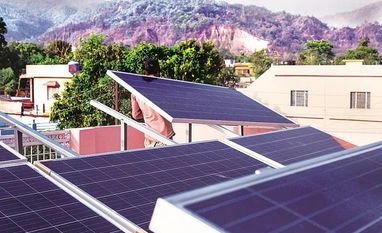
A concerted policy push can accelerate annual installations substantially, especially if the rooftop solar market gains traction. The aggressive auctions schedule announced last week, if implemented, may well place India’s ambitious and elusive 100 gigawatts cumulative installation target of 2022 within reach.
Vandana Gombar is Editor, Global Policy, Bloomberg New Energy Finance. She can be reached at vgombar@bloomberg.net


 "solar panel")