“Green hydrogen” will be a major component of renewable capacity, reducing dependence on fossil fuels. The current renewable capacity of 100 Mw (megawatts) has practically nothing hydrogen-based. If Mr Ambani’s plans fructify, RIL alone will create 100 Mw of hydrogen-based capacity by 2030, amounting to roughly a third of India’s renewables capacity. Hydrogen is the most abundant element and easily harvested by running a current through water in a process called electrolysis. When hydrogen recombines with oxygen, it generates power with emissions of water. If electrolysis is done with renewable energy, the entire cycle is very low-carbon with less environmental impact than solar or wind. It may require less capital equipment imports to create green hydrogen capacity. Apart from use in transportation, hydrogen may be a good storage material for surplus electricity generated from renewables. Solar and wind are intermittent; sometimes they don’t generate any power, and sometimes they generate surplus. The surplus can be used to electrolyse hydrogen, which can be stored. This has advantages over conventional lithium-ion batteries, including longer-lasting storage and a much lower carbon footprint.
Weight for weight, 1 kg of hydrogen has roughly thrice the energy value of 1 kg of diesel. But at normal density, a kg of hydrogen, the lightest of gases, occupies a volume of about 11,000 litres, versus just over a litre per kg of diesel. Moreover, hydrogen is highly reactive at room temperature. So storage and distribution require either high compression to store in special tanks, or chilling to below minus 250 degree centigrade to liquefy. Storage and distribution present problems similar but greater than those involved in handling CNG or LPG. Producing green hydrogen costs between $3.5/kg and $6.5/kg, depending on the cost of power. Cutting this, first to $2 and then to $1, as RIL envisages, will involve new technologies and scale. Creating commercially viable storage and distribution will be a big task. Similar drastic cost reductions have, however, been visible in solar and wind, and with coherent policy support, there is no reason why this is not possible. Side by side, one has to assume that fuel-cell technology and storage solutions will develop to a point where hydrogen energy can be used commercially for a variety of purposes. Affordable green hydrogen capacity can, therefore, lead to many benefits. Policy in this area must be technology-neutral since it’s a nascent sector. Competition must be encouraged. Entrepreneurs looking to launch start-ups on this new value chain must be enabled to raise the required funding.


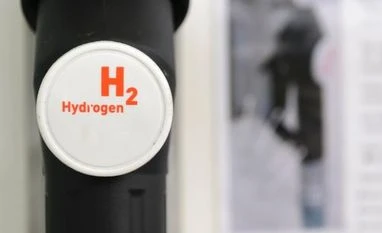 "Hydrogen auto fuel")