


Disquiet in Congress as it prepares for major surgery under Rahul Gandhi
The disquiet among several senior Congress leaders, particularly in its state units, has much to do with the prospect of being marginalised
 "Rahul Gandhi")
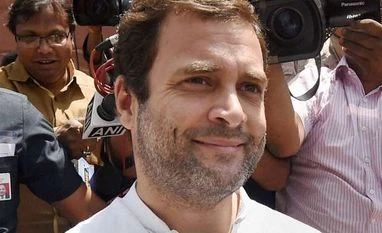
Congress Vice President Rahul Gandhi during the Parliament Session in New Delhi. Photo: PTI
The Congress, under Rahul Gandhi, who will be announced the party president soon, and guided by strategist Prashant Kishor, is on the cusp of a major surgery.
This surgery is not only expected to be somewhat similar to what Prime Minister Narendra Modi and party chief Amit Shah did with the Bharatiya Janata Party (BJP), but on a much larger scale. Modi and Shah didn’t include those over 75 in the council of ministers, promoted the veterans to an ineffectual ‘mentor group’ and promoted younger faces in the party’s state units.
The disquiet among several senior Congress leaders, particularly in its state units, has much to do with the prospect of being marginalised. The rebellions by former Chhattisgarh CM Ajit Jogi and Maharashtra leader Gurudas Kamat are just the start of an intra-party tumult that is likely to reach a crescendo in the days and weeks after Rahul Gandhi takes over.
Any hurried predictions of a Congress demise should factor in that Rahul Gandhi is young by the gerontocratic standards of Indian politics. The Congress presidency could be Rahul Gandhi’s birthday gift as he turns 46 on June 19. In comparison, much of BJP’s top brass will be in their late 60s by 2019 and mid-70s by 2024. Entry of his sister Priyanka Gandhi could also potentially infuse a new dynamic to the Congress.
The case of the six of the 10 Congress legislators in Tripura joining the Trinamool Congress and the rumblings in Uttarakhand has much to do with local politics in the two states. Tripura politics has for long been influenced by Bengal politics. The Trinamool Congress, as it did in Bengal, is fast replacing the Congress as the main Opposition to the ruling Left government in Tripura. With elections due in 2018, Congress leaders and workers are switching sides to a more winnable party after Trinamool’s massive mandate in Bengal. Bengali speaking people constitute the majority in Tripura.

The Congress in Uttarakhand is witnessing leadership tussles as elections are due in February. Similarly, the happenings in Arunachal Pradesh and other northeastern states cannot be seen in the perspective of the upcoming leadership change in the party. Governments in states like Arunachal Pradesh are known to switch lock, stock and barrel to the party in power at the Centre. In 2002, Congress CM of Arunachal Gegong Apang had switched allegiance to the BJP, only to return to the Congress fold once UPA took over in Delhi in 2004.
Also, splits aren’t alien to the Congress. In the past, splits have weakened the Congress but the party has always bounced back. That was, however, when it was the pre-eminent party of India, while now it is at an historical low.
It is likely that the Congress, in the absence of a dynamic leader to compete with Modi, could spawn into smaller regional parties in some of the states in the next few years – somewhat mirroring the Janata parivar parties. But these could come together if Rahul or Priyanka Gandhi could lead the party to election triumphs by end-2018 in states like Rajasthan and Chhattisgarh.
Currently, there are several Congress offshoots that Rahul Gandhi and his team would do well to reach out to with an eye on the future. These include Mamata Banerjee-led Trinamool Congress in Bengal, Sharad Pawar’s Nationalist Congress Party in Maharashtra, YS Jaganmohan Reddy’s YSR Congress in Andhra Pradesh and Telangana and Tamil Nadu’s Tamil Maanila Congress.
Don't miss the most important news and views of the day. Get them on our Telegram channel
First Published: Jun 08 2016 | 2:12 PM IST