


How iCALL is addressing mental health problems
iCALL, a helpline run by the Tata Institute of Social Sciences, is trying to help people - from factory workers to executives - facing mental health problems
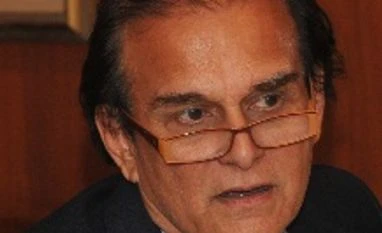)
Marico Chairman Harsh Mariwala has put his force behind iCALL
At a remote factory site, a worker puts in 12 hours a day when he is supposed to be working for eight to nine hours. His team is severely understaffed and he has complained to the site manager frequently, “but no one,” he says, “seems to be listening to us”. Elsewhere, a father who lost his six-month-old baby some weeks ago finds himself unable to move on with life. At another place, a young man often rummages through his sister’s wardrobe to wear her clothes. He is convinced that he is not gay, but is unable to fathom these urges to dress like a woman.
An overworked employee. A grieving father. And a perplexed cross-dresser. On the face of it, these people are all facing very distinct problems that have little similarity. The only thing common to them all is the mental distress they face in confronting their problem. For help, they all turned to one helpline: iCALL.
Based at the Tata Institute of Social Sciences (TISS) in Mumbai, iCALL is a psychosocial helpline that is extending mental health support to callers from across socio-economic classes and over a range of issues through phone and email — Monday to Saturday. And in doing so, it is trying to fill the vast vacuum that exists in the field of mental healthcare in the country.
“In India, 50 to 70 per cent of the people who need mental healthcare do not receive it,” says Paras Sharma, programme coordinator, iCALL. Either they do not have access to it or else, given the stigma attached to mental health problems, they would rather internalise the problem than visit a counsellor. In iCALL, which they can reach through phone or email, many have found the vent they are seeking. That the helpline, which is run by a team of trained psychotherapists, operates in multiple languages — including Hindi, English, Marathi, Gujarati, Tamil, Malayalam and Punjabi — and does not require the caller to reveal his or her identity helps.
A lot of thought went into launching this helpline. While the Centre for Human Ecology at TISS has been training counsellors and clinical psychologists, it was felt that alongside creating more professionals, people’s access to mental healthcare had to improve. In the primary health centres, for example, it has been seen that the issues that 20-25 per cent of the patients complain about fit the description of common mental health problems. But the doctors here are either ill-equipped to identify them or else they treat them purely with medicine. “The patient seldom, if at all, receives any kind of counselling,” says Sharma. Year after year, funds for the district mental health programme remain unused because the primary health centres don’t even ask for mental health drugs. “No one can also tell with any authority how many psychiatrists, psychologists, mental health counsellors and nurses trained in mental healthcare are there in India.”
So, in September 2012, after consultations with existing helplines and NGOs, iCALL was launched. It was decided that this helpline would not focus on any one specific issue. It would, instead, be an open helpline that people experiencing any kind of mental distress — whether it is related to academics, work, marital problems, parental issues, business setbacks, suicidal thoughts or the urge to self-harm — could reach out to.
While the helpline has a special focus on the marginalised, whose mental health issues often remain unrecognised and unaddressed, it has kept the service free for everybody. “Over the last two years we have entered into corporate partnerships to keep the helpline sustainable,” says Sharma. Most recently, Marico Chairman Harsh Mariwala put his force behind the helpline by offering financial and logistical support. “He has joined in his personal capacity and is putting his personal wealth into the initiative,” says Sharma. Mariwala has been tweeting to spread the word about the helpline. The plan is to make this facility available 24x7. It is currently operational from 10 am to 10 pm, Monday to Saturday.
The helpline, which initially received calls largely from Mumbai, is now also being accessed by people from outside Maharashtra, across age groups. Most calls, says Sharma, last 15-20 minutes, and 30-35 per cent of these are from follow-up callers. “The rest are one-time callers,” says Sharma. Within this 15-20-minute duration of the call, the counsellors try to empathetically understand the problems the caller is facing, help identify and prioritise the various issues for the caller and offer solutions — short-term and long-term. “We encourage follow-up calls but they don’t always happen,” says Sharma. The counsellors have found that people who approach them through email are more direct about their problems.
Marico Chairman Harsh Mariwala has put his force behind iCALL
For cases that require intervention, say, of a doctor, iCALL maintains a detailed database of hospitals and medical services and informs the callers of the ones closest to them.
Since it was launched, iCALL has received over 22,000 calls and 1,500 emails. The issues people call about vary. For example, among employees of an engineering and manufacturing major, the counsellors found that their problems related to long hours, hostile working conditions, loneliness and relationship issues as a result of being stationed in a remote site with little residential accommodation or scope for educating their children.
At an FMCG company, where iCALL wants to help address the mental health problems of blue-collar workers, counsellors have found that it is the second-generation employees who are particularly unhappy because they feel their salary cannot afford them the lifestyle they want. Here, the counsellors found the problem of heart ailments, absenteeism and substance abuse — particularly alcohol and tobacco.
It’s difficult, however, to measure the result of the counselling. ‘It’s not like medicine where you can tell if the person is cured or not,” says Sharma. And sometimes the result might not be absolute. Take, for example, the case of a caller who repeatedly harms himself. The counsellor might teach him some techniques to distract himself when he has the urge to self-harm. “If this person is able to distract himself three out of the five times he wanted to harm himself, that is progress,” says Sharma.
There are times when the counsellors do get a feedback from the callers, like this one: “I am glad I called you as this made me aware of support groups of people facing problems similar to mine. It feels good to know I am not alone.”
Help at hand
-
iCall helpline number:
+91-022-25563291 (Monday to Saturday, 10 am to 10pm)
* iCall email ID: icall@tiss.edu
* Some of the issues iCALL tries to address: violation of rights, relationship problems, fear, parenting concerns, feelings of depression and sadness, abuse and violence, matters concerning sexuality and gender, infertility and conception issues, marital problems, matters concerning senior citizens, conflicts, anxiety, suicidal thoughts, workplace stress, mental distress arising out of terminal illness and addiction. The helpline also offers career and academic counselling.
- The TISS initiative is also helping state government’s set up similar helplines to tackle mental illness. Maharashtra has become the first state to launch one such helpline. It can be accessed round-the-clock on the toll-free number 104.

Don't miss the most important news and views of the day. Get them on our Telegram channel
First Published: May 16 2015 | 12:25 AM IST