


McNamara at War: Rare later regret over Vietnam worthy of admiration
Robert McNamara's life was defined by a quest for control. A new biography shows how that same drive shaped his Vietnam errors - and his rare, late-in-life willingness to admit them
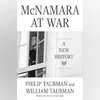 "McNAMARA AT WAR: A New History")
McNAMARA AT WAR: A New History
Listen to This Article
McNAMARA AT WAR: A New History
By Philip Taubman and William Taubman
Published by Norton
498 pages $39.99
James Santel
At the height of his power, Robert S McNamara exuded control. As secretary of defence under Presidents John F Kennedy and Lyndon B Johnson in the 1960s, he appeared regularly before Congress and the press, brandishing charts and rattling off figures that invariably showed progress: progress in cutting costs, in deterring the Soviet Union, in prosecuting the war in Vietnam. He had an answer, often numerical, to every question. George Ball, the Johnson administration’s in-house Vietnam sceptic, recalled that whenever he raised concerns, McNamara would “shoot me down in flames” with a barrage of statistics that seemed to appear from thin air.
Also Read

 "Vietnam, Vietnamese flags")

 "Arnold Su")
 "Chart")
 "Telecom sector")
Thus it was surprising when, in 1995, at the age of 78, he broke his decades-long silence on Vietnam with the publication of his memoir, In Retrospect, declaring in the preface that he had been “wrong, terribly wrong.” He didn’t stop with the book. In numerous public appearances, in a series of meetings with his former adversaries from Hanoi, and in Errol Morris’s sublime 2003 documentary The Fog of War, McNamara seemed at last to surrender to history’s judgment.
And yet, as the prolific authors (and brothers) Philip and William Taubman show in their thoughtful new biography, McNamara at War, their subject’s late-in-life appraisal of his actions was just as motivated by his mania for authority as everything that had come before it. They write that in obsessively returning to the same question — how could someone so smart, successful and patriotic help lead his country into such a costly debacle? — McNamara was seeking “retrospective mastery over what had eluded him and why.”
“Mastery” was the watchword of McNamara’s life until Vietnam. Born in San Francisco in 1916, he had an analytical mind that he honed at Harvard Business School, learning new accounting techniques for managing the large organisations that had begun to dominate American society. During World War II, he served as a “statistical control officer” in the Army Air Forces, where his Harvard training helped him make bombing campaigns more lethal.
After the war, McNamara and some of his fellow Army statisticians joined the Ford Motor Company, which was then reeling from years of mismanagement. Known as the “whiz kids,” McNamara and the other military number crunchers dragged Ford into the modern age, installing new financial systems and organizational structures that reversed the company’s slide. The day after the 1960 election, he was named Ford’s president. Just a few weeks later, Kennedy asked him to lead the Pentagon.
McNamara regarded the Defence Department much as he had Ford: as a lumbering, hidebound organisation in need of mathematical cleansing. “This place is a jungle,” he declared, and he set about taming it. The Taubmans grade his reforms as “impressive,” especially his overhaul of the budgeting process, which subjected the armed forces’ spending requests to rigorous cost-benefit analyses. Had it not been for Vietnam, he might well have been remembered as the most effective defence secretary in the nation’s history. McNamara’s lightning-quick mind propelled him to new heights, but his will to predominate had drawbacks. His colleagues found him to be overbearing. “Even when you knew he was wrong,” recalled one Ford associate, “he’d plow you under.”
With Vietnam, his inflexibility caught up to him. Although he privately concluded in late 1965 that the war was unwinnable, he continued to publicly defend it, and he refused to voice his misgivings even after Johnson pushed him to the World Bank in early 1968.
All of this reads like an allegory for the American Century writ large. The ease with which McNamara can be made into a symbol of a nation blinded by its own mechanical strength helps explain why he was so uniquely reviled among the many figures who orchestrated and oversaw the war in Vietnam.
But the Taubmans suggest another reason that McNamara inspired such contempt: his very public admission that he had erred. His example provided a stark contrast to the national security adviser McGeorge Bundy, who, when told by a drunk guest at a Harvard social function that he had screwed up in Vietnam, replied: “Yes, I did. But I’m not going to waste the rest of my life feeling guilty about it.” Even less repentant was Richard Nixon’s national security adviser Henry Kissinger, who was instrumental in the war’s disastrous expansion into Cambodia. He once made fun of McNamara’s reflections, blubbering fake tears and crying: “Boohoo, boohoo. He’s still beating his breast, right?”
But we are now about as many years removed from the publication of In Retrospect as McNamara was from his involvement in Vietnam when he wrote it. The intervening decades have seen America fight two more futile wars, yet few of the officials responsible have ever acknowledged wrongdoing. Without absolving McNamara, the Taubmans suggest that his willingness to admit error was worthy of admiration, if only for its rarity. Reading this book as the Trump administration elevates jingoism to a virtue, it is hard to disagree.
The reviewer is a freelance writer who served as a speechwriter in the Department of Justice during the Obama administration. ©2025 The New York Times News Service
More From This Section
 "Nautch Boy")
 "Mango millionaire: Smart money management for a sweeter life")
 "THE CEO MINDSET")
 "Missing from the House: Muslim Women in the Lok Sabha")
 "Mujib's Blunders: The Power and the Plot Behind His Killing")
Don't miss the most important news and views of the day. Get them on our Telegram channel
First Published: Sep 28 2025 | 10:39 PM IST