


Still dreaming of the deep sea: India's blue economy and its blind spots
If India truly has such promise in the deep sea, why has modern fishing there never taken off?
 "seafood,fishes")
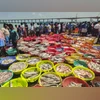
After decades of deep-sea dreams, India’s Blue Economy plan risks repeating old mistakes—ignoring coastal wisdom while chasing distant, uncertain riches. (PTI Photo)


Listen to This Article
When NITI Aayog released its Blue Economy Strategy for Harnessing Deep-Sea and Offshore Fisheries 2025, I felt a wave of déjà vu. After fifty years of working with India’s fisherpeople, I have seen these deep-sea dreams surface regularly — each time with fanfare, each time sinking quietly beneath the waves.
Since Independence, planners have promised that India’s “untapped deep-sea wealth” would transform fisheries. The first such declaration came in 1947, when the National Planning Committee described fishers as “ignorant and primitive” and called for institutionalising fishery knowledge, importing European technology, and setting up a new fisheries bureaucracy. This set the tone for a top-down approach that ignored the skills and institutions of coastal fishing communities — many drawn from the lowest rungs of the caste ladder — who had sustained marine life and livelihoods for generations.
From 1977 to 2014, four more reports on deep-sea potential repeated the same themes. Each claimed that new technology and investment would unlock a hidden bounty. Each failed to ask why the people who had harvested the sea for centuries were absent from the planning table.
A New Strategy, Familiar Bias
Now, in 2025, NITI Aayog’s Blue Economy Strategy returns to the familiar script — with glossier graphics and more jargon. It envisions India becoming a global leader in deep-sea and offshore fisheries through modern fleets, ports, cold chains, and science-based management. Its language blends sustainability and profit, promising green technologies, global competitiveness, and private partnerships.
Also Read

 "Fishermen, Indian fishermen")
 "NITI Aayog")
 "NITI Aayog")
 "NITI Aayog Chief Executive Officer (CEO) B V R Subrahmanyam")
But the report still imagines the sea through a terrestrial lens. For most policymakers, the “deep sea” means simply “far from the shore” — the area between 12 and 200 nautical miles, within India’s Exclusive Economic Zone (EEZ). For policymakers shaped by governance boundaries, the entire EEZ is an economic frontier. In ecological reality, as one moves deeper, biological productivity declines and costs and risks multiply. This fundamental disconnect is why every deep-sea initiative begins with lofty projections and ends in quiet retreat.
The scientific basis of the plan is also shaky. For forty years, official estimates of India’s marine resource potential hovered around 4.4 million tonnes, with barely half a million tonnes from the deep sea. Then, in 2018, a new committee suddenly raised the figure to 7.1 million tonnes, claiming newly discovered non-conventional resources. The evidence remains unclear. Yet this inflated number has become the foundation for new investment proposals and policy rhetoric.
The Thoothoor Paradox
If India truly has such promise in the deep sea, why has modern fishing there never taken off?
Between 2000 and 2025, almost all deep-sea fishing was carried out not by industrial fleets but by the artisanal fishers of Thoothoor, a single village in Tamil Nadu. Their small wooden vessels, 10–20 metres long, ventured to the edge of the EEZ and beyond, landing the bulk of India’s deep-sea catch.
These fishers operate without subsidies, foreign collaboration, or bureaucratic fanfare. For them, the deep sea is not a frontier but part of their lived seascape — risky, yes, but known. Meanwhile, the government admits India has only four genuinely modern deep-sea vessels. The mismatch is telling.
Why So Much Talk, So Little Change?
After seventy-eight years of reports and rhetoric, the reasons for stagnation go deeper than technology or finance. They lie in how we think about the sea, its people, and power.
First, the great disconnect between practice and policy. Those who live by fishing and those who plan for fisheries inhabit different worlds. Few fishery scientists have spent time at sea on small boats or talked with fishers who read currents and species patterns from subtle cues. Token consultations cannot bridge this gap. Add to that a caste and class bias — an unspoken assumption that real expertise lies in institutions, not in calloused hands and sea-worn eyes — and we see why policy rarely reflects practice.
Second, the tragedy of open access. When the sea became “state property”, customary systems that once governed access — deciding who could fish where, with what gear, and when — were eroded. The export push of the 1960s turned fishing into a competitive scramble. Each coastal state enacted its own Marine Fishing Regulation Act to protect nearshore livelihoods, but the offshore zone remained unregulated. Only now, in 2025, do we see a draft national law for waters beyond 12 nautical miles. This seven-decade delay speaks volumes about institutional inertia.
Third, ignoring the principle of subsidiarity. A coherent deep-sea strategy must ensure that the territorial sea — the inshore waters — is reserved for small-scale, owner-operator fishers. Without such protection, the push seaward will inevitably trigger encroachment backward — industrial vessels fishing in shallow, productive zones, displacing those who depend on them for survival. The claim that deep-sea development will relieve pressure on the coast is ecological wishful thinking; the sea is one connected system.
An Ecological and Democratic Reckoning
The deeper problem is not technical but conceptual. We have imagined the ocean as a storehouse of wealth rather than as a living commons. The Blue Economy Strategy’s focus on investment and extraction continues this mindset. If it is to mean anything beyond rhetoric, the policy must begin with a different premise: that small-scale fishers are not relics of the past but vital partners in designing the future.
Their knowledge — of species behaviour, seasons, and ecosystems — is an empirical science in its own right and honed over generations. To ignore it is not just unjust but unwise. Real sustainability will come not from high-tech fleets but from democratic governance of the sea, blending ecological science with community stewardship.
When I began working with fishing communities in the 1970s, we spoke of the deep sea as the next frontier. Half a century later, we are still speaking — still dreaming — while coastal depletion, inequality, and ecological uncertainty deepen.
After seventy-eight years of deep-sea discourse, perhaps it is time to ask not how far our fleets can go, but how deep our understanding can reach.
John Kurien has worked closely with fishing communities in Asia. He was professor at the Centre for Development Studies, Thiruvananthapuram. (kurien.john@gmail.com)
Disclaimer: These are the personal views of the writer. They do not necessarily reflect the opinion of www.business-standard.com or the Business Standard newspaper.
More From This Section
 "Nobel Prize, Joseph Schumpeter")
 "Deep Kapuria")
 "Time for AI in education")
 "MNREGA, Migrants, workers, labour")
 "urban crisis response India, World Habitat Day, pollution, flooding, urban planning, Smart Cities Mission, AMRUT, NCAP, Janbhagidari, city governance, sustainable development")
Topics : Niti Aayog fishing fisheries sector marine exports
Don't miss the most important news and views of the day. Get them on our Telegram channel
First Published: Oct 16 2025 | 4:12 PM IST