


RBI Governor warns of rising digital frauds, urges fintechs to build trust
Malhotra also said the central bank is conceptualising "Unified Market Interface" as a new next-generation financial market infrastructure
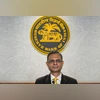 "RBI Governor, Sanjay Malhotra")
Reserve Bank of India Governor Sanjay Malhotra | Photo: PTI
Listen to This Article
Increasing digital frauds are becoming a problem for the regulator, Reserve Bank of India (RBI) Governor Sanjay Malhotra said on Wednesday at the Global Fintech Fest (GFF) while urging the fintech ecosystem to prioritise customers, and develop products that are easy to use and accessible for all.
Malhotra also said the central bank is conceptualising “Unified Market Interface” as a new next-generation financial market infrastructure. “This interface will have the capability to tokenise financial assets and settlements using wholesale CBDC (central bank digital currency),” he said.
Observing that artificial intelligence (AI) holds the future, Malhotra said “…digital fraud is increasingly becoming a problem for us”. He added that there is a need to develop a digital public infrastructure for data integration. The RBI governor stressed the need to keep the information technology (IT) system safe, secure, and fraud-proof.
Commenting on Unified Lending Interface (ULI) — a technology-based initiative to make frictionless credit available to customers — Malhotra said it is a landmark step in data integration, and it will be able to bridge the credit delivery gap. “ULI is a landmark step in data aggregation, which the RBI is building because credit is the lifeblood of inclusive growth. And, despite best efforts by the government, the RBI, and the banking system, and while, you know, huge progress has been made in delivery of credit, there is still a huge unmet demand, and ULI can certainly be a bridge in meeting this need.”
He urged the fintech sector to focus on inclusion, and prioritise building systems to expand financial resources to the unreached, unserved segments of society.
Also Read

 "rbi, reserve bank of india")
 "Rabi Shankar, Dy RBI Guv | File Image")
 "Amit Chaudhary")
 "Sujan Hajra, Chief Economist & Executive Director, Anand Rathi Group")
“Design products and services that are easy to use, accessible for all, with assistive technologies, ensuring that vulnerable groups such as senior citizens, individuals with limited digital literacy, and specially abled are not left behind,” he said, adding: “Strive to design services so well that there is no need for customer service in the first place.”
Malhotra also said fintechs should prioritise trust and compliance while highlighting that India has 10,000-plus fintechs, with more than $40 billion of investment over the last decade. He said there has been a phenomenal growth in this sector, and the future potential is underpinned by several strengths like large and the deep pool of technology talent in the country. “Prioritise trust and compliance. Embed strong data protection, transparency, and safeguards for consumers into every product and service… Think global while you anchor local,” he said.
The RBI governor said fintechs can bridge the digital divide, foster healthy competition, and drive innovation. “In doing so, fintechs will not only secure growth and prosperity, but also play a very pivotal role in driving growth and progress of our country, contributing to the vision of Viksit Bharat 2047,” Malhotra said.
More From This Section
 "PFRDA Chairman S Ramann")
 "CS Setty, SBI Chairman")
 "Rahul Chari")
 "Gift city")
 "Unified Payments Interface, UPI, AADHAR")
Topics : RBI Policy online frauds financial fraud
Don't miss the most important news and views of the day. Get them on our Telegram channel
First Published: Oct 08 2025 | 9:34 PM IST