


Jaishankar criticises EU carbon tax, calls CBAM unacceptable for India
External Affairs Minister S Jaishankar raises strong objections to the EU's CBAM policy, citing unfair global standard-setting and implications for developing economies
 "S Jaishankar, Jaishankar")
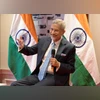
External Affairs Minister S Jaishankar


Listen to This Article
External Affairs Minister S Jaishankar on Wednesday said India has “deep reservations” about the European Union (EU)’s Carbon Border Adjustment Mechanism (CBAM), and finds it unacceptable that one part of the world sets standards for all others.
In an interview with the European news website Euractiv, Jaishankar, who is on a weeklong visit to Belgium and France, also spoke on India’s ties with China, and in that context, highlighted the importance of the EU-India free trade agreement. He suggested that India-- a nation of 1.4 billion-- offers skilled labour and a more trustworthy economic partnership than China.
“I just met with several European companies in India that have chosen to set up there specifically to de-risk their supply chains. Many companies are becoming increasingly careful about where they locate their data – they would rather place it somewhere secure and trustworthy than simply go for efficiency,” he said. “Would you really want that in the hands of actors you don’t feel comfortable with?” the minister said.
To a question about the EU wanting to set global standards through its Green Deal, including agenda-setting measures like the CBAM, Jaishankar said India was opposed to parts of it. “Let’s not pretend – we’re opposed to parts of it. We have very deep reservations about CBAM and we’ve been quite open about it. The idea that one part of the world will set standards for everybody else is something which we are against,” he said.
Also Read

 "S Jaishankar, Ursula chief von der Leyen")
 "S Jaishankar, Jaishankar")
 "S Jaishankar, Jaishankar")
 "S Jaishankar, Jaishankar")
 "S Jaishankar, Jaishankar")
The CBAM is the EU’s planned tax on the carbon emitted while making goods imported from countries like India and China. In February, the EU had acknowledged India’s “specific concerns” about implementing the CBAM and was willing to address them. Emerging and lesser-developed countries have flagged the EU’s move at the UN climate conferences as they fear such tariffs will harm livelihoods and economic growth in their countries.
To a question on India not joining the West’s sanctions against Russia, Jaishankar said: “We don’t believe that differences can be resolved through war – we don’t believe a solution will come from the battlefield. It’s not for us to prescribe what that solution should be. My point is, we’re not being prescriptive or judgemental – but we are also not uninvolved.”
He said India has a strong relationship with Ukraine as well as Russia. “But every country, naturally, considers its own experience, history and interests,” he added. “India has the longest-standing grievance – our borders were violated just months after independence, when Pakistan sent in invaders to Kashmir. And the countries that were most supportive of that? Western countries,” he said. “If those same countries – who were evasive or reticent then – now say let’s have a great conversation about international principles, I think I’m justified in asking them to reflect on their own past,” he said.
On whether India could trust US President Donald Trump and if New Delhi thinks he is “as good as his word”, Jaishankar said, “I take the world as I find it. Our aim is to advance every relationship that serves our interests – and the US relationship is of immense importance to us. It’s not about personality X or president Y.”
On Wednesday, Jaishankar also met European Parliament President Roberta Metsola. “As negotiations on a free trade agreement advance, we look forward to transforming commitments into actions and to strengthen the strategic partnership between Europe and India,” she posted on X.
More From This Section
 "N Chandrababu Naidu, Chandrababu, Naidu")
 "Indian railways, rail accident, rail safety")
 "edible oil")
 "Commerce and Industry Minister Piyush Goyal")
 "trade, import, export, container, shipping")
Don't miss the most important news and views of the day. Get them on our Telegram channel
First Published: Jun 11 2025 | 8:43 PM IST