


Cabinet clears Rs 6,405-cr rail projects to ease freight congestion
Projects to improve rail links in Jharkhand, Karnataka and Andhra Pradesh and increase freight capacity by 49 mtpa across coal, steel, cement and petroleum corridors
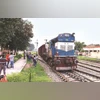 "Indian railways, rail accident, rail safety")
The 133-kilometre-long Koderma–Barkakana doubling project passes through a major coal-producing area of Jharkhand and serves as the shortest and more efficient rail link between Patna and Ranchi.
Listen to This Article
The Union Cabinet on Wednesday approved two railway capacity expansion projects worth ₹6,405 crore.
The projects, Koderma – Barkakana track doubling and Ballari – Chikjajur doubling, aims to enhance connectivity in Jharkhand, Karnataka, and Andhra Pradesh.
The multitracking projects are poised to improve operational efficiency and service reliability for Indian Railways and alleviate congestion, the Cabinet said.
The 133-kilometre long Koderma – Barkakana doubling project passes through a major coal producing area of Jharkhand and serves as the shortest and more efficient rail link between Patna and Ranchi.
The 185-kilometre long Ballari – Chikjajur project traverses through Ballari and Chitradurga districts of Karnataka and Anantapur district of Andhra Pradesh. According to Railway Minister Ashwini Vaishnaw, the project will serve the Mangaluru Port and reduce the need for shipments to be taken to Goa or Krishnapatnam Port in Andhra Pradesh.
Also Read

 "station, Indian Railway, railway station")
 "makemytrip, online, ticket booking, railway, air travel, flights")
 "Hisashi Takeuchi, MD and CEO, Maruti Suzuki India Limited, MSIL")
 "konkan railways")
 "MakeMyTrip")
“The approved multitracking project will enhance connectivity to approximately 1,408 villages, which have a population of about 2.82 million people. These are essential routes for transportation of commodities such as coal, iron ore, finished steel, cement, fertilizers, agriculture commodities, and petroleum products. The capacity augmentation works will result in additional freight traffic of magnitude 49 million tonnes per annum),” the Cabinet said.
Vaishnaw, citing research, said that the government’s interventions in infrastructure and connectivity have led to a 4 percentage-point reduction in India’s national logistics costs.
“During PM Modi's historic third term, many projects have been undertaken to reduce transportation and logistics costs. IIM Bangalore and IIM Calcutta's recent study shows that the investments in transportation have caused a reduction in the country's logistics cost by about 4 percentage points,” Vaishnaw said.
The minister did not confirm what India’s current logistics cost as a percentage of the GDP is according to these studies. So far, the government’s latest estimates, calculated by the National Council of Applied Economic Research (NCAER) peg national logistics costs at 7.8-8.9 per cent of the GDP in 2021-22.
In July 2024, DPIIT signed an MoU with NCAER to develop a framework to calculate these costs for 2023-24.
“Every percentage point reduction in logistics cost means that there will be much more competitive industries. We can export more. We can keep production costs low,” he said.
More From This Section
 "edible oil")
 "N Chandrababu Naidu, Chandrababu, Naidu")
 "Commerce and Industry Minister Piyush Goyal")
 "trade, import, export, container, shipping")
 "India-US")
Topics : Railways Indian Railways rail projects
Don't miss the most important news and views of the day. Get them on our Telegram channel
First Published: Jun 11 2025 | 8:19 PM IST