


Trump's 'Liberation Day' countdown begins, world braces for tariffs impact
Trump has declared April 2 as 'Liberation Day', asserting that the tariffs will liberate the US from its dependence on foreign goods
 "Donald Trump, Trump")
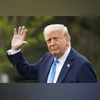
US President Donald Trump says reciprocal tariffs are key to rectify unfair trade practices by imposing duties that match those levied by other countries on US products. (Photo: PTI)
Listen to This Article
US President Donald Trump is set to announce a series of sweeping reciprocal tariffs on Wednesday aimed at addressing trade imbalances, prompting global concern as countries prepare for potential economic repercussions.
He will unveil his global tariff plan at a Rose Garden event featuring his entire Cabinet, scheduled to begin as US markets close at 4 pm Eastern Time (ET), or 1:30 am on April 3, according to Indian Standard Time (IST).
On Sunday, Trump declared that “all countries” would be targeted. “You would start with all countries, so let’s see what happens,” Trump told reporters, dismissing expectations that he might reduce certain levies or apply them only to nations with larger trade imbalances.
Trump termed April 2 as “Liberation Day”, asserting that the tariffs would liberate the US from its dependence on foreign goods. On Tuesday, White House Press Secretary Karoline Leavitt said India imposes a 100 per cent tax on American agricultural products. “If you look at the unfair trade practices, we have 50 per cent from the European Union on American dairy, a 700 per cent tariff from Japan on American rice, a 100 per cent tariff from India on American agricultural products, and nearly a 300 per cent tariff from Canada on American butter and American cheese.”
Leavitt added that Trump’s “Liberation Day” tariffs would take effect immediately after the announcement. She said, “The president will be announcing a tariff plan that will roll back the unfair trade practices that have been ripping off this country for decades. He’s doing this in the best interest of the American worker.”

 "BSE, STOCK MARKETS")
 "Mukesh Ambani")
 "U.S. President Donald Trump gestures after disembarking Air Force One as he arrives at Joint Base Andrews, Maryland, U.S, July 6, 2025")
 "A recent NITI Aayog paper recommends sweeping tariff cuts on a range of agricultural imports from the United States — including rice, dairy, poultry, corn, apples, almonds, and genetically-modified soya — as part of the proposed India-US Free Trade A")
 "Narendra Modi, Lula da silva")
What are reciprocal tariffs?
According to Trump, these tariffs are a key part of his administration’s plan to rectify what it sees as unfair trade practices by imposing duties that match those levied by other countries on US products. This approach could affect imports valued at approximately $600 billion annually, with tax on auto imports alone expected to raise $100 billion a year, according to media reports.
Trump had already imposed tariffs on steel and aluminium imports and additional levies on imports from China. He announced a 25 per cent tariff on all auto imports last week, which is set to take effect on April 3.
Economic implications
Economists warn that the tariffs could lead to higher prices for consumers and potential disruptions in global supply chains.
According to an S&P analysis, India, South Korea, and Thailand could be among the most vulnerable to these tariffs.
The uncertainty surrounding the trade policies has already contributed to significant market volatility, with major indices experiencing declines. In India on Tuesday, the Sensex and Nifty fell 1.8 per cent and 1.5 per cent, respectively, driven by concerns over the impact of Trump’s tariffs.
Global reactions
A day before the announcement, Trump said, “India would be reducing its tariffs very substantially.” He added, “I believe many countries will lower their tariffs, as they have imposed unfair duties on the United States for years. For instance, the European Union has already reduced its car tariff to 2.5 per cent, which was announced a few days ago—a very small tariff. The US has been charging very little in comparison. I recently heard that India will also be making a significant cut to its tariffs. I asked, why was this not done long ago? Many countries are now planning to lower their tariffs.”
Leaders worldwide have expressed unease over the potential for these tariffs to disrupt the global economy. Canadian businesses, for instance, are uncertain about the specifics but anticipate negative impacts, especially given the substantial trade volume between Canada and the US. Similarly, Indian and South Korean markets are on edge, with industries such as pharmaceuticals, copper, automotive, and steel bracing for possible downturns.
Between financial years (FY) 2021–22 and 2023–24, the US remained India’s largest trading partner, according to a PTI report. It accounted for nearly 18 per cent of India’s total merchandise exports, 6.22 per cent of imports, and 10.73 per cent of overall bilateral trade.
India and the US will hold sector-specific discussions in the coming weeks to finalise the framework of the proposed bilateral trade agreement. Commerce minister Piyush Goyal said the talks are progressing and will serve the interests of both countries while safeguarding India’s concerns.
As the implementation of these tariffs approaches, the global community remains on high alert. The full impact on international trade, economies, and consumers will unfold in the coming months, depending on the specifics of the tariffs and the responses from affected nations.
More From This Section
 "Indian economy, Economy")
 "milk factory amul mother dairy")
 "factories, roads, power plants")
 "politics, social media, political agenda")
 "goods and services tax (GST) payers")
Topics : Trump tariffs US tariffs US trade policy India exports Global Markets Indian Economy Global economy BS Web Reports
Don't miss the most important news and views of the day. Get them on our Telegram channel
First Published: Apr 02 2025 | 9:14 AM IST