


China tests non-nuclear hydrogen bomb: Here's what it is capable of
China's PLA tests a clean-energy hydrogen bomb using magnesium hydride, signalling a shift in warfare tech to accommodate cleaner energy solutions
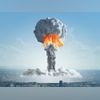 "Nuclear, nuke, explosion, destruction, nuclear weapons")
Unlike traditional nuclear bombs, this device employs a magnesium-based solid-state hydrogen storage material known as magnesium hydride. (Representational Image)
Listen to This Article
Chinese scientists have successfully tested a non-nuclear hydrogen bomb amid the People's Liberation Army's (PLAs) push towards cleaner energy solutions. The move comes amid the US' increasing defence support to Taiwan, and China's quest for dominance in the South China Sea.
According to a report in South China Morning Post, the explosive device, weighing 2 kilograms, was developed by the China State Shipbuilding Corporation’s (CSSC) 705 Research Institute, which is known for its work in underwater weapon systems. Unlike traditional nuclear bombs, this device uses a magnesium-based solid-state hydrogen storage material known as magnesium hydride, which is capable of storing more hydrogen than pressurised tanks.
Once activated, the magnesium hydride undergoes rapid thermal decomposition, releasing hydrogen gas that ignites into a sustained fireball exceeding 1,000 degrees Celsius for over two seconds—15 times longer than equivalent TNT blasts. This combustion results in extensive thermal damage, sufficient to melt aluminum alloys, and allows for precise control over blast intensity, achieving uniform destruction across vast areas.
How did China test the bomb?
According to a paper published in the Chinese-language Journal of Projectiles, Rockets, Missiles and Guidance, the test involved a series of experiments demonstrating the weapon's directed energy potential. Under controlled detonation, peak overpressure reached 428.43 kilopascals at two meters from the bomb. This was roughly 40 per cent as strong as a comparable TNT explosion, but the heat it unleashed reached far beyond what TNT can achieve.
Also Read

 "Khadga Prasad Oli, KP Oli, Nepal PM, Xi Jinping, Jinping, China President")
 "White House Covid lab leak")
 "Chinese President Xi Jinping")
 "Xi Jinping")
 "Boeing")
The initial blast smashes the magnesium hydride powder into tiny fragments, freeing up fresh surfaces. As those fragments heat up, they release hydrogen gas, which mixes with the surrounding air. Once there’s enough hydrogen in the air, it lights up in a second, much hotter fireball. That extra heat then cracks more magnesium hydride open, releasing more hydrogen and creating a self-feeding combustion loop.
What is this bomb capable of?
The bomb doesn’t just deliver a single blast. Instead, it unleashes a roaring fireball that remains scorching hot for several seconds, allowing it to cover a wide terrain. This sustained heat makes it ideal for sweeping away dispersed enemy forces across an open field, while its energy can also be concentrated on a single, high-value point—imagine singeing through a bridge or fuel depot with surgical precision.
In practice, the PLA could use the bomb to deny the enemy access to key routes by incinerating stretches of road, to cripple essential services by targeting power stations or communications hubs, or to strike a specific cluster of equipment or personnel without destroying an entire region.
Earlier this year, a mass production facility for magnesium hydride was inaugurated in Shaanxi province, capable of producing 150 tonnes annually. This is notable because until recently, magnesium hydride, being highly reactive, could only be produced in laboratories at the pace of a few grams per day.
China's shift towards clean energy
China is actively modernising its military capabilities by integrating clean energy technologies. In March, China announced a 7.2 per cent increase of its national defence budget totalling to USD 249 billion for the modernisation drive. In a draft budget report submitted to China's Parliament, Premier Li Qiang said the PLA will step up military training and combat readiness to "firmly safeguard China’s sovereignty, security, and development interests."
The PLA has been promoting the use of renewable energies such as solar, wind, ocean, and hydrogen power for military purposes. In the naval domain, China is upgrading its fleet with advanced warships featuring integrated electric propulsion (IEP) systems. For example, the Type 055 Renhai-class cruisers are equipped with IEP, enhancing their stealth, speed, and operational range.
In aerospace sector, China has claimed developing eco-friendly propulsion technologies. In 2023, Beijing claimed its Zhuque-2 rocket, developed by LandSpace, was the world's first methane-powered rocket to reach orbit, utilising liquid methane and oxygen as propellants.
Taiwan conflict
Recently, China has increased its maritime drills around Taiwan, which is claims is a part of its territory under its 'One China' principle. The Chinese military activity has increased in the region due to increasing US arms sales to Taiwan, high-profile political visits by American officials, and joint military exercises in the region.
Beijing views any support for Taiwan, especially military aid, arms sales, or official political engagements, as a direct challenge to its sovereignty. It has repeatedly warned the US against "interfering in internal affairs," accusing it of encouraging Taiwanese independence.
This month, China conducted large-scale joint exercises around Taiwan, including live fire drills. The US called it China’s intimidation tactics, reaffirming its commitment to Taiwan and other allies in the region.
More From This Section
 "JD Vance, Vance, Usha Vance")
 "Finance Minister Nirmala Sitharaman during the 150 years celebration of BSE in Mumbai, Thursday, April 17, 2025 | Photo: KAMLESH PEDNEKAR")
 "India Pakistan, India, Pakistan")
 "Rafale, Aircraft")
 "Pakistan terrorist")
Don't miss the most important news and views of the day. Get them on our Telegram channel
First Published: Apr 20 2025 | 1:15 PM IST