


Trade, energy imports in focus as PM Modi to meet Trump during key US visit
PM Modi's US visit takes on added significance as Donald Trump plans to introduce reciprocal tariffs, with an announcement expected just before the Indian PM's arrival in Washington DC
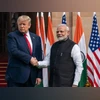 "Modi Trump")
Scheduled for February 13, PM Modi’s discussions with Trump are expected to centre on trade relations. | PTI Photo
Listen to This Article
As Prime Minister Narendra Modi gears up for his upcoming meeting with US President Donald Trump, India is evaluating the feasibility of increasing energy imports from the United States.
Scheduled for February 13, PM Modi’s discussions with Trump are expected to centre on trade relations, particularly tariff reductions, enhanced energy and defence cooperation, and longstanding economic issues.
The visit takes on added significance as Trump plans to introduce reciprocal tariffs, with an announcement expected just before PM Modi's arrival in Washington DC. Additionally, PM Modi is set to engage with top US business leaders, including Tesla CEO Elon Musk.
US-India: Energy trade considerations
Officials from India's Ministry of Petroleum and executives of state-run oil and gas firms have been deliberating on the country’s current energy imports from the US and the potential for substantial growth in this sector, sources familiar with the matter told The Economic Times.
Also Read

 "Tirumala Tirupati Devasthanam")
 "Pariksha Pe Charcha 2025")
 "Donald Trump, PM Modi")
 "India-France, India France flag, India, France")
 "Photo: Danny Gaekwad website")
The US is the world’s largest oil and gas producer and a leading exporter of liquefied natural gas (LNG). It ranks as India’s fifth-largest crude supplier, accounting for about 5 per cent of total imports, behind Russia, Iraq, Saudi Arabia, and the UAE. It also provides approximately 30 per cent of India’s long-term contracted LNG supply from overseas.
Industry executives maintain that Indian refiners prioritise cost-effective crude purchases, irrespective of the source. This approach has been evident in India's pivot towards Russian oil, which became more competitively priced following Western sanctions on Moscow in 2022.
"The pricing mechanisms in Russia and the Middle East are influenced by state-controlled oil companies, whereas in the US, private firms dictate prices. Trump cannot direct American producers to lower costs," noted an industry executive, underlining the challenge of securing government-driven crude deals with the US.
Additionally, logistical constraints pose challenges. Given the geographical distance, US crude must be competitively priced to offset shipping expenses. Similar concerns apply to LNG imports, as Indian buyers highlight the difficulty of acquiring additional long-term US gas contracts at present. Available volumes are limited, with fresh agreements unlikely to take effect before 2028.
Furthermore, major domestic consumers such as power plants and city gas distributors remain hesitant to commit to long-term US LNG contracts. They anticipate a supply glut from 2028 onwards, which could drive down global LNG prices. Another deterrent is the pricing structure — US LNG contracts are indexed to Henry Hub, the American natural gas benchmark, whereas Indian industries typically favour oil-linked contracts, which they perceive as more stable.
US-India: Trade and tariff talks
Trade and tariff-related discussions will be a focal point of PM Modi’s visit, particularly regarding the phasing out of import duties.
Ahead of the trip, Indian Foreign Secretary Vikram Misri stated that New Delhi expects "more intensive and ongoing talks on tariffs". Trump has previously criticised India for imposing high tariffs on US goods, referring to it as a "tremendous tariff maker".
Finance and Revenue Secretary Tuhin Kanta Pandey, however, dismissed concerns of imminent US tariff hikes on Indian exports, asserting that India is not a protectionist economy. He added that a substantial portion of US imports already enter India at low tariff rates, with 6,000 out of 8,400 tariff lines below 100 per cent.
In a bid to address US concerns, India has taken steps to align with Trump’s trade priorities. The Union Budget 2025-26 saw reductions in customs duties on luxury imports, including premium motorcycles — a move benefitting American manufacturers such as Harley-Davidson. Duties on fully imported motorcycles have been lowered from 50 per cent to 40 per cent.
Additionally, India eliminated customs duties on lithium-ion batteries for electric vehicles (EVs), a policy shift likely to appeal to companies like Tesla. Import tariffs on mobile phone battery production equipment were also reduced, supporting local manufacturing and firms like Apple, which has a strong presence in the Indian market.
New Delhi remains open to negotiating a limited trade agreement with Washington to address market access concerns. Previous efforts during Trump’s first term were unsuccessful, but with bilateral trade surpassing $118 billion in 2023-24, India is keen to strengthen economic ties. A trade surplus of $32 billion in India’s favour further underscores the growing commercial engagement between the two nations.
US immigration and visa policy
Immigration policy will also be on the agenda, particularly in response to US concerns over undocumented Indian migrants.
India has already repatriated over 100 citizens following US deportation orders, and discussions will focus on the return of additional individuals facing similar action.
PM Modi is expected to advocate for expanding the H-1B visa programme, which is vital for India's IT workforce. Trump's stance on H-1B visas has been relatively supportive, given the programme’s role in bolstering the US tech sector with skilled foreign workers. India, as the largest beneficiary of these visas, is eager to ensure their continuity.
India-US: Defence and energy cooperation
PM Modi’s visit is also expected to reinforce India’s commitment to procuring US-made defence equipment, including fighter jets and drones. India is currently acquiring 31 drones from the US in a deal valued at approximately $4 billion and has issued a global tender for 114 fighter jets.
Defence Secretary Rajesh Kumar Singh noted that India already sources a substantial portion of its military needs from US firms and intends to continue this trend. Ongoing discussions include potential deals for transport aircraft, infantry vehicles, and additional reconnaissance aircraft.
Nuclear energy cooperation will be another key area of focus, with India seeking to collaborate with the US on small modular reactors. Recent amendments to India’s nuclear laws are expected to attract US firms such as GE Hitachi Nuclear Energy, Westinghouse Electric Co., and Electricité de France SA, paving the way for their participation in large-scale power projects.
India-US trade snapshot
India-US trade reached a record $118.2 billion in FY24, marking a slight decline from $128.78 billion in FY22. India maintained a trade surplus of $36.8 billion.
More From This Section
 "Security forces,army,soilder")
 "F-35 Fighter jets")
 "Ex Winged Raider. Indian Air Force, Army")
 "Defence Minister Rajnath Singh addresses a press conference in Bengaluru on the eve of the 15th edition of Aero India, February 9, 2025. Image credit: PIB")
Topics : Narendra Modi Donald Trump Trade exports US on India trade India imports US tariff washington Energy demand in India India oil imports H-1B Visa Deportation from US US immigration policy
Don't miss the most important news and views of the day. Get them on our Telegram channel
First Published: Feb 10 2025 | 10:27 AM IST