


Indian youth 'concerned' about China's rise, think-tank survey shows
A new foreign policy survey by the Observer Research Foundation finds most young respondents also wary of Chinese 'military coercion'
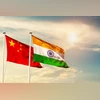 "India china")
The ORF said income was seen as influencing perceptions about India’s economic engagements with China. (Photo: Shutterstock)
Listen to This Article
A majority of India’s youth — through a representational sample — is either very concerned or concerned about China’s ascension to global power, according to an Indian think-tank survey that was unveiled on Tuesday.
The continued border dispute, including the 1962 Sino-Indian war, China’s annexation of Tibet (1950-51) and its “aggressive promotion” of a flagship project under the Belt and Road Initiative that passes through Pakistan-occupied Kashmir, are among major issues that have affected India-China relations, the 2024 Foreign Policy Survey by New Delhi-based Observer Research Foundation (ORF), said it found.
“Indian youth are also wary of China’s military coercion,” the ORF survey said, citing border incidents such as the Doklam standoff in 2017 and the Galwan River valley clash in 2020 as likely causes for “the respondents to worry about China’s rise”.
The survey asked more than 5,000 Indians — between the ages 18 and 35, from different socio-economic backgrounds, across 19 cities in the country — about China, India’s foreign policy and geopolitics in general. It was conducted from July to September last year.
On China’s ascent, the survey said it found that among the respondents, holders of post-graduate degrees expressed the highest apprehension at 91 per cent, with skilled workers next at 89 per cent and job seekers at 88 per cent. A majority of the respondents in India’s eastern and northern cities (in geographical proximity to China, Pakistan and Bangladesh) highlighted their “China concern” in the survey.
Also Read

 "Pema Khandu, Arunachal Pradesh CM")
 "KP Sharma Oli, Oli, Nepal PM")
 "Rafale, Aircraft")
 "India's Prime Minister Narendra Modi speaks during the 17th annual BRICS summit in Rio de Janeiro, Brazil")
 "Rare Earth minerals")
The ORF said income was seen as influencing perceptions about India’s economic engagements with China. A model used in the survey suggested young Indians who earn Rs 30,000-90,000 a month were more likely to support policies that address India’s trade imbalance with China such as reducing imports.
India’s trade deficit with China was recorded at $99.2 billion last year.
Most respondents, the survey said, saw China as a maritime threat and as “weaponising” its vast supply chains and mineral reserves.
While the Galwan clash froze the bilateral relationship over the past five years, a thaw has been noticed in the months since Prime Minister Narendra Modi and Chinese President Xi Jinping met on the sidelines of a Brics summit in Russia in October.
But China’s diplomatic support to Pakistan after the Pahalgam attack in April, which India linked to Pakistan-based terrorists, and China’s military support to Pakistan during Operation Sindoor have again complicated India-China relations.
The ORF said the respondents in its survey — conducted before the 2024 Brics summit and the Pahalgam attack — saw “border conflicts with China, cross-border terrorism and border conflicts with Pakistan” as the three biggest challenges for India.
In the preface to the survey, Samir Saran, ORF president, asked if China’s leaders and policymakers want their country to be viewed by Indians in a similar way as Indians view Pakistan, that is, as “an irresponsible global actor”.
On the other hand, the survey said the majority of the Indian youth polled showed favourable response to Quad, the grouping of the United States, Australia, Japan and India, as well as to India’s relations with Russia, although many worried about the China-Russia relationship.
Most respondents viewed the Quad countries and Russia as “India’s potential leading partners in the next decade.”
About 54 per cent of the respondents said India should side with the US in its rivalry with China, 38 per cent said India should adopt a neutral position and 70-77 per cent spoke in support of India-US cooperation across domains, according to the ORF survey.
Among other key findings, the survey said 93 per cent of the respondents supported India’s bid for a permanent seat at the United Nations Security Council, and 88 per cent had a positive perception of India’s foreign policy.
More From This Section
 "PM Modi in Naimibia")
 "Smoke billows after the IAF's Jaguar fighter jets crashed near Churu in Rajasthan on Wednesday. | Photo: PTI")
 "India US trade deal, interim trade agreement, tariff concessions, US reciprocal tariff, India US bilateral trade, Modi Trump trade pact, Vietnam US trade deal, India trade negotiations, India US tariff deadline, bilateral trade agreement")
 "Nimisha Priya")
Don't miss the most important news and views of the day. Get them on our Telegram channel
First Published: Jul 09 2025 | 11:56 PM IST