


External spillovers likely to hit India's financial system: RBI report
Stress tests showed banks' gross NPA to rise under baseline scenario
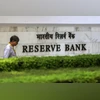 "RBI, Reserve Bank of India")
While the economy and the financial system are relatively well positioned to withstand tariff-induced shocks, risks from global spillovers and escalation in geopolitical conflicts is seen as a key concern by the central bank. | Image: Bloomberg
Listen to This Article
While India’s growth remains insulated from global headwinds mainly due to buoyant domestic demand, the domestic financial system could, however, be impacted by external spillovers, the Reserve Bank of India (RBI) said in its half yearly Financial Stability Report published on Monday.
Furthermore, the rising global trade disputes and intensifying geopolitical hostilities could negatively impact the domestic growth outlook and reduce the demand for bank credit, which has decelerated sharply. “Moreover, it could also lead to increased risk aversion among investors and further corrections in domestic equity markets, which despite the recent correction, remain at the high end of their historical range,” the report said.
It noted that there is some build-up of stress, primarily in financial markets, on account of global spillovers, which is reflected in the marginal rise in the financial system stress indicator, an indicator of the stress level in the financial system, compared to its position in the first half of FY25.
“It is estimated that a 100 basis points (bps) slowdown in global growth can, ceteris paribus, pull down India’s growth by 30 bps,” the report said. RBI has projected GDP growth of 6.5 per cent for the current financial year, same as last year’s.
The domestic financial system, the report observed, is exhibiting resilience fortified by healthy balance sheets of banks and non-banks, it reckoned.
Also Read

 "MSME credit target FY26, MSME loans public sector banks, PSB MSME lending growth, Finance Ministry MSME focus, India MSME sector credit, SBI MSME loan target 2025, PNB MSME lending growth, MSME credit outstanding FY25, MSME loan YTD growth 2025, GNPA")
 "IndusInd Bank")
 "banks")
 "RBI, Reserve Bank of India")
 "corporate bond")
While the economy and the financial system are relatively well positioned to withstand tariff-induced shocks, risks from global spillovers and escalation in geopolitical conflicts is seen as a key concern by the central bank.
ALSO READ: IndusInd submits MD & CEO candidate list to RBI before 30 June deadline
On inflation, the report said the outlook for food inflation remains favourable and risk of imported inflation largely remains low with the anticipated slowdown in global growth likely to soften commodity and crude oil prices. At the same time, it said the recent escalation of geopolitical tensions in the Middle East has led to heightened uncertainty. Overall, headline inflation is likely to undershoot the target at the margin as per the projections of the RBI.
On the country’s banking sector, the report said scheduled commercial banks continued to record improvement in their asset quality, with the GNPA ratio and NNPA ratio declining to multi-decadal lows of 2.3 per cent and 0.5 per cent as on March 31, 2025 respectively.
However, the stress tests showed that gross NPA ratios of 46 banks to rise to 2.7 per cent in March 2027 under the baseline scenario and to 5.6 per cent and 5.3 per cent, under adverse scenario 1 and adverse scenario 2, respectively.
The stress tests also reveal that capital adequacy ratio may marginally dip to 17.0 per cent by March 2027 from 17.2 per cent in March 2025, under the baseline scenario. “However, none of the banks would fall short of the regulatory minimum requirement of 9 per cent even under the adverse scenarios,” the report concluded.
The report noted the resilience of the external sector and said it has been a key contributing factor to India’s macroeconomic and financial stability. “Current account deficit (CAD) at 0.6 per cent of GDP during 2024-25 remains eminently manageable,” it underlined.
More From This Section
 "Finance Minister Nirmala Sitharaman")
 "DFS secretary M Nagaraju")
 "TDS on Rs 1-crore cash withdrawal aimed at cracking down on black money")
 "Finance Ministry, Ministry of Finance")
Topics : RBI Banks finance sector
Don't miss the most important news and views of the day. Get them on our Telegram channel
First Published: Jun 30 2025 | 10:18 PM IST