


RBI winds down offshore currency tool reflecting shift in strategy
Reduction in the offshore exposure accounts for most of the recent drop in the RBI's overall forward dollar positions
 "RBI, Reserve Bank of India")
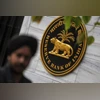
RBI isn’t worried about the potential drain on its reserves from these dollar sales | Image: Bloomberg
Listen to This Article
By Subhadip Sircar and Bhaskar Dutta
India’s central bank has scaled back its use of a key tool it deployed last year to counter the strong dollar, according to people familiar with the matter, reflecting a change in the authority’s intervention strategy under its new leadership.
The Reserve Bank of India’s short dollar positions in the non-deliverable forwards market have fallen sharply to below $5 billion, down from a peak of about $70 billion late last year, the people said, asking not to be named discussing private matters.
The central bank had relied heavily on these offshore contracts in 2024 as the dollar surged, driven by a strong US economy and Donald Trump’s presidential win. However, this year, the rupee has moved more freely against the greenback, suggesting a shift toward a more hands-off approach to currency management amid global trade uncertainty.
Also Read

 "The number of active investors on the National Stock Exchange (NSE) have jumped 44 per cent over the past one year to 47.9 million at the end of September 2024. The surge in active clients is underpinned by the rally in the markets, with the Nifty 50")
 "RBI, Reserve Bank of India")
 "RBI Governor Sanjay Malhotra")
 "gold loans")
 "The limit of loans under the Pradhan Mantri Mudra Yojana (PMMY) was doubled to Rs 20 lakh recently, inserting a new category—Tarun Plus. Launched 10 years ago, the scheme intended to provide microfinance to small entrepreneurs. However, the number of")
“A central bank cannot keep increasing its short forward book without losing the efficacy of this tool. So to prepare for further volatile events, the RBI will reduce its forward book substantially, if not completely,” said Dhiraj Nim, currency strategist at Australia & New Zealand Banking Group Ltd.
An email sent to the RBI seeking comment on the matter didn’t immediately receive a response.
Using offshore non-deliverable forwards has a number of advantages for central banks, including potentially lower costs and the fact that they don’t drain official reserves. That’s because the NDF contracts allow the central bank to influence the rupee’s levels without actually selling large amounts of dollars. Such interventions can also act as a signal of intent in the spot market, thus boosting the rupee when markets are volatile.
The RBI’s heavy reliance on the offshore market last year was in sharp contrast to its usual practice of curbing swings in the rupee onshore. Under Governor Sanjay Malhotra, who took office in December, the central bank has brought a large portion of its derivatives intervention to the local market.
The reduction in the offshore exposure accounts for most of the recent drop in the RBI’s overall forward dollar positions, the people said. As of April, the total forward book — covering both local and offshore markets — stood at about $73 billion, down from a record $88.8 billion in February. More than half the book was within the 3-month to 1-year maturity bucket, indicating a large portion of the book had been brought onshore.
However, the RBI isn’t worried about the potential drain on its reserves from these dollar sales. “We are not unduly concerned about that,” Governor Malhotra told reporters on Friday after cutting interest rates for a third straight meeting. “If there are opportunities, we can build reserves.”
India’s foreign exchange reserves have rebounded to $692 billion, nearing the record high of $705 billion hit in September. Still, the RBI will likely need to continue adding to its reserves over the next three months to cushion any impact of $14.7 billion in maturing short positions through July, Nomura Holdings Inc. analysts wrote in a note.
More than two-thirds of the contracts in the overall forwards book were in the three months to one-year bucket and are unlikely to be rolled over, according to DBS Bank Ltd.
The RBI’s unexpected decision to cut banks’ cash reserve ratio and free up ₹2.5 trillion in liquidity was also aimed at offsetting likely liquidity strain from unwinding short positions, according to the lender. When the RBI sells dollars to banks, it absorbs rupees, potentially tightening financial conditions.
“Liquidity infusion via the CRR cut would also aid this process and ensure it is non-disruptive, while shielding the currency,” said Radhika Rao, senior economist at DBS Bank.
More From This Section
 "Rs, Rupee, Cash, Credit, Economy, Saving, Payment, Indian Currency")

 "Mahanagar Telephone Nigam, MTNL")
 "Union Bank")
 "Indian Oil")
Don't miss the most important news and views of the day. Get them on our Telegram channel
First Published: Jun 12 2025 | 12:49 PM IST