


3-5% construction cost rise: Will this push property prices higher in 2026?
Labour costs projected to surge 5-12% following implementation of New Labour Codes in November 2025
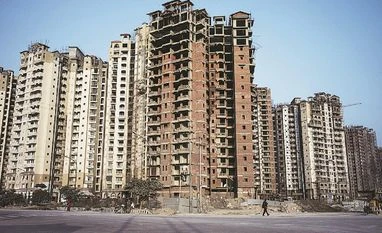 "Construction, infrastructure, Cement prices, steel prices")
Labor costs are experiencing the most consistent upward pressure, increasing by 5-6% across all categories, driven by skilled labour shortages and infrastructure demand.
Listen to This Article
Construction costs in India are projected to rise 3-5% across all asset classes in 2026, according to JLL’s Construction Cost Guide, India – 2026 that was released on Tuesday.
In 2025, Material costs presented a mixed picture with divergent trends across categories. Cement, steel and diesel prices showed a mild decrease of 1-2%, 3-4% and 5-6%, while aluminium and copper costs experienced more significant increases of 8-9% and 9-10% respectively, driven by global demand pressures and supply chain dynamics, said the report.
Labor costs are experiencing the most consistent upward pressure, increasing by 5-6% across all categories, driven by skilled labour shortages and infrastructure demand.
"While the government’s GST 2.0 initiative delivered a critical 10% tax relief on cement, promising savings of 2-3% for developers and property prices by 1-1.5% for homebuyers, the new labour code which took effect in November 2025, mandate enhanced social security benefits, healthcare coverage, and standardized wage frameworks, driving labour costs up 5-12% across all skill categories. The net result: construction costs may rise 3-5% this year which may have an impact on project economics," said the JLL report.
The cost increase comes at a time when India’s economy remains robust, with GDP growth projected at 7.4%, foreign direct investment rising 14%, and infrastructure spending running at 1.3 times the previous two-year average. Together, these factors are driving sustained demand across residential, commercial, and industrial real estate.
Also Read

 "TB awareness")
 "Indian Railway")
 "SC, Supreme Court")
 "Sukhvinder Singh Sukhu, HP CM")
 "PMI, PMI INDIA")
Labour costs emerge as the biggest driver
Labour costs are expected to rise between 5% and 12%, driven by the implementation of new labour codes in November 2025. These reforms mandate:
- Enhanced social security benefits
- Healthcare coverage
- Standardised wage structures
- At the same time, a shortage of skilled workers—particularly in urban infrastructure and real estate—has further pushed up wages.
- Unlike materials, where prices fluctuate, labour costs are showing consistent upward pressure, making them the most critical factor impacting construction budgets.
Material costs show a mixed trend
Material costs in 2025 presented a mixed picture, offering some relief to developers.
- Cement prices declined by 1–2%
- Steel fell by 3–4%
- Diesel dropped by 5–6%
However, key industrial metals moved in the opposite direction:
- Aluminium rose by 8–9%
- Copper increased by 9–10%
The rise in metals has been driven by global demand and supply chain disruptions, particularly linked to energy markets and infrastructure investments worldwide.
This divergence has helped moderate overall cost increases, as softer cement and steel prices have partly offset rising labour and metal costs.
GST 2.0 provides a crucial cushion
One of the biggest relief measures for the sector comes from the government’s GST 2.0 reform.
The policy is expected to:
- Reduce cement taxes by around 10%
- Deliver 2–3% cost savings for developers
- Translate into 1–1.5% lower property prices for homebuyers
Since cement is a core input across all construction categories, this reform plays a key role in absorbing inflationary pressures.
Premiumisation helps developers absorb costs
The rise in construction costs is unfolding alongside a structural shift in India’s housing market—toward higher-value homes.
Average housing ticket sizes have increased from ₹80 lakh in FY23 to over ₹1.2 crore in FY26
Homes priced above ₹2 crore are expected to contribute 45–50% of total housing value
This trend is helping developers maintain margins, as premium housing allows greater pricing flexibility compared to affordable segments.
As a result, even with rising costs, developers are better positioned to pass on part of the increase without significantly affecting demand.
Geography of construction is shifting
Cost differences across cities are also reshaping real estate development strategies.
Mumbai commands ₹4,600–5,200 per sq ft for luxury high-rises
Bengaluru, Chennai and Hyderabad offer lower costs at ₹4,200–4,800 per sq ft
This gap is driving:
- Expansion into Tier-II and emerging cities
- Diversification of project portfolios
- More efficient capital allocation
Developers are increasingly balancing high-cost metro projects with lower-cost, high-growth markets.
"What we are witnessing across India’s six major cities tells the story: Mumbai commands Rs 4,600-5,200 per sq. ft. for luxury high-rises, while Chennai, Bangalore, and Hyderabad deliver competitive rates at Rs 4,200- 4,800 per sq. ft. This isn’t just a cost differential—it is fundamentally reshaping capital allocation, driving the Tier-II expansion, and redefining India’s real estate geography. Those who remain vigilant and adapt proactively will capture outsized opportunities in this transformed landscape,” said Aditya Desai, Executive Director, PDS, India, JLL.
Demand remains strong across sectors
The construction boom is no longer limited to residential real estate.
Office space:
India recorded 57 million sq ft of office leasing in 2025, the highest in the Asia-Pacific region.
Industrial & logistics:
Demand is expected to reach 1.2 billion sq ft by 2027, driven by e-commerce and manufacturing growth.
Data centres:
Capacity is projected to grow 85% to over 2,000 MW by 2027, reflecting the digital economy’s expansion.
Hospitality & healthcare:
Both sectors are seeing renewed investments, adding to construction demand.
This diversification is helping sustain growth even as individual segments face cyclical pressures.
Technology and sustainability reshape the sector
With costs rising, developers are increasingly focusing on:
Digital construction tools
Project efficiency and cost control
Sustainable and green building practices
Technology is emerging as a key lever to offset cost pressures by improving productivity and reducing wastage.
At the same time, stricter environmental norms are pushing the industry toward more sustainable construction practices, adding to upfront costs but improving long-term value.
What it means for homebuyers
For homebuyers, the impact of rising construction costs is likely to be moderate.
Property prices may see incremental increases
GST savings could partially offset price hikes
Premium housing will continue to dominate supply
However, affordability in the mid-income segment could remain under pressure if costs rise further.
India’s construction industry in 2026 is defined by resilience and transition.
While labour costs and regulatory changes are pushing expenses higher, softer material prices, policy support, and strong demand are helping keep overall cost increases in check.
“Construction costs in 2026 are expected to rise 3-5%, driven by regulatory changes, skilled labor scarcity, and stricter environmental standards. Digital technologies help offset these pressures by improving efficiency and delivering greater project value. Despite rising global construction costs and market uncertainty, significant opportunities are emerging. The sector's shift toward sustainability, digital transformation, and adaptive practices creates a strong rationale for strategic investment. Companies prioritizing agility and operational efficiency today will build enduring competitive advantages that extend well beyond 2026 in an increasingly dynamic market environment” said Ashok VS, Head of Cost Management, JLL PDS, India.
More From This Section
 "BKC")
 "Smallcap mutual funds, mutual funds")
 "Mutual fund")
 "Women investors, Woman")
 "UAE flag")
Topics : skyscraper construction BS Web Reports
Don't miss the most important news and views of the day. Get them on our Telegram channel
First Published: Mar 24 2026 | 12:52 PM IST