


Scrap yard or resale market? Know the best option for your vehicle
Scrapping incentives vs resale value- what really puts more money back in your pocket
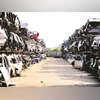 "Car scrapping")
Representative Image
Listen to This Article
If your car is approaching the age where rules tighten and costs rise, the financial decision is no longer just about convenience. It becomes a numbers question- will you recover more by selling it, or by scrapping it under the government’s vehicle scrappage framework?
Here is how to evaluate both options before you decide.
When scrapping becomes unavoidable?
Under the voluntary vehicle fleet modernisation programme launched by the Ministry of Road Transport and Highways, private vehicles do not get scrapped purely due to age. What matters is the fitness test.
· Private cars over 15 years and commercial vehicles over 15 years must undergo fitness testing
· Vehicles that fail are classified as end-of-life vehicles and must be scrapped
Also Read

 "Life Insurance Council, Insurance")
 "Himalaya, Himalayas")
 "Alphabet")
 "Australia")
 "cancer recovery")
· In Delhi-NCR, stricter rules apply- diesel cars over 10 years and petrol cars over 15 years cannot be used, even if they are fit
If your car falls under a local usage ban, resale is practically ruled out. Scrapping becomes the only compliant route.
What you actually get from scrapping?
Scrapping must be done through a registered vehicle scrapping facility. After processing, the owner receives a Certificate of Deposit and a scrapping certificate. These unlock incentives on a replacement vehicle.
Typical benefits may include:
· Scrap value based on metal weight and reusable parts
· Manufacturer discount of around 4–6 per cent on a new vehicle
· Waiver of registration fees on the new purchase
· Road tax concession of up to 25 per cent for private vehicles in some states
Scrap payouts vary widely by size and condition, but are usually modest compared to resale value. For small cars, the amount often ranges from the low tens of thousands of rupees.
When selling makes more financial sense?
If the car is still roadworthy, legally usable in your state, and has a clean record, resale usually produces a better return than scrap value alone.
Cars under 10 years old, with moderate mileage and valid insurance, often find buyers in the used-car market. Demand is typically stronger in smaller towns and cities without age-based bans.
However, selling involves effort and risk:
· Price negotiation and buyer search
· RC transfer paperwork
· Liability risk until ownership transfer is complete
Don’t ignore green tax and renewal costs
Keeping an ageing car on the road is not cost-neutral. Owners may face:
· Green tax of 10–25 per cent of road tax at renewal
· Fitness test fees
· Higher insurance premiums
· Rising repair bills
If these costs are stacking up, resale value should be compared against scrap value plus incentives, not scrap value alone.
The practical decision rule
Sell if the car is legal to run, mechanically sound, and still attracts a reasonable market price. Scrap if it is barred from use, failing compliance tests, or too expensive to keep road-legal. The correct choice is the one that minimises total cost over the next ownership cycle, not just the one with the headline incentive.
More From This Section
 "Air India Express, Air India, Boeing")
 "cyber insurance")
 "gold loan interest rate")
 "gold")
 "Housing in Nuuk, Greenland")
Topics : BS Web Reports
Don't miss the most important news and views of the day. Get them on our Telegram channel
First Published: Feb 04 2026 | 12:19 PM IST