


Delimitation in India: How it was done before and why it was paused
India once redrew constituencies regularly, but political concerns over population and regional balance led to a freeze that still shapes representation today
 "map, population, india map")
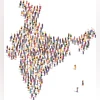
Delimitation determines how electoral boundaries are drawn to ensure fair representation across constituencies in India. (Photo: Business Standard)
Listen to This Article
The Centre has proposed the Constitution (131st Amendment) Bill and the Delimitation Bill, 2026, to be introduced during a special session of Parliament from April 16 to 18, signalling a potential shift in how India’s political representation is structured. The move has brought renewed attention to delimitation, a process that could reshape electoral boundaries and alter the balance of power between states.
Delimitation has long been a quiet but crucial part of India’s democratic machinery, and it now sits at the centre of a growing political debate. While the process was carried out regularly in the decades after Independence, it was eventually halted in a way that reshaped how representation works in the country.
Understanding how delimitation was done earlier, and why it was restricted, offers insight into the balance India has tried to strike between fairness and federal stability.
What delimitation means and why it is conducted
Delimitation is the process through which electoral constituency boundaries are redrawn to reflect changes in population. Its core aim is to ensure that each elected representative speaks for a roughly equal number of people, and therefore that each citizen’s vote carries similar weight.
“The guiding principle behind delimitation has been ‘one person, one vote, one value’, which means each constituency is designed to represent roughly the same number of people so that every vote carries equal weight,” Tushar Gupta, political analyst told Business Standard.
Also Read

 "heatwave summer heat")
 "Parliament, Budget session, Lok Sabha")
 "Q4 results today")
 "legal")
 "Income Tax Bill, Income Tax")
Gupta added that Articles 82 and 170 of the Constitution shaped this process by ensuring constituencies remain compact while taking into account natural features and, wherever possible, existing administrative boundaries.
As populations grow and shift, some regions expand rapidly while others stabilise. Without periodic delimitation, this imbalance would distort representation, and some voters would effectively have more influence than others. Therefore, delimitation is central to the principle of equal representation.
How delimitation is conducted in India
India follows a structured and legally binding process to carry out delimitation, which is designed to minimise political interference while ensuring transparency. The process unfolds in several stages:
- Parliament first passes a Delimitation Act after the completion of a Census
- The central government then constitutes a Delimitation Commission
- The Commission typically includes a retired Supreme Court judge as chairperson, along with the Chief Election Commissioner or an Election Commissioner from the Election Commission of India, and State Election Commissioners as associate members
The Delimitation Commission then uses Census data to redraw constituency boundaries and identify seats reserved for Scheduled Castes and Scheduled Tribes. Draft proposals are published, and objections are invited from the public, while hearings and consultations are often held to incorporate feedback.
Once the process is complete, the Commission issues final orders, and these carry the force of law. Importantly, they cannot be easily challenged in court, which ensures that the exercise remains insulated from prolonged legal disputes.
How India conducted delimitation earlier
In the years after Independence, delimitation was a relatively straightforward exercise, with four commissions set up in 1952, 1963, 1973 and 2002 under Acts passed by Parliament.
The 1952 exercise was based on the 1951 Census, and by the time of the 1973 Commission, which used 1971 Census data, the strength of the Lok Sabha had effectively been fixed at 543 seats.
During this period, the process involved two key elements:
- Redrawing constituency boundaries within states
- Reallocating the number of Lok Sabha seats among states based on population changes
This meant that as populations grew unevenly across regions, political representation in Parliament adjusted accordingly. States with higher population growth gained more seats, while others saw slower increases.
However, the process was later frozen due to concerns over representation, population control, and regional balance. The question was not just about fairness in numbers, but also about fairness in outcomes across states.
Why seat redistribution was frozen
In the 1970s, the government was heavily promoting family planning and population control measures. Since seat allocation was strictly tied to population figures, states that were successful in reducing their birth rates (largely in the south) stood to lose seats in Parliament. Conversely, states with higher growth rates (largely in the north) would have gained more seats.
To address this, the government led by Indira Gandhi introduced the 42nd constitutional amendment in 1976, which froze the allocation of seats among states based on the 1971 Census.
This decision had several implications:
- The number of Lok Sabha seats allotted to each state would remain fixed
- Population changes would not immediately alter inter-state representation
- States would not be penalised for implementing family planning policies
“From ‘one person, one vote, one value’, we moved to ‘rewarding low birth rates',” said Gupta, explaining the rationale behind freezing seat distribution.
Why delimitation was effectively limited in 2002
When the year 2001 arrived, the disparity in population growth between states had become even more pronounced. If the freeze had been lifted then, the shift in political power would have been massive.
Consequently, the government passed the 84th Amendment Act (2001), which extended the freeze on the total number of seats for another 25 years, until the first census taken after 2026.
While constituency boundaries within states were redrawn and reserved seats were updated, the overall number of seats allocated to each state remained unchanged.
In effect, the process continued in a restricted form, where internal adjustments were allowed, but the broader question of representation between states was left untouched.
A balance between fairness and stability
India’s approach to delimitation reflects an attempt to balance two competing priorities. On one hand, there is the democratic principle of equal representation, and on the other, there is the need to maintain fairness between states with differing population trajectories. At its core, the debate is as much about perception as it is about numbers. “If southern states anticipate a loss of seats, even in the absence of a declared formula, securing their alignment will be difficult,” said Nitish Sharma, CEO of PASG, adding that the focus should move beyond a North-South binary and instead address inter-state disparities more constructively.
The freeze on seat redistribution addressed immediate political concerns, but it also deferred a deeper question about how representation should evolve in a changing, developing country. As the next phase of delimitation approaches, this balance is likely to be tested once again, and the choices made will shape the future of India’s democratic structure.
More From This Section
 "Parliament, New Parliament")
 "Congress President Mallikarjun Kharge addressed a press conference after a meeting between INDIA bloc leaders, in New Delhi, on Wednesday")
 "Supreme Court, SC")
 "us india")
 "cylinder blast")
Don't miss the most important news and views of the day. Get them on our Telegram channel
First Published: Apr 15 2026 | 4:30 PM IST