


New WHO agreement on pandemic response: What's it is and what it will do
With lessons from Covid-19, WHO members back treaty to improve equity, vaccine access, and emergency coordination during future outbreaks
 "WHO, pandemic agreement")
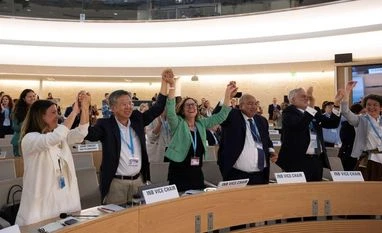
Member states of WHO adopt by consensus the world's first pandemic agreement to make the world more equitable and safer from future pandemics. (Photo: X | @WHO)
Listen to This Article
World Health Organization (WHO) member states have adopted a landmark agreement aimed at addressing the gaps exposed during the Covid-19 pandemic. The WHO Pandemic Agreement is designed to ensure faster, fairer and more coordinated global responses during future health emergencies.
What is the WHO Pandemic Agreement?
The WHO Pandemic Agreement is the first legally binding international accord to comprehensively address pandemic prevention, preparedness, and response. Adopted under Article 19 of the WHO Constitution, it promotes data sharing, equitable access to resources and greater cooperation between countries during health crises.
The agreement text states that member countries recognise “that the international spread of disease is a global threat… that calls for the widest possible international and regional collaboration… while reaffirming the principle of the sovereignty of States in addressing public health matters.”
What are the goals of the WHO pandemic treaty?
The agreement outlines five primary objectives:
- Ensure equitable access to pandemic-related vaccines, treatments, and diagnostics
- Strengthen collaboration through data and pathogen sharing
- Support resilient health systems, especially in low-resource settings
- Promote knowledge and technology transfer for local production
- Establish sustainable funding mechanisms for rapid response
How will countries benefit from the pandemic agreement?
Countries that sign and ratify the agreement will be entitled to:
Also Read

 "workplace, walking, office, physical health")
 "heart health, healthy men, man, happy man")
 "heart health, healthy men, man, sad man, men's health")
 "Alzheimer's blood test, brain health")
 "WHO, World Health Organization")
- Rapid access to 20 per cent of global pandemic-related health product output — 10 per cent as donations, 10 per cent at affordable prices
- A Global Supply Chain and Logistics Network (GSCL) for fair resource distribution
- A coordinated financial mechanism for emergency response from day one of a pandemic
- Access to shared technologies and production knowledge, especially in developing countries
What is the WHO Pathogen Access and Benefit-Sharing System (PABS)?
The Pathogen Access and Benefit-Sharing System (PABS), still under negotiation, will govern how countries share biological materials and genome sequences and ensure fair return benefits like vaccines and diagnostics. The PABS annex will be finalised for consideration at the 2026 World Health Assembly.
The treaty also adopts a “One Health” approach, acknowledging the link between human, animal and environmental health.
What happens next?
The agreement is now open for signature and ratification. It will become binding once ratified by 60 countries. Member states are expected to:
- Begin aligning national laws with the agreement
- Engage in the development of the PABS annex
- Support WHO-led efforts to strengthen health systems, particularly in developing nations
- Consider early ratification to expedite the treaty’s entry into force
How will the agreement promote equity in vaccine distribution?
The agreement directly addresses vaccine inequity, a major issue during the Covid-19 pandemic. Pharmaceutical manufacturers will be required to reserve:
- 10 per cent of production for WHO-led donations
- 10 per cent at reduced prices for distribution to low-income nations
- The agreement also discourages vaccine hoarding and promotes timely and transparent supply allocation to vulnerable populations.
What did WHO say about the significance of the treaty?
“The world is safer today thanks to the leadership, collaboration and commitment of our Member States to adopt the historic WHO Pandemic Agreement,” said WHO Director-General Dr Tedros Adhanom Ghebreyesus in a statement.
He added: “The Agreement is a victory for public health, science and multilateral action. It will ensure we, collectively, can better protect the world from future pandemic threats. It is also a recognition by the international community that our citizens, societies and economies must not be left vulnerable to again suffer losses like those endured during Covid-19.” For more health updates, follow #HealthWithBS
More From This Section
 "Covid 19, Covid-19, covid")
 "Covid 19, Covid-19, covid")
 "Fruit, Fruits, vendors, vendor")
 "brain, dementia, Alzheimer's, memory issues")
Topics : Coronavirus Coronavirus News Health with BS BS Web Reports WHO World Health Organization Vaccination flu pandemic health news Health Ministry
Don't miss the most important news and views of the day. Get them on our Telegram channel
First Published: May 21 2025 | 5:26 PM IST