


China delays launch of K visa for tech talent amid social media backlash
China's rollout of its new K visa for foreign professionals has been delayed as embassies remain closed for holidays, amid public criticism over job concerns and timing
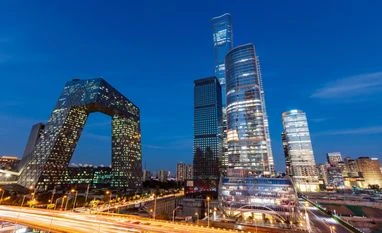 "Beijing, China")
China K Visa Updates: The K visa, described as China’s version of the H-1B, was announced in August this year to attract young international professionals in science and technology.. Photo: Shutterstock
Listen to This Article
China’s much-publicised K visa for foreign professionals, which was to take effect from October 1, is yet to be implemented as the country’s embassies abroad remain closed till October 8 for the National Day and Mid-Autumn Festival holidays. However, it has already drawn sharp criticism on Chinese social media platforms, with users questioning the timing of the policy amid an ongoing employment slowdown, according to Hong Kong-based South China Morning Post.
The K visa, described as China’s version of the H-1B, was announced in August this year to attract young international professionals in science and technology. But its launch has coincided with public holidays that have kept Chinese embassies closed, delaying its rollout.
“The K visa will facilitate exchanges and cooperation between Chinese and international young professionals in scientific and technological fields,” said Guo Jiakun, spokesperson for China’s National Immigration Administration, on September 29.
Online criticism over K Visa timing
China’s youth unemployment rate has hovered around 19 per cent in the past two years, with about 12 million graduates entering the job market every year.
“Does this policy imply that our education system is inferior to that of other countries?” one user asked on Weibo. Another wrote: “Why is it that young people in China with bachelor’s degrees struggle to find good jobs and are forced to pursue master’s degrees, while foreign bachelor’s degree holders are considered ‘tech talent’?”
Also Read

 "oil, global oil, oil storage")
 "china Flag, China")
 "Humanoid robots")
 "Pakistan Air Force JF-17")
 "A BYD SkyRail at the company's headquarters in Shenzhen, China")
Some critics said the K visa could benefit foreigners at the cost of domestic jobseekers. Others warned that without employer sponsorship, the system could be exploited by fraudulent agents.
“It is already difficult to thoroughly scrutinise domestic educational credentials,” a user posted. “With the introduction of the K visa, a supply chain of visa agencies will quickly form around it and help foreigners get the visa. How much manpower and resources will it take to vet each application and ensure it is genuine?”
Comparison with US H-1B visa
The K visa announcement largely went unnoticed until US President Donald Trump introduced a $100,000 fee for the H-1B visa, long used by Indian professionals to work in the United States. The timing drew comparisons between the two countries’ contrasting approaches to foreign talent.
Key features of the China K visa
According to state-run Xinhua, the K visa will offer greater convenience compared with China’s 12 existing visa categories. It's key features include:
Multiple permitted entries
Longer validity periods
Extended duration of stay
Simplified procedures without the need for a domestic employer or invitation
Once in China, K visa holders will be allowed to take part in exchanges in education, culture, and technology, as well as in entrepreneurial and business activities.
However, eligibility criteria such as age, educational background, and work experience will still apply.
More From This Section
 "Donald Trump, Trump")
 "US visa, US students")
 "US visa, H4, H1B")
 "US visa, H4, H1B")
Topics : H1B Visa China immigration BS Web Reports
Don't miss the most important news and views of the day. Get them on our Telegram channel
First Published: Oct 06 2025 | 12:26 PM IST