


Russia-Pak JF-17 deal: What it means for Moscow-New Delhi relations
Several reports claimed that Russia had decided to supply Pakistan with RD-93MA engines for its JF-17 Thunder fighter jets, reportedly moving ahead despite India's objections
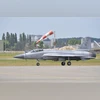 "Pakistan Air Force JF-17")
While Pakistan has never directly procured equipment from Russia, China has acted as an intermediary for over a decade. (Wikimedia Commons)
Listen to This Article
Reports of Russia supplying advanced RD-93MA engines to Pakistan’s JF-17 fighter jets have sparked widespread criticism from the Opposition and raised questions about India-Russia ties. While there is not confirmation yet from the Russian authorities, the issue remains sensitive for India, which continues to rely heavily on Russia for both crude oil and defence procurement.
Here’s a breakdown of what has happened so far and its implications for Moscow-New Delhi relations.
What we know
Several reports on Sunday, October 5, claimed that Russia had decided to supply Pakistan with RD-93MA engines for its JF-17 Thunder fighter jets, reportedly moving ahead despite India’s objections.
However, according to a report by WION, Russian authorities have denied these claims. The report, citing a Russian source, said it seems illogical to serious and professional observers who follow the major defence deals planned between Russia and India.
Notably, the use of Russian engines in Pakistan’s fighter jets is not new. While Pakistan has never directly procured equipment from Russia, China has acted as an intermediary for over a decade, supplying RD-93MA engines for the JF-17 Thunder. The JF-17, designed and assembled jointly by China and Pakistan, is powered by the Russian-made RD-93MA engine, a variant of the Klimov RD-33 adapted for single-engine aircraft.
Also Read

 "Crude oil")
 "Vladimir Putin, Putin")
 "Vladimir Putin, Putin")
 "Dmitry Patrushev, russian deputy PM with PM Modi")
 "european union flag, India flag, EU-India ties")
Why it matters
The development is significant as India and Russia have been long-standing defence partners. For over five decades, the two nations have collaborated across key sectors, including military hardware, nuclear energy, and space programmes.
India and Russia have also planned an annual summit that is scheduled for December. Russian President Vladimir Putin will be visiting New Delhi to attend the summit.
Meanwhile, India remains one of the largest defence importers. According to recent data from the Stockholm International Peace Research Institute (SIPRI), India was the world’s second-largest arms importer after Ukraine, accounting for about 8.3 per cent of global imports in 2020–24. Pakistan ranks fifth.
India’s reliance on Russia
Although Russia continues to be one of India’s biggest arms suppliers, its share has declined steadily as New Delhi pushes for self-reliance under the Make in India initiative, increases defence spending, and diversifies procurement toward Western suppliers such as France, Israel, and the United States.
SIPRI data shows that Russia accounted for 36 per cent of India’s total arms imports in 2020–24, followed by France and Israel. However, this marks a sharp fall from 55 per cent in 2015–19 and 72 per cent in 2010–14. India’s overall arms imports also declined by 9.3 per cent between 2015–19 and 2020–24.
Pakistan’s arms imports rise
While India is working to reduce its defence imports, Pakistan’s weapons purchases are increasing sharply. Between 2015–19 and 2020–24, Pakistan’s arms imports rose by 61 per cent as it began receiving new combat aircraft and frigates under a large-scale procurement programme.
According to SIPRI data, Pakistan accounted for 4.6 per cent of global arms imports in 2020–24. China remains its biggest supplier, providing 81 per cent of Pakistan’s major arms imports during this period, up from 74 per cent in 2015–19.
Opposition slams government
Shortly after the reports emerged, Congress general secretary Jairam Ramesh took to X to criticise the ruling Bharatiya Janata Party government. “The Modi government must explain why Russia has chosen to ignore New Delhi’s appeals and proceed with supplying advanced RD-93MA engines... The latest Block III variant of this aircraft will feature the upgraded engine and the same PL-15 missiles believed to have been used against our country during Operation Sindoor. The IAF Chief has also stated that the JF-17 may be among the Pakistani fighters that were used against us,” he said.
Citing multiple news reports, Ramesh added that the deal is moving forward despite direct interventions by External Affairs Minister S Jaishankar in June 2025. “The government owes the nation an explanation as to why a long-time and trusted partner like Russia is now providing military support to Pakistan, even as India continues to purchase S-400 missile systems and negotiates for Su-57 stealth fighters from Moscow,” he said.
‘Sale of RD-93 engines will benefit India’
Russian defence experts believe the sale could actually work in India’s favour due to its predictability. Pyotr Topychkanov of Moscow’s Primakov Institute told news agency PTI that the new aircraft would be “familiar and predictable” for India, given that it uses the same engine and that India has already observed the JF-17’s operational performance during Operation Sindoor.
More From This Section
 "Indians in US, Indian Americans")
 "China-Taiwan drills, China-Taiwan, Taiwan")
 "S Jaishankar, Jaishankar")
 "Rajnath Singh, Defence Minister")
 "Nayab Singh Saini, Nayab Singh, Nayab")
Topics : India-Russia ties defence sector Pakistan Operation Sindoor defence purchase China Congress BS Web Reports
Don't miss the most important news and views of the day. Get them on our Telegram channel
First Published: Oct 06 2025 | 10:13 AM IST